🦋 Understanding Thyroid Health in India
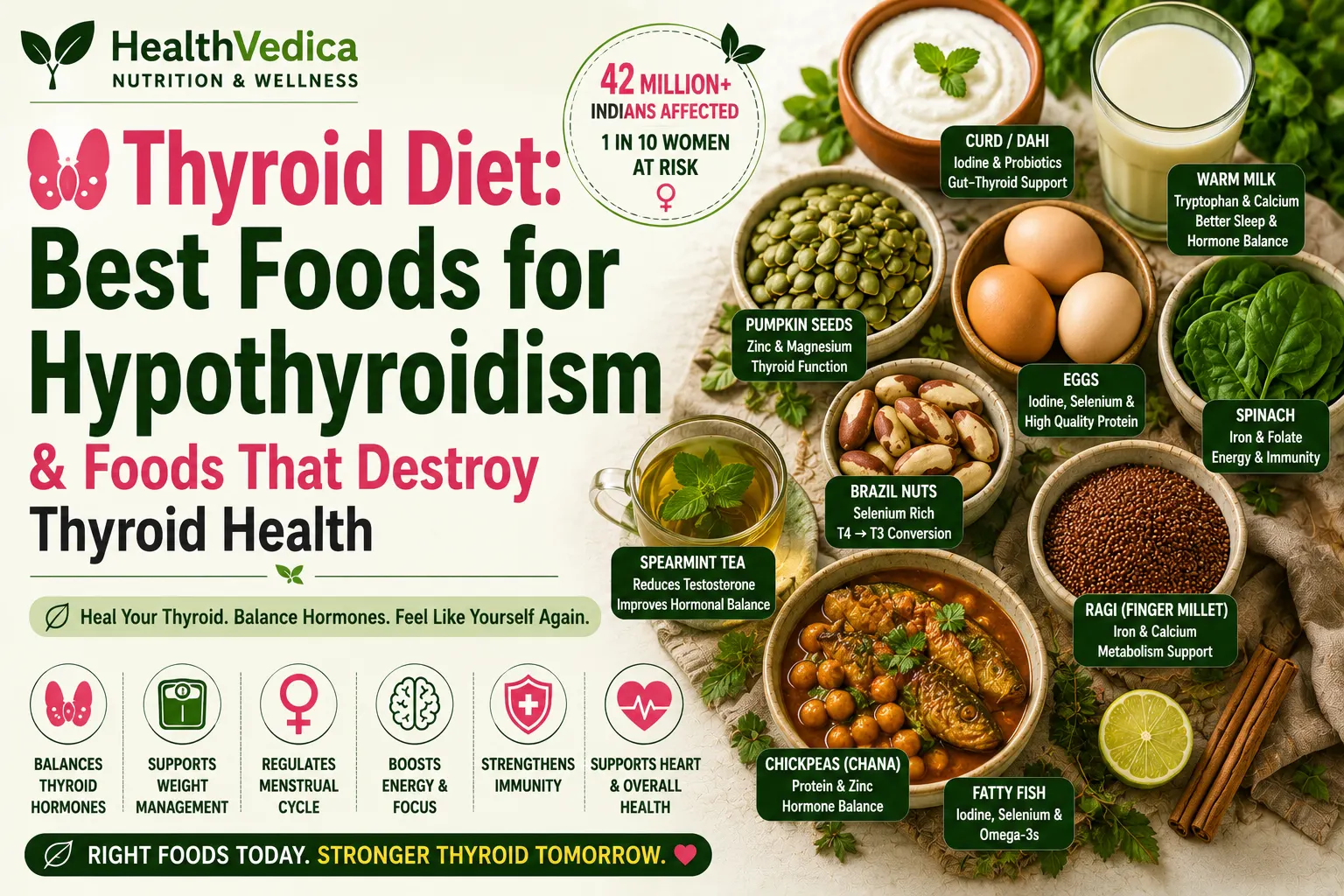
Thyroid disorders affect over 42 million Indians, making it one of the most prevalent endocrine conditions in the country. Hypothyroidism — where the thyroid gland produces insufficient hormones — is especially common among Indian women, with studies indicating 1 in 10 Indian women suffers from some form of thyroid dysfunction. Yet shockingly, over 60% of cases remain undiagnosed.
The thyroid gland, a butterfly-shaped organ in your neck, produces hormones (T3 and T4) that regulate metabolism, energy production, body temperature, heart rate, and brain development. When it underperforms, every system in your body slows down — leading to weight gain, fatigue, hair loss, constipation, depression, and cold sensitivity.
The good news? India's diverse food culture provides an incredible array of thyroid-supportive nutrients. From selenium-rich Brazil nuts to iodine-fortified sea vegetables, and traditional herbs like ashwagandha and guggul, the Indian pantry holds powerful thyroid medicine. This guide reveals exactly what to eat, what to avoid, and how to rebuild thyroid function through strategic nutrition.
🔬 The Science of Thyroid Nutrition
The thyroid requires specific micronutrients to function optimally. Understanding these helps you build a targeted diet:
Iodine is the primary raw material for thyroid hormones. India's iodine deficiency crisis was addressed through mandatory salt iodisation, but many rural and coastal populations remain deficient. The recommended daily intake is 150 mcg for adults. Without adequate iodine, the thyroid cannot produce T4 (thyroxine).
Selenium is critical for converting inactive T4 into active T3 (the hormone that actually works in cells). India's selenium-poor soils mean most Indians are deficient. Just 2 Brazil nuts daily provide your entire selenium requirement. Selenium also protects the thyroid from autoimmune damage (Hashimoto's disease).
Zinc plays multiple roles — it's needed for TSH (thyroid-stimulating hormone) synthesis and helps convert T4 to T3. Indian vegetarians are particularly at risk for zinc deficiency due to phytates in grains.
Iron deficiency impairs thyroid peroxidase (TPO), the enzyme that produces thyroid hormones. Given that 50% of Indian women are anaemic, this is a critical connection.
Tyrosine (an amino acid) combines with iodine to form thyroid hormones. Adequate protein intake is therefore essential.
📊 Thyroid Nutrient Chart: Best Indian Food Sources
| Nutrient | Why It Matters | Top Indian Sources | Daily Target |
|---|---|---|---|
| Iodine | Makes T3 & T4 | Iodised salt, seafood, dairy | 150 mcg |
| Selenium | T4→T3 conversion | Brazil nuts, tuna, eggs, mushrooms | 55 mcg |
| Zinc | TSH synthesis | Pumpkin seeds, chickpeas, dal | 8–11 mg |
| Iron | TPO enzyme function | Spinach + vitamin C, ragi, liver | 18 mg (women) |
| Vitamin D | Reduces autoimmunity | Sunlight, fortified milk, fatty fish | 600–2000 IU |
| Vitamin B12 | Energy metabolism | Dairy, eggs, fortified cereals | 2.4 mcg |
| Magnesium | T4 conversion support | Bajra, leafy greens, almonds | 310–420 mg |
| Tyrosine | Hormone building block | Paneer, dal, chicken, seeds | 500 mg+ |
✅ Best Foods for Thyroid Health (Indian Edition)
1. Iodised Salt (in moderation)
The simplest thyroid intervention. Use 1 tsp of iodised salt daily in cooking. However, avoid excessive salt as it raises blood pressure. Ensure you buy FSSAI-certified iodised salt, especially from branded sources.
2. Brazil Nuts (2 per day)
Just two Brazil nuts provide 100–200 mcg of selenium — more than your daily requirement. These are now widely available in Indian supermarkets and health stores. Don't exceed 3–4 per day as too much selenium is toxic.
3. Eggs
Eggs provide both iodine (in yolk) and selenium. One egg = 16 mcg iodine + 20 mcg selenium. Eat the whole egg — the nutrients are concentrated in the yolk. Indian preparations like egg bhurji or boiled eggs are excellent.
4. Dairy (Dahi, Paneer, Milk)
Curd and milk are excellent iodine sources (50–80 mcg per cup). Paneer provides tyrosine. Daily dahi consumption also supports gut health, which influences thyroid autoimmunity.
5. Fatty Fish (Rohu, Surmai, Tuna)
Fish provides iodine, selenium, omega-3 (anti-inflammatory), and vitamin D — a complete thyroid package. Aim for 2–3 servings per week. Coastal Indians have natural dietary advantage here.
6. Ragi (Finger Millet)
Iron-rich ragi supports thyroid enzyme function. 100g ragi = 3.9 mg iron. Prepare as ragi mudde, ragi dosa, or ragi porridge.
7. Pumpkin Seeds (Kaddu ke Beej)
Excellent zinc source — 100g provides 7.5 mg zinc. Snack on roasted pumpkin seeds or add to salads and raitas.
8. Coconut Oil
Medium-chain fatty acids (MCFAs) in coconut oil may support thyroid metabolism. Use 1–2 tsp daily in cooking. It also supports gut health which is linked to thyroid autoimmunity.
🌿 Ayurvedic Approach to Thyroid Health
Ayurveda views thyroid disorders through the lens of Kapha-Vata imbalance. Hypothyroidism manifests as aggravated Kapha (lethargy, weight gain, cold, slow metabolism). Treatment focuses on kindling Agni (digestive fire) and balancing doshas.
Guggul (Commiphora mukul): The most studied Ayurvedic herb for thyroid. Research from Banaras Hindu University found guggulsterones in guggul actively stimulate thyroid function. Use under practitioner supervision.
Ashwagandha (Withania somnifera): Adaptogenic herb that significantly raises T3 and T4 levels. A 2018 study in Medicine journal found 600 mg/day for 8 weeks significantly improved thyroid hormones in subclinical hypothyroidism patients.
Brahmi (Bacopa monnieri): Supports cognitive function impaired by hypothyroidism. Also has mild thyroid-stimulating properties.
Ginger-Black Pepper Decoction: Stimulates Agni and improves metabolism. Drink as morning tea.
🚫 Foods to Avoid or Limit with Thyroid Issues
Goitrogenic Vegetables (Raw): Cruciferous vegetables like cabbage, cauliflower, broccoli, and kale contain goitrogens that can interfere with iodine uptake when eaten raw in large amounts. Cooking neutralises 30–40% of goitrogens. Indians who rely heavily on raw salads of these vegetables should steam or sauté them instead. Normal cooked portions are safe.
Soy Products (Excessive): Soy isoflavones may inhibit thyroid peroxidase. Avoid having soy milk or tofu within 4 hours of taking thyroid medication. Moderate fermented soy (like tempeh) is safer.
Gluten (for Hashimoto's): If you have autoimmune thyroid disease (Hashimoto's), gluten can trigger immune attacks on the thyroid due to molecular mimicry. A gluten-free trial for 3 months is worth attempting.
Ultra-Processed Foods: These cause systemic inflammation, disrupt gut microbiome, and impair nutrient absorption — all of which worsen thyroid function.
Calcium-Rich Foods WITH Medication: Calcium (dairy, supplements) and iron supplements should be taken 4 hours apart from levothyroxine, as they block absorption.
💡 7-Day Thyroid-Supportive Indian Meal Plan
Daily Foundation Rules:
- 2 Brazil nuts each morning (selenium)
- Use iodised salt in cooking
- 15–20 minutes sun exposure (vitamin D)
- Take thyroid medication on empty stomach (if prescribed)
Monday: Breakfast: Ragi dosa + sambar + 2 eggs | Lunch: Rice + dal + sabzi (cooked) + dahi | Dinner: Grilled fish + sautéed vegetables + chapati
Tuesday: Breakfast: Paneer bhurji + multigrain toast | Lunch: Rajma + rice + cucumber raita | Dinner: Chicken curry + millet roti + spinach
Wednesday: Breakfast: Poha + pumpkin seeds + milk | Lunch: Sambar rice + papad + dahi | Dinner: Dal makhani + chapati + salad
Thursday: Breakfast: Idli + coconut chutney + egg | Lunch: Chole + rice + lassi | Dinner: Fish curry + rice + stir-fry greens
Friday: Breakfast: Oats + banana + milk | Lunch: Dal + sabzi + roti + dahi | Dinner: Chicken stew + millet + roasted vegetables
Saturday: Breakfast: Besan chilla + green chutney | Lunch: Mixed vegetable curry + rice | Dinner: Paneer tikka + roti + soup
Sunday: Breakfast: Upma + sambhar | Lunch: Mutton (for non-veg) or mushroom curry + rice | Dinner: Light khichdi + dahi