🌿 Introduction
Black pepper, known as Kali Mirch in India, is rightly called the King of Spices. Derived from the berries of Piper nigrum, a climbing vine native to India's Malabar Coast (modern-day Kerala), black pepper has been treasured for over 4,000 years. It was so valuable in ancient times that it was used as currency and drove the spice trade routes that shaped world history. Today, India remains one of the world's largest producers and consumers of black pepper. Beyond its culinary role, Kali Mirch is revered in Ayurveda as a powerful medicinal spice with unique ability to enhance the absorption of other nutrients and medicines — a property called bioenhancement.
📊 Nutritional Value Per 100g
| Nutrient | Amount | % Daily Value |
|---|---|---|
| Calories | 251 kcal | 13% |
| Carbohydrates | 63.9 g | 21% |
| Dietary Fiber | 25.3 g | 101% |
| Protein | 10.4 g | 21% |
| Fat | 3.3 g | 5% |
| Calcium | 443 mg | 44% |
| Iron | 9.7 mg | 54% |
| Magnesium | 171 mg | 43% |
| Phosphorus | 158 mg | 16% |
| Potassium | 1329 mg | 38% |
| Zinc | 1.2 mg | 8% |
| Vitamin C | 21 mg | 35% |
| Vitamin K | 163 mcg | 204% |
| Manganese | 12.8 mg | 638% |
| Copper | 1.33 mg | 66% |
⚡ The Power of Piperine
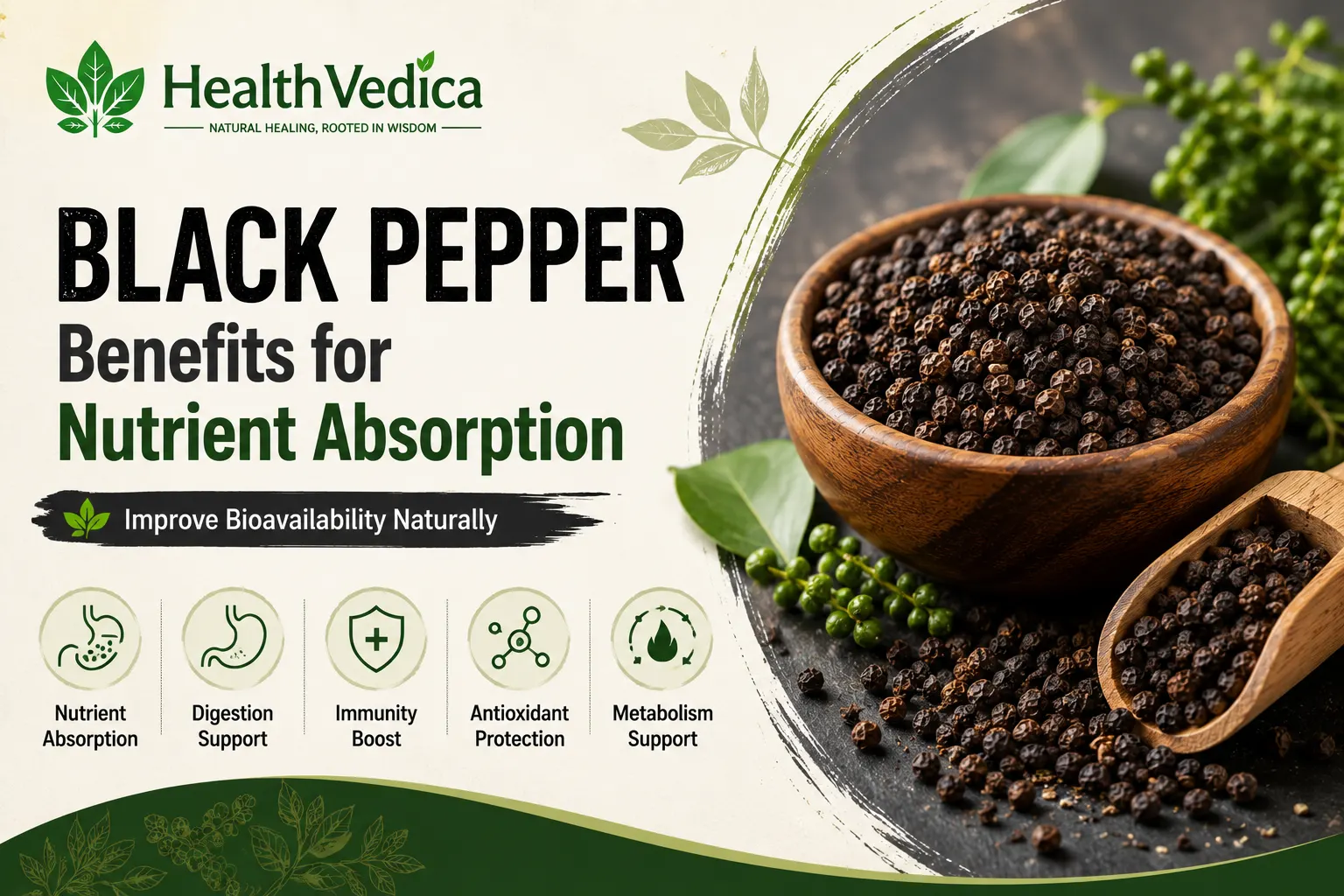
Piperine is black pepper's most remarkable compound and the source of its pungency. Its most extraordinary property is bioenhancement — it dramatically increases the absorption of other nutrients and medicinal compounds. Studies show piperine increases curcumin (turmeric) absorption by an astonishing 2000%. It also enhances absorption of selenium, beta-carotene, Vitamin B6, coenzyme Q10, and various pharmaceutical drugs. This is why Ayurvedic formulations have included black pepper for thousands of years — ancient healers intuitively knew it made other medicines more effective. Beyond bioenhancement, piperine has anti-inflammatory, antioxidant, anti-cancer, antidepressant, and thermogenic (fat-burning) properties.
🕉️ Ayurvedic Properties & Dosha Effect
In Ayurveda, Kali Mirch is called Maricha and is classified as one of the Trikatu (three pungent spices) along with ginger and long pepper. It is intensely Ushna (hot), sharp, and pungent. It powerfully balances Kapha and Vata doshas and increases Pitta. Maricha is considered Deepana (digestive stimulant), Pachana (digestive), Kaphahara (phlegm reducer), and Shothahara (anti-inflammatory). The classic formulation Trikatu churna (ginger + black pepper + long pepper) is one of Ayurveda's most prescribed digestive and metabolic tonics.
💚 Health & Healing Benefits
Bioavailability Enhancement (Unique Benefit): Piperine is the world's most studied natural bioenhancer. Just 5mg of piperine (found in about 1/8 tsp of black pepper) increases curcumin absorption by 2000%. This is why the combination of turmeric + black pepper is one of the most powerful natural health combinations. It also enhances drug bioavailability for conditions like epilepsy and high blood pressure.
Digestive Health: Black pepper stimulates hydrochloric acid secretion in the stomach, improving protein digestion. It promotes gut motility, relieves flatulence, and stimulates enzyme activity in the pancreas and intestine. Kali mirch is a primary Ayurvedic remedy for digestive sluggishness.
Anti-Inflammatory & Antioxidant: Piperine inhibits NF-κB — a key molecular regulator of inflammation — suppressing the production of inflammatory cytokines. Its antioxidant capacity rivals many known antioxidants.
Brain Health & Antidepressant Effects: Piperine inhibits enzymes that break down serotonin and dopamine (MAO inhibition), resulting in elevated mood, reduced depression, and improved cognitive function. Animal studies show it significantly improves learning, memory, and recovery from brain injuries.
Anti-Cancer Properties: Piperine has demonstrated ability to slow proliferation of breast, colon, prostate, and lung cancer cells while sensitizing cancer cells to chemotherapy agents, potentially allowing lower doses to be used.
Weight Management: Black pepper has thermogenic properties — it raises body temperature slightly, speeding up metabolism and fat burning. Piperine also inhibits fat cell formation (adipogenesis) at the genetic level.
Blood Sugar Control: Piperine improves insulin sensitivity and reduces blood glucose levels by inhibiting enzymes that break down complex carbohydrates in the gut.
Respiratory Health: Black pepper's pungent oils break up mucus and phlegm, clearing nasal passages and respiratory tracts. It is a classical Ayurvedic remedy for cough, cold, and asthma when combined with honey.
Antibacterial & Antifungal: Black pepper oil inhibits the growth of multiple bacteria including Staphylococcus aureus and E. coli, as well as fungal pathogens.
🏠 Ayurvedic & Home Remedies Using Black Pepper
| Remedy | Preparation | Benefit |
|---|---|---|
| Kali Mirch + Honey (Cold Remedy) | Mix 4–5 crushed black peppercorns in 1 tsp honey, consume 2–3 times daily | Cough, cold, throat infection, mucus clearance |
| Trikatu Churna | Equal parts black pepper, ginger, and long pepper powders, 1/4 tsp with warm water before meals | Digestion, metabolism, weight loss, Kapha balance |
| Turmeric + Black Pepper Golden Milk | 1/2 tsp turmeric + pinch of black pepper + warm milk + honey | Anti-inflammatory, joint health, immunity (2000% better curcumin absorption) |
| Pepper + Honey Paste for Acne | Mix crushed pepper with honey, apply on pimples for 10 min | Antibacterial acne treatment |
| Pepper Kadha for Fever | Boil 5 peppercorns + tulsi + ginger + cloves in water, add honey when cool | Fever reduction, immunity, viral infections |
| Pepper Ghee for Cognitive Health | Grind 3–4 peppercorns, mix with warm ghee and take daily | Memory enhancement, brain tonic, Vata balance |
🍛 Indian Culinary Uses
Black pepper is literally everywhere in Indian cooking. It is a key component of garam masala and most spice blends. It is freshly ground into rasam and sambar in South India, added to chai (Indian tea), and used in marinades for meats and paneer. Whole peppercorns are added to biryanis and rice dishes for aroma. Black pepper features in classic North Indian preparations like shahi paneer, paya soup, and nihari. It is also ground into buttermilk (chaas) and sprinkled on fruits as a digestive aid. The combination of black pepper with turmeric milk (haldi doodh) is perhaps India's most famous medicinal drink.
💡 Tips for Best Use
Always use freshly ground: Pre-ground black pepper loses its volatile oils (and piperine potency) rapidly. Use a pepper grinder and grind fresh for each use. Always pair with turmeric: The turmeric + black pepper combination is non-negotiable for maximum curcumin benefits — the enhancement is dramatic and scientifically proven. Coarse grind for cooking, fine grind for medicine: Coarser grinds work best in tadka and meat dishes; finer powder blends well into drinks and herbal formulations. Storage: Whole peppercorns last 3–5 years in airtight containers; ground pepper should be used within 3–6 months.
⚠️ Precautions & Side Effects
Black pepper is extremely safe in culinary amounts. Excessive medicinal doses may cause gastrointestinal irritation and heartburn. Piperine may interact with certain medications (including rifampicin, phenytoin, and propranolol) by affecting their metabolism — consult a doctor if taking these drugs. People with peptic ulcers should limit intake. Topical application of pepper essential oil may cause skin irritation.