🌿 Introduction
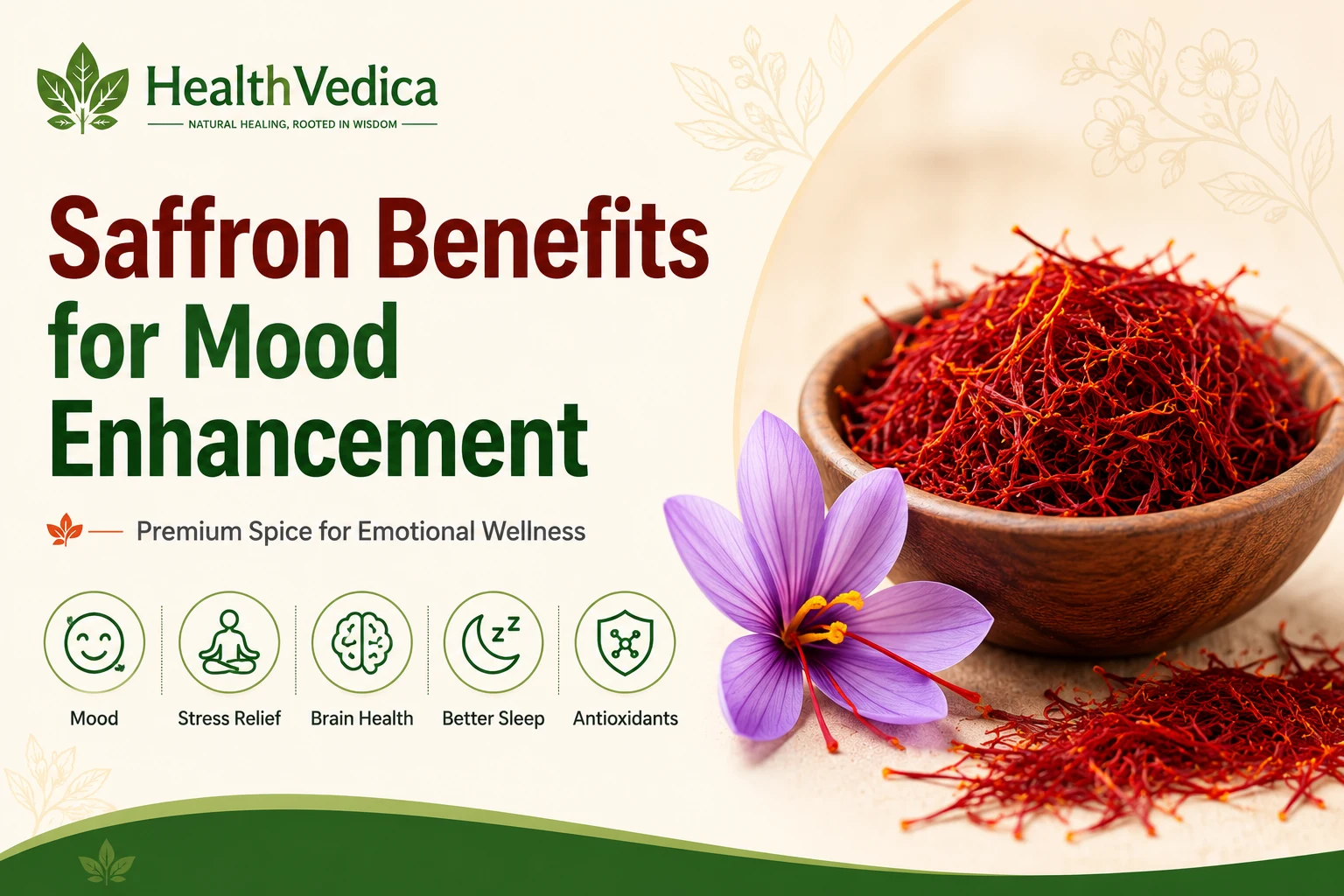
Saffron, called Kesar in India and Crocus sativus scientifically, is the world's most expensive spice — prized both for its golden color and extraordinary medicinal properties. Harvested by hand from the stigmas of the saffron crocus flower, it takes roughly 75,000 flowers to produce just one pound of saffron. India's finest saffron comes from the Kashmir valley, where the cool climate produces threads of exceptional quality. In Ayurveda, Kesar is revered as a Rasayana — a rejuvenating herb that promotes longevity, vitality, and mental clarity.
📊 Nutritional Value Per 100g
| Nutrient | Amount | % Daily Value |
|---|---|---|
| Calories | 310 kcal | 16% |
| Carbohydrates | 65.4 g | 22% |
| Protein | 11.4 g | 23% |
| Fat | 5.9 g | 9% |
| Dietary Fiber | 3.9 g | 14% |
| Vitamin C | 80.8 mg | 135% |
| Riboflavin (B2) | 0.27 mg | 16% |
| Niacin (B3) | 1.46 mg | 7% |
| Vitamin B6 | 1.01 mg | 50% |
| Iron | 11.1 mg | 62% |
| Magnesium | 264 mg | 66% |
| Potassium | 1724 mg | 49% |
| Manganese | 28.4 mg | 1420% |
| Zinc | 1.09 mg | 7% |
Note: Saffron is used in tiny amounts (0.1–0.5g per serving), so nutritional benefits come primarily from its bioactive compounds rather than macronutrients.
⚗️ Key Bioactive Compounds
Saffron's extraordinary health effects come from three primary carotenoid compounds. Crocin is responsible for saffron's intense golden-yellow color and has powerful antioxidant, antidepressant, and memory-enhancing properties. Crocetin, a natural carotenoid, supports cardiovascular health and may have anti-cancer properties. Safranal gives saffron its distinctive aroma and contributes to its antidepressant, anticonvulsant, and neuroprotective effects. Kaempferol, a flavonoid present in saffron petals, has anti-cancer and mood-boosting properties.
🕉️ Ayurvedic Properties & Dosha Effect
In Ayurveda, Kesar is described as Ushna Veerya (hot potency), sweet and bitter in taste, and light in quality. It is a Tridosha Shamaka herb — one that balances all three doshas (Vata, Pitta, and Kapha) when used in appropriate quantities. Kesar is considered a premier Medhya Rasayana (brain tonic), Varnya (complexion enhancer), Hridya (heart tonic), and Artavajanana (menstrual regulator). Classical Ayurvedic texts prescribe it in formulations like Kesar Pak and Kumkumadi Tailam.
💚 Health & Healing Benefits
Mood Enhancement & Depression: This is saffron's most clinically proven benefit. Multiple randomized controlled trials show that 30mg of saffron extract daily is as effective as standard antidepressants like fluoxetine and imipramine for mild-to-moderate depression, with far fewer side effects.
Memory & Cognitive Function: Crocin and crocetin in saffron protect brain cells from oxidative damage and improve learning and memory. Studies in Alzheimer's patients show saffron significantly slows cognitive decline.
Eye Health: Saffron's carotenoids protect retinal cells from light-induced oxidative damage. Clinical trials show improvement in visual acuity in age-related macular degeneration (AMD) patients taking saffron supplements.
PMS & Menstrual Benefits: Saffron significantly reduces PMS symptoms including mood swings, depression, irritability, and cramps. It is a traditional remedy for menstrual irregularity and painful periods.
Antioxidant Protection: Saffron has one of the highest antioxidant capacities among all spices, protecting cells from oxidative stress linked to aging, cancer, and chronic diseases.
Anti-Cancer Potential: Laboratory and animal studies show crocin and crocetin induce apoptosis (cell death) in cancer cells and inhibit tumor growth. Human clinical trials are ongoing.
Heart Health: Saffron reduces LDL oxidation, lowers blood pressure, prevents atherosclerosis, and improves overall cardiovascular markers.
Skin Benefits: Saffron brightens complexion, reduces hyperpigmentation, fights acne-causing bacteria, and protects skin from UV damage through antioxidant mechanisms.
Appetite Suppression & Weight Management: Studies show saffron extract reduces snacking behavior and emotional eating by increasing serotonin levels, leading to modest weight loss.
🏠 Ayurvedic & Home Remedies Using Saffron
| Remedy | Preparation | Benefit |
|---|---|---|
| Kesar Doodh (Saffron Milk) | Soak 4–5 strands in 1 tbsp warm milk for 10 min, add to 1 glass warm milk with honey | Mood boost, skin glow, better sleep, immunity |
| Kesar Water | Soak 2–3 strands in 1 cup warm water for 15 min, drink on empty stomach | Antioxidant boost, digestion, complexion |
| Kesar Honey Paste | Mix 4–5 strands with 1 tsp honey, consume in the morning | Brain tonic, energy, anti-depression |
| Kumkumadi Face Oil | Commercial or homemade preparation with saffron, sesame oil, and herbs | Skin brightening, anti-aging, pigmentation |
| Saffron Ghee (Kesar Ghrita) | Infuse 8–10 strands into warm pure ghee, take 1 tsp daily | Memory enhancement, Vata-Pitta balance |
| Pregnancy Kesar Milk | 2–3 strands in warm milk, consumed after 4th month under doctor guidance | Fetal development support, mood stabilization |
🍛 Indian Culinary Uses
Kesar is the soul of premium Indian dishes. It gives Kashmiri biryani, royal pulao, and kheer their signature golden hue and ethereal fragrance. Saffron is dissolved in warm milk or water before adding to dishes to release its color and aroma. It is indispensable in sweets like gulab jamun, rasmalai, peda, and Mysore pak. Kashmiri kehwa (green tea with saffron, cardamom, and almonds) is a beloved traditional drink. Saffron also features in Mughlai cuisine marinades and royal kormas.
🔍 How to Identify Real Saffron
Water test: Real saffron slowly releases a golden-yellow color when soaked in warm water (takes 10–15 minutes) and the thread remains intact and red/orange. Fake saffron bleeds color immediately or turns water red.
Thread shape: Genuine saffron threads are trumpet-shaped — wider at one end. Uniform threads are likely artificial.
Taste: Real saffron tastes slightly bitter but smells sweet and floral. Fake saffron tastes sweet due to added sugar or dye.
💡 Tips for Buying & Storing
Always purchase saffron from reputable sources as it is frequently adulterated. Kashmiri Mongra saffron is considered the finest quality. Store in an airtight glass vial away from light and moisture. Saffron retains potency for 2–3 years when stored properly. Optimal dosage for health benefits is 20–30mg (about 10–15 threads) per day.
⚠️ Precautions & Side Effects
Saffron is safe in culinary amounts for everyone. Medicinal doses above 5g per day may be toxic. Pregnant women should avoid large medicinal doses as it can stimulate uterine contractions — small culinary amounts are considered safe after the first trimester under medical guidance. People on antidepressants or blood pressure medications should consult a doctor before taking saffron supplements.