🩺 Which Foods Support Healthy Eyes and Vision?
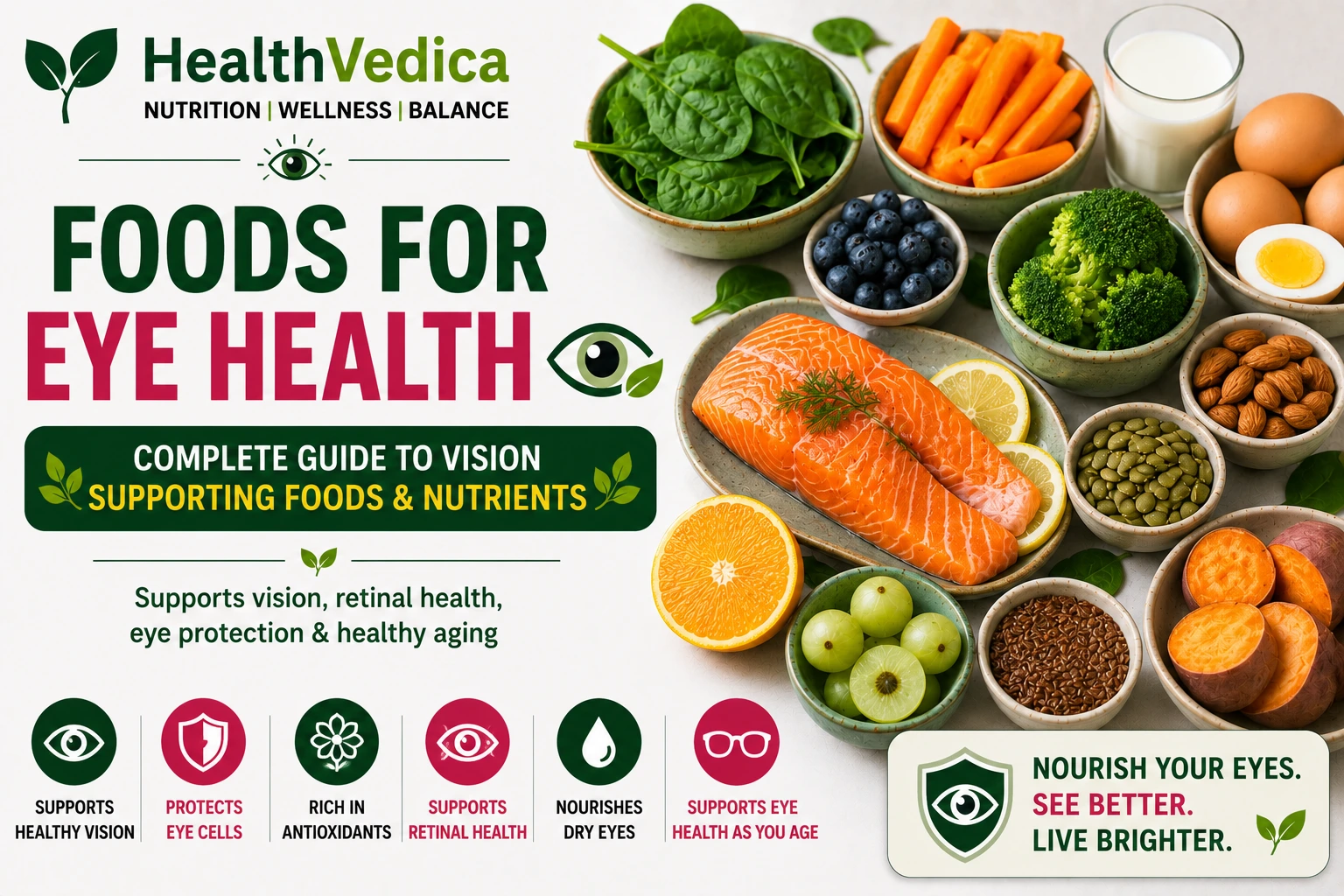
A varied diet rich in leafy greens, colourful vegetables, fruit, nuts, seeds and fish supplies nutrients involved in retinal and general eye health. But carrots or any other food cannot correct refractive error or replace treatment for eye disease.
For eye health, the goal is to support the tissues of the eye and reduce modifiable risk factors — not promise sharper eyesight from a single food.
👁️ The Nutrients That Matter
| Nutrient | Role | Indian Food Sources |
|---|---|---|
| Vitamin A / provitamin A carotenoids | Normal retinal function and vision | Carrot, pumpkin, sweet potato, leafy greens |
| Lutein + zeaxanthin | Concentrated in retina; antioxidant/light-filtering roles | Leafy greens, egg yolk, some colourful vegetables |
| Vitamin C | Antioxidant support | Amla, guava, citrus |
| Vitamin E | Cell protection | Nuts and seeds |
| Zinc | Normal visual function and retinal metabolism | Pulses, seeds, dairy/animal foods |
| Omega-3 fats | Structural role in retina and overall nutrition | Fatty fish, walnuts, flaxseed (ALA) |
🥕 Carrots Are Useful — Just Not Magic
Carrots supply beta-carotene, which the body can convert to vitamin A. Vitamin A is important for normal vision. However, eating extra carrots does not keep increasing eyesight beyond what adequate vitamin A status supports.
🥬 Leafy Greens Deserve More Attention
Spinach, amaranth, methi and other leafy greens provide lutein and zeaxanthin. The National Eye Institute notes that diets rich in green leafy vegetables are associated with lower risk of developing age-related macular degeneration (AMD), while AREDS2 supplement benefits are specific to people with appropriate stages of AMD — not to everyone with normal eyes.
🐟 Fish, Nuts and Seeds
Fatty fish provide EPA and DHA. Walnuts and flaxseed provide ALA. These are valuable components of an overall heart- and brain-healthy pattern, although supplements should not be presented as a guaranteed way to prevent eye disease.
💊 What About AREDS2?
AREDS2 is not a general 'eye vitamin'. The formula was studied in people with intermediate or late AMD and can slow disease progression in appropriate patients. The National Eye Institute specifically notes that people without AMD or with early AMD do not get the same treatment indication. Speak with an eye specialist before buying high-dose eye supplements.
💻 Digital Eye Strain Is Different
Screen-related discomfort is more commonly about prolonged near work, reduced blinking, glare, posture and dry-eye symptoms than a vitamin deficiency. Use sensible screen habits: regular distance breaks, comfortable text size, appropriate lighting and evaluation for persistent dry-eye or vision symptoms.
👁️ A Simple Indian Eye-Health Plate
Breakfast: eggs or dal-based breakfast + fruit.
Lunch: leafy-green vegetable + dal + whole grain + salad.
Snack: guava/amla/orange + nuts.
Dinner: fish/tofu/paneer + colourful vegetables + whole grain.
🚨 Do Not Use Food to Delay Eye Care
Sudden vision loss, new flashes/floaters, eye pain, a curtain-like shadow, significant redness with vision change or rapidly worsening vision requires prompt eye evaluation.
✅ Bottom Line
Eat for the retina, not for a myth. Leafy greens, colourful vegetables, fruit, nuts, seeds and fish provide important nutrients; regular eye examinations remain essential.
📚 Trusted Sources & Further Reading
This guide is educational and is not a substitute for diagnosis or treatment. Nutrient and dietary guidance is aligned where applicable with Indian nutrition guidance and major clinical references.