🥗 What Is an Anti-Acne Diet?
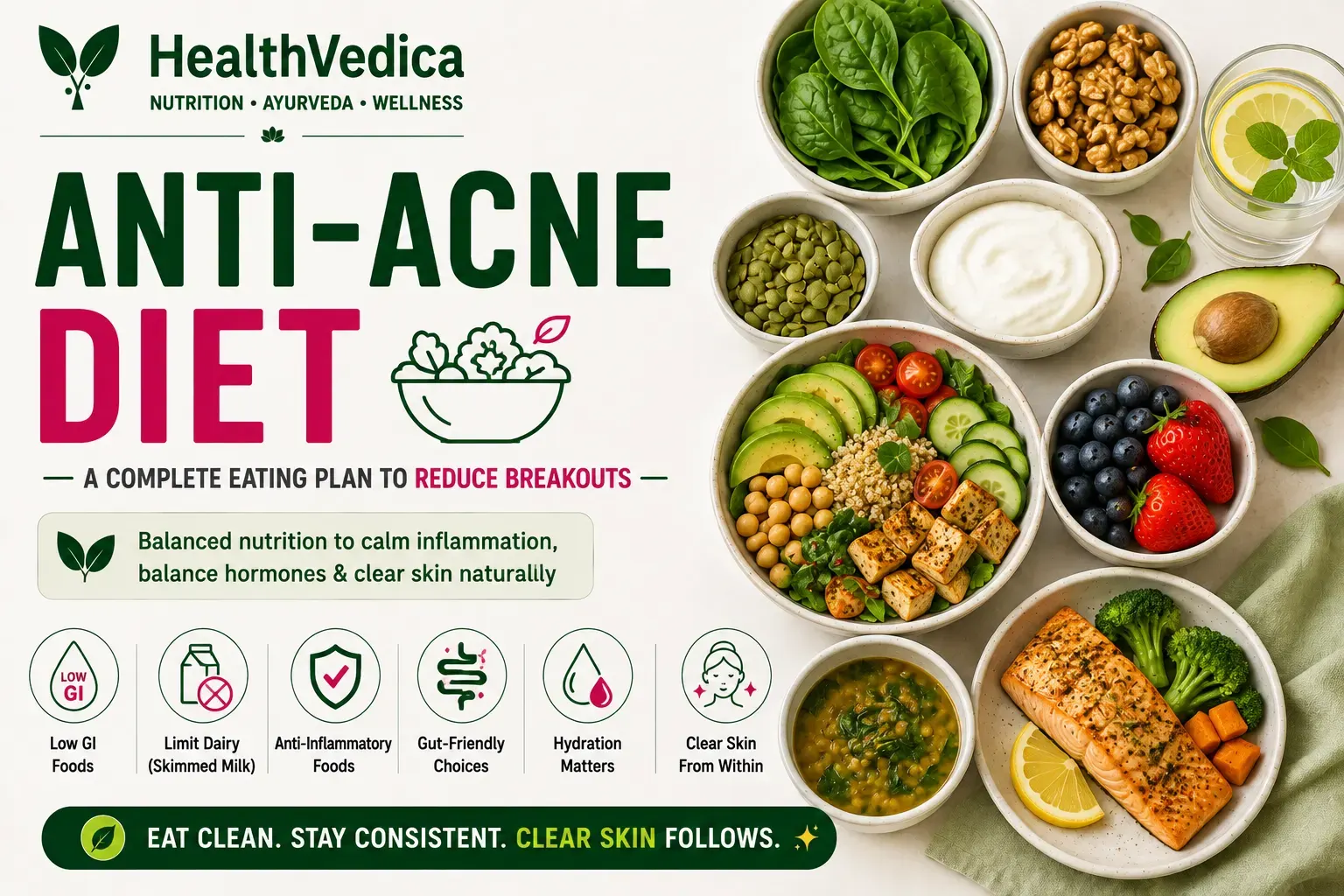
An anti-acne diet is not a crash diet and it is not a promise that food alone will clear your skin. It is a practical eating pattern that emphasizes minimally processed foods, vegetables, pulses, adequate protein and lower-glycemic carbohydrate choices while reducing frequent sugary and highly refined foods.
Small clinical studies suggest that lower-glycemic diets may reduce acne lesions, but the evidence is not definitive. Acne remains a multi-factorial condition.
🔬 The 3 Principles
1. Reduce high-glycemic eating. Replace frequent sugary drinks, sweets and refined snacks with vegetables, pulses, whole grains and other higher-fibre choices.
2. Assess dairy rather than automatically banning it. Cow's milk has shown an association with acne in some studies, but responses vary. The evidence for yogurt and cheese is less concerning.
3. Build a nutrient-dense plate. Include protein, vegetables, fibre and healthy fats rather than relying on restrictive food lists.
📊 Eat More vs Limit More Often
| Category | Choose More Often | Limit More Often |
|---|---|---|
| Carbohydrates | Millets, whole grains, pulses, vegetables | Refined bakery foods, sugary cereals and sweets |
| Protein | Dal, beans, eggs, tofu, paneer, fish | Highly processed meat products |
| Fats | Nuts, seeds, fish and other unsaturated-fat sources | Frequent deep-fried foods |
| Dairy | Monitor individual response | Consider reducing milk/whey if clearly linked to breakouts |
| Beverages | Water, unsweetened drinks | Sugary drinks and frequent sweetened beverages |
🍽️ Sample Indian Anti-Acne Day
Breakfast: Vegetable besan chilla + guava/amla/orange. Snack: A small portion of walnuts or pumpkin seeds. Lunch: Dal + vegetables + millet or rice + curd if tolerated. Evening: Unsweetened tea or green tea + fruit. Dinner: Tofu/paneer/egg/fish + vegetables + roti or another whole-food carbohydrate.
🥛 Should You Stop Milk?
Not automatically. If you suspect milk or whey protein is worsening your acne, change one variable at a time and monitor your skin for several weeks. The American Academy of Dermatology notes that cow's milk has a more consistent acne association than yogurt or cheese.
⏳ How Long Should You Try It?
Do not expect meaningful conclusions after three days. A structured trial over several weeks is more useful. Keep your skincare and medications stable where possible so you can tell what is actually changing.
⚠️ Important
A diet should not replace evidence-based acne treatment, particularly for painful, scarring or moderate-to-severe acne. Delaying treatment can increase the risk of persistent marks and scars.
📌 Bottom Line
The goal is not to eat perfectly. Reduce the dietary patterns most plausibly linked to acne, eat a varied nutrient-dense diet and track your personal response. A sustainable pattern is more useful than an unnecessarily restrictive acne food list.