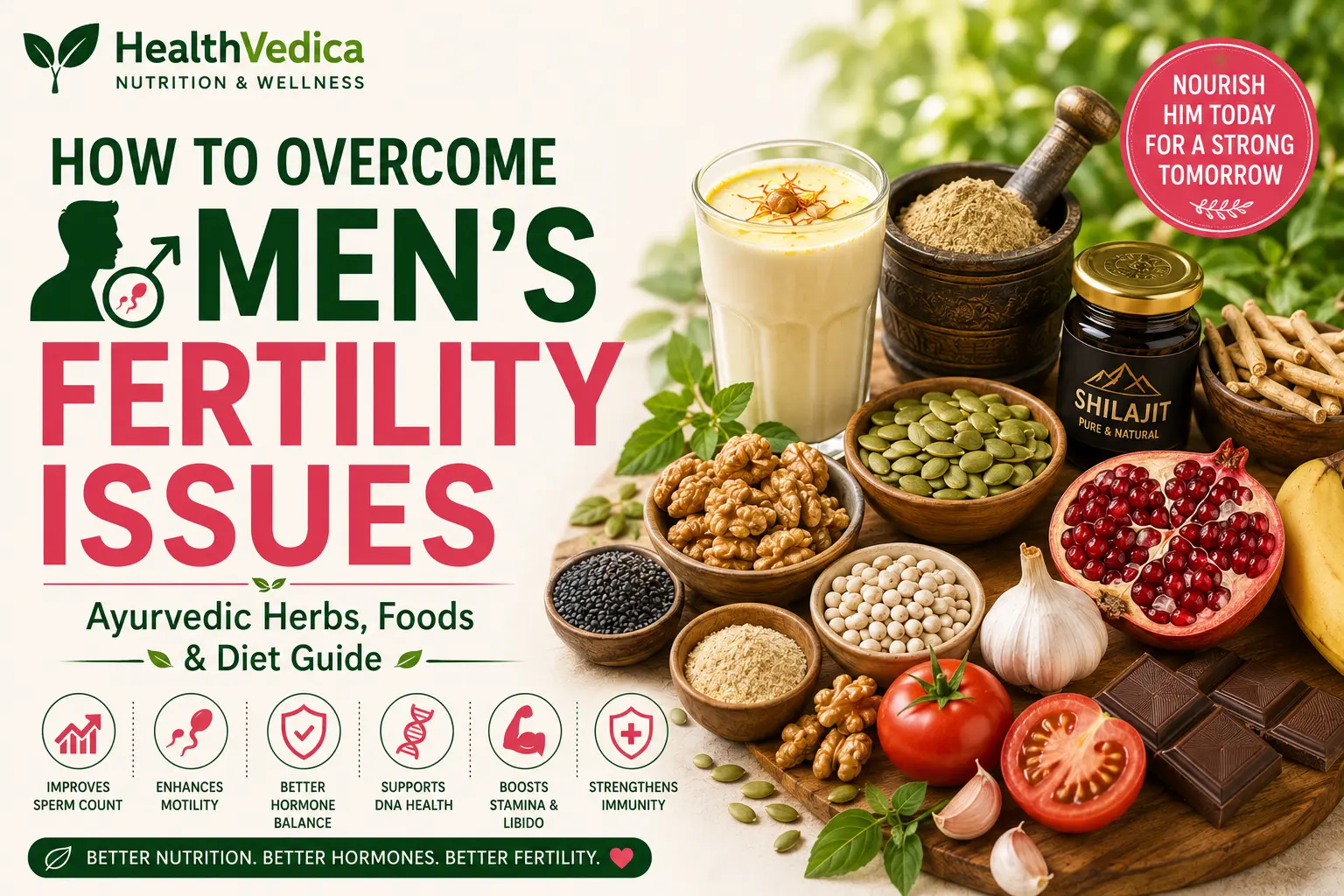
👨 Male Fertility Diet: What Actually Helps Sperm Health?
Male fertility is not just about “more sperm.” A semen analysis looks at several parameters, and fertility can be affected by testicular health, hormones, infections, varicocele, medications, genetics, lifestyle and environmental exposures. A food-first approach can improve nutritional quality, but no Indian food or Ayurvedic herb is a guaranteed sperm-count booster.
AUA/ASRM guidance recommends that infertile men be evaluated appropriately and notes that the clinical utility of antioxidant and vitamin supplements remains uncertain. Testosterone treatment is also a special issue: testosterone monotherapy should not be prescribed to men who want current or future fertility because external testosterone can suppress sperm production. [1]
⭐ The Male Fertility Basics
| Priority | Why It Matters | Indian Food Examples |
|---|---|---|
| Protein | Supports overall nutritional adequacy and tissue maintenance | Dal, chana, eggs, curd, paneer, fish, chicken |
| Zinc | Needed for normal reproductive and cellular functions | Pumpkin seeds, legumes, meat, dairy |
| Selenium | Supports antioxidant enzymes and thyroid function | Eggs, fish, meat, nuts where appropriate |
| Folate & B12 | Support cell division and normal blood formation | Greens, pulses, eggs, dairy and fortified foods |
| Unsaturated fats | Useful for an overall heart-healthy dietary pattern | Walnuts, ground flax, chia, fish, nuts |
| Fruit & vegetables | Provide vitamin C, carotenoids and polyphenols | Amla, guava, tomatoes, citrus, greens, peppers |
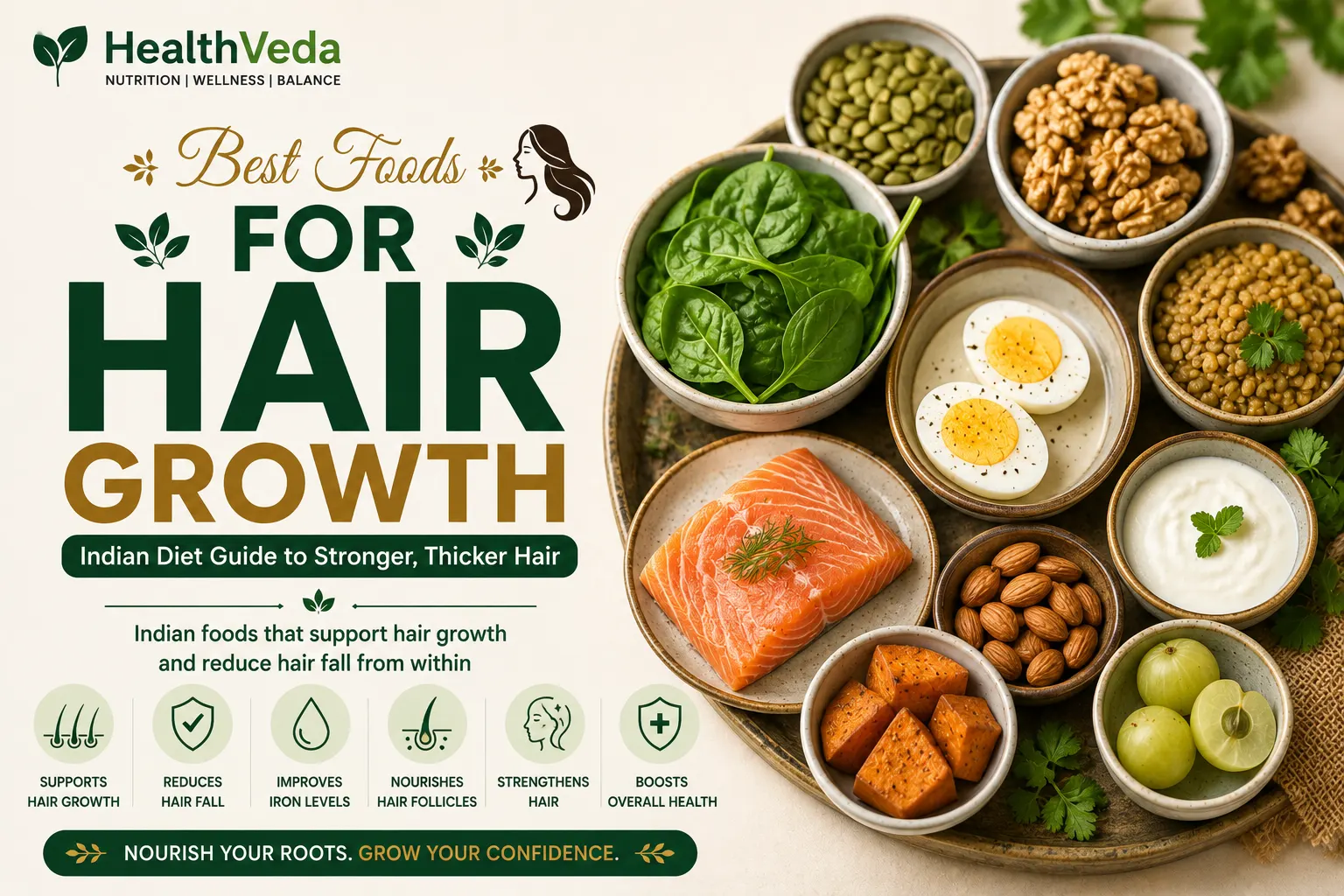
🥗 Best Foods to Build Into a Sperm-Supportive Indian Diet
Tomatoes: rich in lycopene and an easy addition to curries, salads and cooked dishes. Human research on lycopene and semen parameters is promising but does not make tomatoes a standalone treatment.
Pumpkin seeds: a practical zinc-rich food. Use a modest serving as part of a varied diet instead of treating them as a megadose supplement.
Walnuts: provide ALA omega-3 and unsaturated fats. They fit well into an overall heart-healthy eating pattern.
Eggs: provide high-quality protein, selenium, B12 and choline. Boiled eggs or egg bhurji can be convenient options.
Amla, guava and citrus: useful vitamin-C-rich foods that add variety without relying on sugary juices.
Fish: can provide protein, omega-3 fats, vitamin D and selenium. Choose locally appropriate lower-mercury options and follow pregnancy-related fish advice when the couple is planning conception.
Dal and beans: affordable sources of protein, folate, iron and fibre. Pairing pulses with vegetables creates a more nutrient-dense meal than relying mainly on refined carbohydrates.
🌿 Ashwagandha, Shilajit & Other Ayurvedic Herbs: Keep the Claims Proportional
Ministry of AYUSH resources recognise herbs such as Ashwagandha and Shatavari within Ayurveda. That establishes their place in traditional medicine, not proof that a particular preparation increases pregnancy or live-birth rates. [2]
Ashwagandha: some human studies have reported changes in semen parameters in specific groups of men, but results should not be turned into a universal “167% increase” promise. Product quality, preparation, population and outcome all matter.
Shilajit: purified preparations have been studied for male reproductive and testosterone-related outcomes, but raw or contaminated products are a concern. Only use a quality-controlled product and discuss it with a clinician if you have medical conditions or take medication.
Kaunch Beej (Mucuna pruriens) and Safed Musli: traditional Vajikarana ingredients with ongoing research, but they should be presented as traditional or emerging evidence, not guaranteed infertility cures.
🚫 Lifestyle Factors That Can Work Against Fertility
| Factor | What the evidence supports | Practical move |
|---|---|---|
| Smoking / tobacco | Associated with poorer reproductive outcomes and lower semen parameters | Quit rather than trying to “offset” smoking with supplements |
| Anabolic steroids / unsupervised testosterone | Can suppress sperm production | Do not use for muscle gain or “low testosterone” without specialist care |
| Obesity | Associated with reduced fertility in men | Use sustainable nutrition and physical activity |
| Heavy alcohol use | Can worsen aspects of reproductive health | Reduce/avoid and discuss with a clinician when actively trying to conceive |
| Heat exposure | Testicular heat is a plausible and studied reproductive stressor; evidence for specific everyday exposures varies | Avoid prolonged high-heat exposure and address occupational risks |
🧪 When a Semen Analysis Is More Useful Than Another Supplement
If conception has not occurred, or if semen parameters are already abnormal, testing can identify whether the problem is count, motility, morphology or another issue. AUA/ASRM guidance also emphasises looking for underlying causes rather than treating every abnormal result with supplements. [1]
Get evaluated sooner with a history of testicular injury, undescended testis, previous pelvic/testicular surgery, varicocele, sexual dysfunction, known hormonal problems, or prior chemotherapy/radiation.
🍽️ Simple Indian Day for Sperm-Supportive Nutrition
Breakfast: vegetable omelette + whole-grain or millet option + fruit.
Lunch: dal/rajma/chicken/fish + vegetables + roti or rice + curd.
Snack: fruit + a small serving of walnuts or pumpkin seeds.
Dinner: vegetables + protein + moderate whole-grain/millet portion.
Drinks: water, unsweetened tea/coffee in moderation; avoid turning juices, energy drinks and sugary beverages into daily habits.
✅ The 90-Day Mindset — Without the Marketing Hype
Sperm production is a continuous biological process, so reproductive changes take time. A healthy 2–3 month period of better sleep, smoking cessation, improved diet, exercise and medical treatment of identifiable problems is more meaningful than a short “fertility detox.” Retesting should be guided by your doctor and semen-analysis findings.
📚 Sources & Editorial Note
Nutritional framing follows ICMR-NIN dietary guidance and Indian nutrient recommendations. Ayurveda/herbal sections distinguish traditional use from clinical evidence and include Ministry of AYUSH safety context. Male infertility claims are cross-checked against AUA/ASRM guidance.