blogs

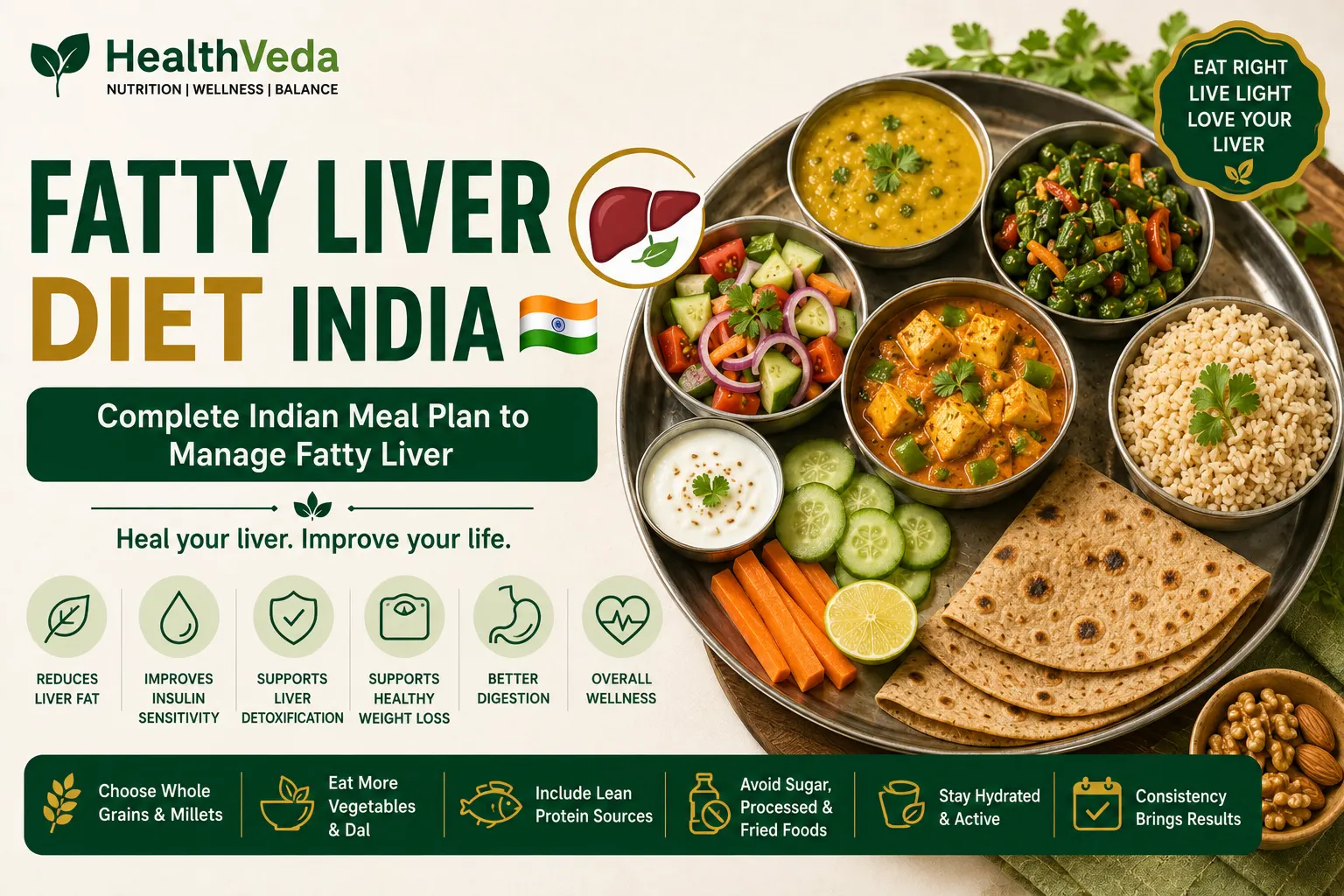
Fatty Liver Diet India ๐Ÿ‡ฎ๐Ÿ‡ณ: Complete Indian Meal Plan to Manage Fatty Liver

Last updated:
๐ŸŒฟ Complete Indian diet plan structured specifically for fatty liver management
Fatty Liver Diet India โ€” Nutrition, Health Benefits & Remedies
Fatty Liver Diet India: Complete Indian Meal Plan | Health Vedica
โš ๏ธ Medical Disclaimer: This content is for informational purposes only and does not constitute medical advice. Always consult a qualified healthcare professional for diagnosis and treatment.

๐Ÿ‡ฎ๐Ÿ‡ณ Building a Fatty Liver Diet Around Indian Staples

Managing fatty liver in an Indian context does not require abandoning Indian food โ€” it requires restructuring the proportions and swapping specific high-impact ingredients while keeping traditional cooking largely intact. The biggest dietary shifts needed are reducing white rice and maida dominance, eliminating sugary beverages, and increasing vegetable and legume proportion on the plate, while continuing to use traditional spices, dals, and cooking methods that are already liver-supportive.

๐Ÿ”ฌ The Core Principles Behind This Plan

Carbohydrate quality over elimination: Fatty liver management does not require a low-carbohydrate diet in the extreme sense, but it does require shifting from refined carbohydrates (white rice, maida) to fibre-rich whole grains (millets, brown rice, whole wheat) that produce a gentler glucose and insulin response, directly reducing the liver's fat-synthesis trigger.

Consistent protein at every meal: Adequate protein from dal, paneer, fish, or eggs supports liver repair processes and helps maintain muscle mass during any associated weight loss, which protects metabolic health.

Plate proportion restructuring: A practical target is half the plate as vegetables, a quarter as protein, and a quarter as whole grain carbohydrate โ€” a meaningful shift from the rice or roti-dominant proportions common in many Indian meals.

๐Ÿ“Š 7-Day Fatty Liver Friendly Indian Meal Plan

Core principles: No sugary drinks | Millets/brown rice over white rice | Generous vegetables and dal | Garlic and turmeric daily | Fatty fish or walnuts for omega-3 | Black coffee or green tea over sweetened chai

Monday: Breakfast: Vegetable oats upma + black coffee | Lunch: Moong dal + jowar roti + lauki sabzi + salad | Dinner: Grilled fish or paneer + sautรฉed greens + small portion brown rice

Tuesday: Breakfast: Besan chilla + mint chutney | Lunch: Rajma + bajra roti + cucumber raita | Dinner: Mixed vegetable curry + 1 roti + dal soup

Wednesday: Breakfast: Vegetable poha (minimal oil) + green tea | Lunch: Chana dal + ragi roti + bhindi sabzi | Dinner: Egg curry or tofu + sautรฉed methi + roti

Thursday: Breakfast: Sprouts salad with lemon | Lunch: Toor dal + multigrain roti + salad + curd | Dinner: Fish curry + steamed vegetables + small brown rice

Friday: Breakfast: Vegetable daliya + black coffee | Lunch: Lobia curry + jowar roti + kachumber | Dinner: Paneer bhurji + sautรฉed greens + roti

Saturday: Breakfast: Moong dal chilla + chutney | Lunch: Dal + brown rice (small) + mixed sabzi + salad | Dinner: Grilled chicken or paneer + soup + 1 roti

Sunday: Breakfast: Idli + sambar (no coconut chutney excess) | Lunch: Festive dal + brown rice + 2 sabzi | Dinner: Light vegetable soup + roti + salad

๐Ÿšซ What to Eliminate First

Sugary tea, packaged juices, and soft drinks should be the first elimination โ€” these alone often drive a disproportionate share of liver fat accumulation. Deep-fried snacks (samosa, pakora, namkeen) and bakery items made with maida and refined sugar should be reduced to occasional rather than regular consumption. Excessive white rice, particularly large portions eaten without adequate vegetable or protein balance, should be moderated in favour of millet or brown rice alternatives.

โ“ Frequently Asked Questions

Common questions about Fatty Liver Diet India

Yes, but portion and type matter. Switching from white rice to brown rice, or reducing rice portion while increasing millet (jowar, bajra, ragi) and vegetable proportion, produces a gentler blood sugar response that supports liver health better than large portions of white rice. Complete elimination of rice is not necessary for most people; moderation and partial substitution with whole grains is the practical, sustainable approach.
Small amounts of ghee used for cooking or tempering (a teaspoon or so per meal) are generally acceptable in a fatty liver diet, since the primary driver of liver fat is excess sugar and refined carbohydrate, not moderate amounts of traditional fats. However, large quantities of any fat, including ghee, contribute to overall caloric surplus, which can work against liver health if it leads to weight gain. Moderation rather than elimination is the appropriate approach.
Some improvement in liver fat markers can be seen within 8-12 weeks of consistent dietary change, particularly when sugary beverages and refined carbohydrates are significantly reduced and replaced with whole foods. However, the timeline varies based on the severity of fatty liver, adherence to changes, and whether weight loss is also occurring. Regular monitoring through liver function tests and ultrasound, as advised by a doctor, is the most reliable way to track actual progress rather than relying on how one feels.
No, whole fruits should not be avoided, as they contain fibre that slows sugar absorption, unlike fruit juices which concentrate fructose without the fibre. Whole fruits in reasonable portions (one to two servings daily) are generally fine and even beneficial for fatty liver due to their antioxidant and fibre content. The concern is specifically with fruit juices, packaged fruit drinks, and excessive consumption of very high-sugar fruits in large quantities, not whole fruit in normal portions.
Some research suggests that time-restricted eating patterns may help reduce liver fat by improving insulin sensitivity and supporting modest weight loss, which indirectly benefits fatty liver. However, this is not a universally necessary approach, and the same benefits can be achieved through consistent calorie-appropriate meals with good food quality. Anyone considering intermittent fasting with an existing health condition like fatty liver should discuss it with a doctor first, particularly if there are other health conditions like diabetes involved.
Related Blogs
Insulin Resistance Diet Blogs
Jul 14, 2026
Insulin Resistance Diet
๐Ÿ’‰ Understanding Insulin Resistance Before Fixing ItInsulin resistance occurs when cells โ€” particula...
Read More
Best Foods for Strong Teeth & Gum Health Blogs
Jul 14, 2026
Best Foods for Strong Teeth & Gum Health
๐Ÿฆท India's Oral Health CrisisOral diseases affect nearly 95% of Indian adults, according to the Indi...
Read More
Best Winter Warming Foods Blogs
Jul 14, 2026
Best Winter Warming Foods
โ„๏ธ Why Winter Nutrition Matters More Than You ThinkWinter is one of the most pleasant seasons in Ind...
Read More
Foods That Should Not Be Eaten Together Blogs
Jul 14, 2026
Foods That Should Not Be Eaten Together
๐Ÿฝ๏ธ Food Combining: Ancient Wisdom or Modern Myth?Almost every Indian household has food rules passed...
Read More
High-Protein Vegetarian Foods for Muscle Building Blogs
Jul 14, 2026
High-Protein Vegetarian Foods for Muscle Building
๐Ÿƒ IntroductionIndia is a predominantly vegetarian nation โ€” with 30โ€“40% of the population eating no...
Read More
Sattvic Diet Guide Blogs
Jul 14, 2026
Sattvic Diet Guide
๐Ÿ•‰๏ธ What Is a Sattvic Diet?The Sattvic diet is an ancient Ayurvedic eating approach designed to promo...
Read More
Ragi vs Bajra Comparison Blogs
Jul 14, 2026
Ragi vs Bajra Comparison
๐ŸŒพ Calcium Champion vs Iron PowerhouseRagi (finger millet) and bajra (pearl millet) are both nutrien...
Read More
Kidney Stone Diet India Blogs
Jul 14, 2026
Kidney Stone Diet India
๐Ÿฉบ What Are Kidney Stones?Kidney stones are hard mineral deposits that form inside the kidneys when...
Read More
Postpartum Weight Loss Diet India Blogs
Jul 14, 2026
Postpartum Weight Loss Diet India
๐Ÿคฑ Understanding Postpartum Weight LossWeight gain during pregnancy is normal and necessary for a he...
Read More