Quick answer
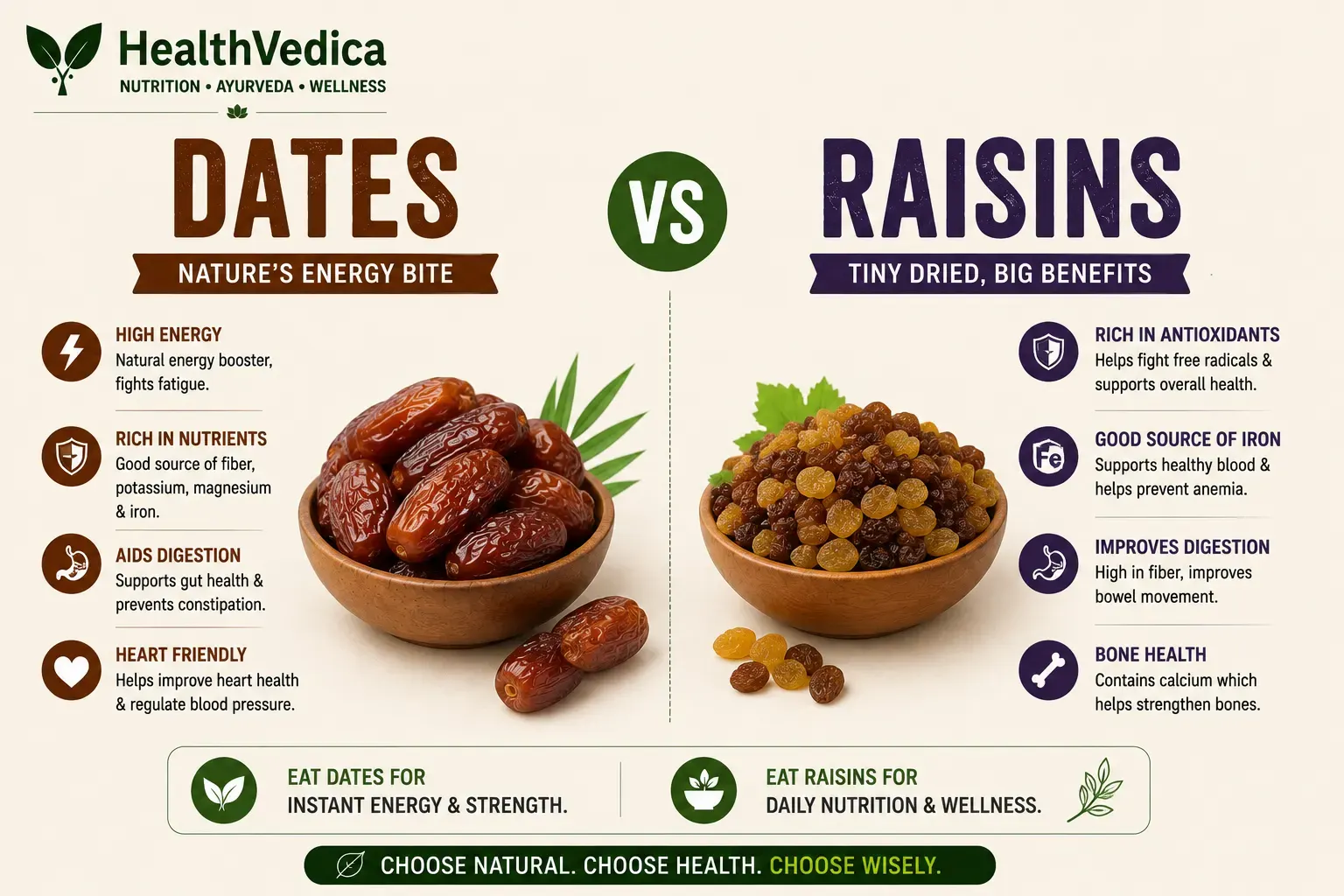
There is no single food that is automatically healthier for everyone. Dates vs Raisins Comparison are useful choices in different situations, and the better option depends on your overall diet, portion size, cooking method and personal needs. This guide compares the two foods in plain language so you can make an informed choice.
📊 Dates vs Raisins: Nutritional Comparison (per 100g, dried)
| Nutrient | Dates | Raisins | Advantage |
|---|---|---|---|
| Fibre | 6.7g | 3.7g | Dates (nearly double) |
| Glycaemic Index | 42–62 | ~64 | Dates (generally lower) |
| Potassium | 696mg | 749mg | Raisins (marginally higher) |
| Iron | 0.9mg | 1.9mg | Raisins |
| Natural sugars | ~63g | ~59g | Raisins (marginally lower) |
| Calories | 277 kcal | 299 kcal | Dates (marginally lower) |
| Magnesium | 54mg | 32mg | Dates |
✅ Where Dates Win
Higher fibre content: Dates provide nearly double the fibre of raisins per 100g, supporting greater satiety, better digestion, and a gentler impact on blood sugar despite their concentrated natural sugar content.
Lower glycaemic index: Dates generally have a lower glycaemic index than raisins, particularly certain varieties, making them a comparatively better choice when natural sweetness is needed without as sharp a blood sugar response.
Effective as a whole-food sugar substitute: Dates blend easily into a smooth paste that works well as a direct substitute for refined sugar in energy balls, smoothies, and Indian sweets, delivering fibre and minerals alongside sweetness.
✅ Where Raisins Win
Higher iron content: Raisins contain roughly double the iron of dates per 100g, making them a meaningfully useful snack for supporting iron intake, particularly relevant given how common iron deficiency is among Indian women.
Slightly lower sugar and calories per gram: Raisins contain marginally less natural sugar and are smaller and lighter per piece, making portion control easier for some people compared to the larger, denser texture of whole dates.
Versatility in traditional cooking: Raisins are a familiar addition to pulao, kheer, and a wide range of Indian sweets and savoury dishes where their small size integrates more easily than whole dates.
🍽️ Which Should You Choose?
For fibre, blood sugar management, and use as a natural sugar substitute in recipes, dates have the nutritional edge. For iron intake and easy portion-controlled snacking, raisins offer a genuine advantage. Both remain calorie-dense dried fruits that should be eaten in moderation — a small handful of either, roughly 20–30g, is a reasonable daily serving rather than unlimited snacking.
Sources and context
Nutrition guidance in this article is framed around Indian dietary guidance from ICMR–National Institute of Nutrition (ICMR-NIN). Where Ayurveda is discussed, it is presented as a traditional framework and kept separate from modern clinical evidence. The Ministry of AYUSH's published guidance emphasises factors such as food quality, preparation, quantity, timing and individual suitability; these principles are useful context, but they should not be treated as a substitute for diagnosis or medical treatment.
Important: Nutrition needs vary with age, pregnancy, medications and medical conditions. If you have diabetes, kidney disease, coeliac disease, a food allergy or another diagnosed condition, use personalised advice from a qualified clinician or dietitian.