🩺 What Should You Eat to Keep Your Kidneys Healthy?
Your kidneys quietly filter waste, balance fluids and minerals, help regulate blood pressure, and support red-blood-cell and bone health. The best diet for healthy kidneys is not a “detox” diet; it is a balanced eating pattern that helps control the biggest kidney-risk factors, especially high blood pressure, diabetes, excess sodium intake and unhealthy body weight.
For most healthy adults, that means plenty of vegetables and fruit, adequate protein, whole grains, pulses, nuts and seeds, and less highly processed food. Indian diets can fit this pattern very well.
Important: a general kidney-health diet is not the same as a chronic kidney disease (CKD) diet. Once kidney function is reduced, potassium, phosphorus, protein and fluids may need to be adjusted according to blood tests, CKD stage, medicines and dialysis status.
🔬 What the Kidneys Actually Do
| Kidney Function | Why It Matters |
|---|---|
| Filter waste from blood | Removes metabolic waste through urine |
| Balance fluids | Helps maintain the right amount of water in the body |
| Regulate electrolytes | Helps control sodium, potassium and other minerals |
| Support blood pressure | Kidneys participate in long-term blood-pressure regulation |
| Support red-blood-cell production | Kidneys make erythropoietin, a hormone involved in red-blood-cell production |
| Support bone health | Kidneys activate vitamin D as part of mineral and bone regulation |
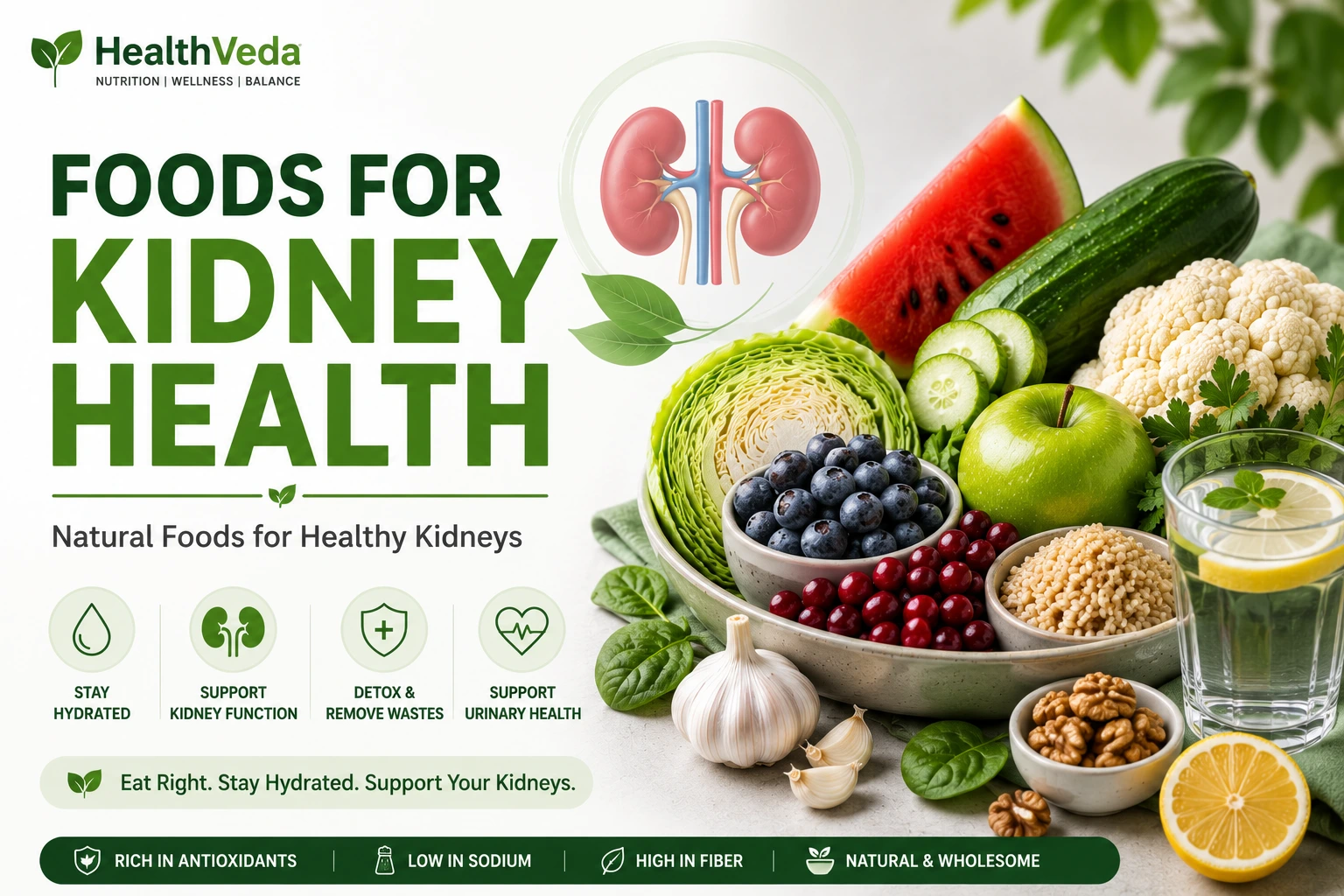
🥗 Best Foods for Healthy Kidneys
| Food Group | Indian Examples | Why It Fits a Kidney-Healthy Pattern |
|---|---|---|
| Vegetables | Lauki, cabbage, cauliflower, beans, capsicum, carrot | High nutrient density and naturally low in sodium |
| Whole grains | Oats, barley, whole wheat, millets | Provide fibre and help replace refined grains |
| Pulses | Moong, masoor, chana, rajma | Provide plant protein and fibre |
| Fruits | Apple, pear, guava, papaya, oranges | Provide fibre, vitamins and water |
| Healthy fats | Walnuts, flaxseed, nuts, seeds | Unsaturated fats support overall cardiovascular health |
| Flavour builders | Garlic, ginger, lemon, herbs, spices | Help reduce dependence on excess salt |
💧 How Much Water Is Good for Your Kidneys?
For people with healthy kidney function, drinking regularly through the day and responding to thirst is usually appropriate. More water is not automatically better. Excessive water intake can also be harmful in some medical situations.
During hot weather, exercise or heavy sweating, fluid needs rise. Water should usually be your main drink; unsweetened beverages can also contribute to total fluid intake.
🧂 The Kidney Habit Most Indians Should Watch: Salt
High sodium intake can raise blood pressure, and uncontrolled hypertension is a major cause and accelerator of kidney damage. A practical strategy is to reduce packaged snacks, instant noodles, salty sauces, papad, pickles and restaurant foods, while using lemon, garlic, ginger and spices for flavour.
Easy swap: do not simply remove salt from dal or sabzi. First reduce the biggest hidden sources of sodium in the meal.
🍎 Fruits: Healthy for Most People, but Not Automatically for Every CKD Patient
Whole fruit is generally part of a healthy eating pattern. However, people with CKD may need to modify fruit choices if their blood potassium is high or if their doctor has prescribed a potassium restriction. Lists that label every fruit as universally “kidney safe” can therefore be misleading.
For healthy adults, useful everyday choices include apple, pear, guava, papaya, orange and seasonal local fruit in sensible portions.
🌾 Whole Grains and Pulses
Replacing some refined grains with whole grains and pulses increases fibre and improves overall diet quality. Good Indian options include oats, barley, whole-wheat roti, jowar, bajra, moong dal and chana.
People with advanced CKD may need individualized advice about potassium, phosphorus and protein, so a general high-fibre list should not be copied blindly into a renal diet.
🚫 Foods to Limit for Long-Term Kidney Protection
| Limit | Why |
|---|---|
| Very salty packaged foods | Can increase sodium intake and blood pressure |
| Processed meats | Often high in sodium and additives |
| Sugary drinks | Add excess sugar and calories; regular intake increases metabolic risk |
| Frequent deep-fried fast food | Often calorie-dense and high in unhealthy fats/salt |
| Excess alcohol | Can complicate blood-pressure and metabolic control |
🌿 Ayurveda and Kidney Health: Keep the Claim Precise
Ayurveda contains many traditional herbs associated with urinary and metabolic health, and the Ministry of Ayush maintains official medicinal-plant and research resources. However, traditional use is not the same as proof that an herb can repair damaged kidneys.
Herbs such as Punarnava, Gokshura and other classical ingredients are documented within Indian traditional medicine systems. Anyone with CKD, reduced kidney function, a transplant, or multiple medicines should discuss herbal products with a qualified clinician because herbs can interact with treatment and product quality varies.
🩺 When You Should Get Your Kidneys Checked
Do not wait for symptoms if you have diabetes, high blood pressure, a strong family history of kidney disease, recurrent kidney stones, or another major risk factor. A clinician may use blood creatinine/eGFR and urine albumin testing to look for kidney damage.
🍽️ Simple Kidney-Healthy Indian Day
Breakfast: Vegetable oats or moong dal chilla + plain curd
Mid-morning: One whole fruit such as apple or guava
Lunch: 2 whole-wheat/jowar rotis + dal + two vegetable portions + salad
Evening: Unsweetened buttermilk or fruit + a small portion of nuts
Dinner: Vegetable khichdi or roti + mixed vegetables + a protein source
Throughout the day: Water according to thirst, climate and individual medical needs
⚠️ If You Already Have Chronic Kidney Disease
A CKD diet may be very different from a general healthy-kidney diet. Depending on kidney function and laboratory results, your care team may ask you to change sodium, potassium, phosphorus, protein or fluid intake. The right plan can also change over time.
💡 Final Takeaway
The most useful kidney-health diet is surprisingly simple: less sodium, fewer highly processed foods, better control of blood pressure and blood sugar, more vegetables and whole foods, and adequate—not excessive—fluid intake.
Think long-term. A kidney-supportive diet is less about one superfood and more about the pattern you repeat every day.