blogs

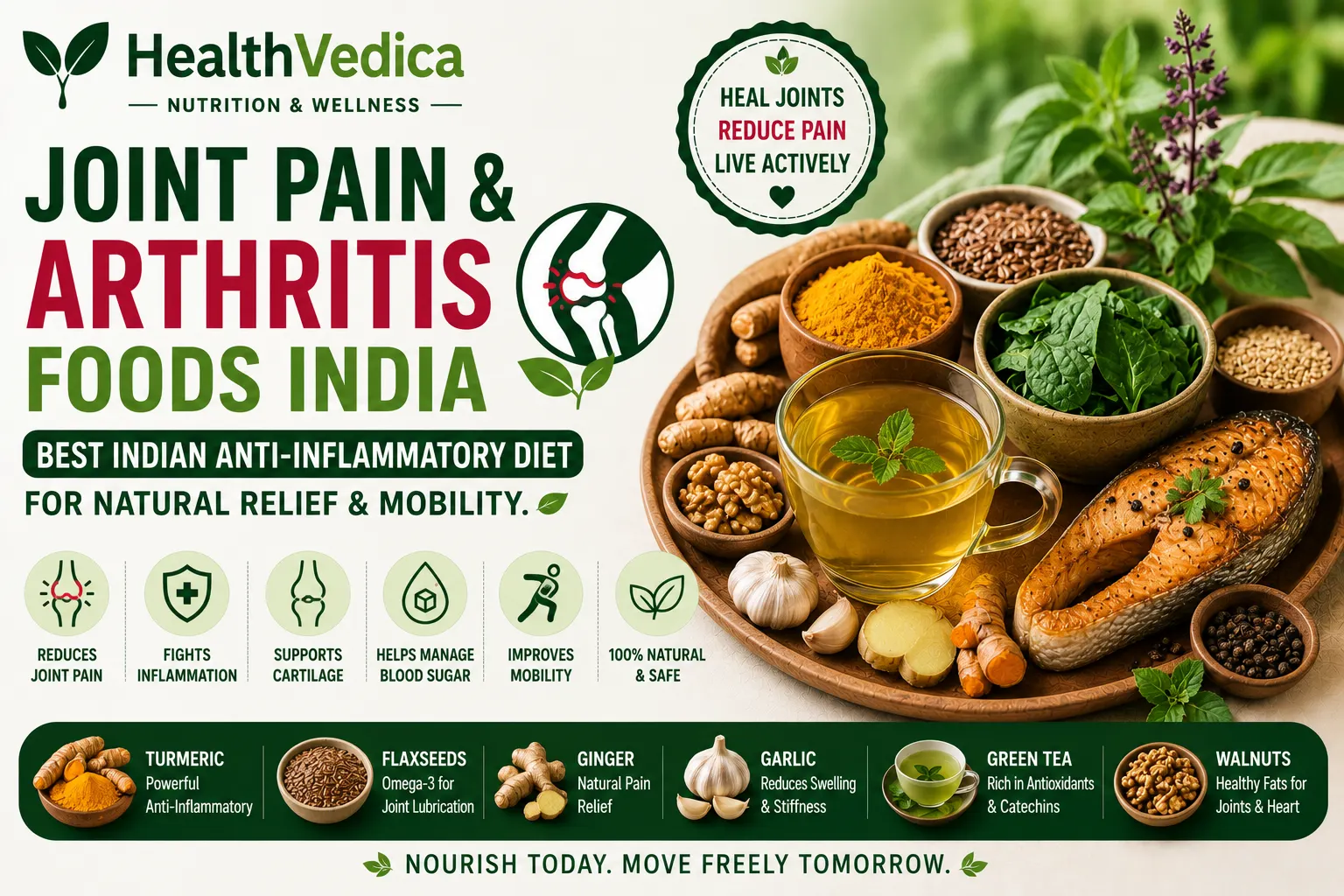
Joint Pain & Arthritis Foods India 🦴 – Best Indian Anti-Inflammatory Diet for Natural Relief

Last updated:
🌿 Anti-inflammatory Indian diet for joint pain relief
Best Foods for Joint Pain and Arthritis Relief β€” Nutrition, Health Benefits & Remedies
Joint Pain & Arthritis Foods: Best Indian Diet for Natural Pain Relief | Health Vedica
⚠️ Medical Disclaimer: This content is for informational purposes only and does not constitute medical advice. Always consult a qualified healthcare professional for diagnosis and treatment.

🦴 Arthritis in India: A Growing Crisis

Arthritis affects over 180 million Indians β€” a prevalence higher than heart disease and cancer combined. Osteoarthritis (OA β€” joint cartilage degeneration) is the most common form, affecting nearly 30% of Indians over 60. Rheumatoid arthritis (RA β€” autoimmune joint inflammation) affects approximately 0.5–1% of the population, disproportionately affecting women. Both conditions cause debilitating pain, reduced mobility, and significantly diminished quality of life.

India has remarkable traditional resources for joint health. Turmeric, ginger, Shallaki (Boswellia), Guggul, Nirgundi, and sesame oil β€” all Indian-origin plants and preparations β€” have extensive clinical evidence for arthritis management. Combined with anti-inflammatory dietary patterns, these provide a powerful, culturally resonant approach to joint pain that complements conventional treatment.

The fundamental insight: arthritis, whether osteoarthritis or rheumatoid arthritis, is fundamentally an inflammatory disease. Diet either fuels or dampens this inflammation. An anti-inflammatory Indian diet β€” rich in turmeric, omega-3 fatty acids, antioxidants, and low in processed foods and refined carbohydrates β€” can measurably reduce joint pain, swelling, and stiffness within weeks.

πŸ”¬ Inflammation, Cartilage, and the Role of Nutrition

Osteoarthritis mechanism: Mechanical stress + metabolic inflammation β†’ cartilage matrix breakdown (via matrix metalloproteinases) β†’ bone-on-bone contact β†’ pain and further inflammation. Obesity dramatically accelerates OA β€” each kilogram of excess weight adds 4 kg of force on knee joints with each step. Anti-inflammatory nutrition and weight management are the two most evidence-based non-surgical OA interventions.

Rheumatoid Arthritis mechanism: Autoimmune B and T cell attack on synovial membrane β†’ synovitis β†’ joint destruction. Inflammatory cytokines (TNF-alpha, IL-6, IL-1Ξ²) drive the disease. Omega-3 fatty acids, curcumin, and several plant polyphenols inhibit these cytokines through multiple pathways β€” providing adjunct anti-inflammatory benefit alongside disease-modifying drugs.

Gut microbiome and arthritis: RA patients show characteristic gut dysbiosis β€” reduced microbial diversity and specific bacterial imbalances that promote immune dysregulation. Probiotic interventions improve RA outcomes in clinical trials, confirming the gut-joint connection. Anti-inflammatory diets that support gut health may reduce autoimmune activity in RA.

πŸ“Š Anti-Inflammatory Nutrients for Joint Health

Nutrient/CompoundJoint BenefitMechanismTop Indian Sources
CurcuminReduces pain, swellingNF-kB, COX-2, TNF-alpha inhibitionTurmeric + black pepper
Omega-3 (EPA/DHA)Reduces inflammation, morning stiffnessInhibits leukotriene B4, PGE2Flaxseeds, fatty fish, walnuts
Boswellic AcidsReduces swelling, improves mobilityInhibits 5-lipoxygenaseShallaki (Boswellia serrata)
Gingerols/ShogaolsPain reduction, anti-inflammatoryCOX and LOX inhibitionFresh and dry ginger
AnthocyaninsCartilage protection, antioxidantReduces MMP activityJamun, pomegranate, dark grapes
Vitamin DReduces RA activity, bone healthImmune modulation, calciumSunlight, fatty fish, fortified milk
SeleniumAntioxidant in joint fluidGPx enzyme protectionBrazil nuts, eggs, tuna
Collagen precursorsCartilage repair supportProvides building blocksBone broth, eggs, dal

βœ… Top Indian Foods for Joint Pain Relief

1. Turmeric (Haldi) β€” Clinically Proven Joint Medicine
Turmeric's curcumin is the most extensively studied natural anti-inflammatory compound for arthritis. Multiple RCTs directly comparing curcumin with NSAIDs (ibuprofen, diclofenac) for osteoarthritis and RA have found curcumin equally effective for pain and function improvement β€” with dramatically fewer gastrointestinal side effects. A landmark 2014 study found 1500mg curcumin daily was equivalent to 1200mg ibuprofen for knee OA, with superior GI safety profile. Use liberally in all cooking with black pepper (20mg piperine increases curcumin absorption 2000%). For therapeutic effect, curcumin supplements (500–1000mg standardised extract) provide more consistent doses than cooking alone.

2. Ginger (Adrak) β€” Nature's COX Inhibitor
Ginger's active compounds (6-gingerol, 6-shogaol) inhibit both COX-1 and COX-2 enzymes β€” the same mechanism as ibuprofen and aspirin β€” plus 5-lipoxygenase (additional anti-inflammatory pathway not addressed by standard NSAIDs). Clinical studies show ginger extract reduces OA knee pain by 40% and reduces morning stiffness in RA patients significantly. Fresh ginger in cooking and ginger tea (1 inch fresh ginger boiled in water) provides therapeutic doses. A classic combination: ginger + turmeric tea β€” works synergistically for joint inflammation.

3. Shallaki (Boswellia serrata) β€” India's Arthritis Herb
Boswellia is India's most clinically validated Ayurvedic herb for arthritis. Boswellic acids inhibit 5-lipoxygenase (an inflammatory enzyme not addressed by standard NSAIDs), reduce synovial inflammation, inhibit cartilage-destroying enzymes, and improve joint blood supply. Multiple RCTs show Boswellia significantly reduces OA pain, swelling, and stiffness within 8 weeks. Particularly effective for knee osteoarthritis β€” some studies show Boswellia extract equivalent to prescription COX-2 inhibitors. Available as Shallaki capsules (standardised for boswellic acid content) or in classical preparations like Yogaraja Guggul.

4. Omega-3 Rich Foods (Flaxseeds and Fish)
EPA and DHA omega-3 fatty acids are converted to resolvins and protectins β€” bioactive molecules that actively resolve inflammation (not just suppress it). In RA patients, 2–4g omega-3 daily significantly reduces morning stiffness duration, tender joint count, and allows reduction in NSAID dosage. In OA, omega-3 reduces inflammatory markers in joint fluid. Ground flaxseeds (1 tbsp daily) provide ALA omega-3 β€” sufficient for general anti-inflammatory benefit. For RA patients, marine omega-3 from fatty fish (surmai, bangda β€” 2–3 servings weekly) or fish oil supplements provide EPA/DHA with superior bioavailability.

5. Pomegranate (Anar)
Pomegranate's punicalagins and ellagic acid inhibit matrix metalloproteinases (MMPs) β€” the enzymes that destroy joint cartilage in OA. A University of Case Western Reserve study showed pomegranate extract significantly blocked the inflammation cascade driving OA cartilage breakdown. Clinical studies in RA patients show pomegranate extract reduces disease activity scores, CRP (inflammation marker), and disease severity. Drink 100–200ml pure pomegranate juice daily or eat Β½ pomegranate β€” choose without added sugar.

6. Sesame Seeds and Sesame Oil (Til)
Sesame has a special place in Ayurvedic joint treatment β€” sesame oil massage (Abhyanga) is the classical Vata-reducing treatment for joint pain. Internally, sesame seeds provide: calcium (for bone health), sesamol and sesamin (powerful antioxidants), and lignans (anti-inflammatory). A Korean study found sesamin supplementation reduced inflammatory joint markers equivalent to low-dose steroids in an arthritis model. Traditional Indian practice of eating til laddoo and cooking in til oil provides these joint-protective compounds.

7. Amla (Indian Gooseberry)
Amla's extraordinary antioxidant content (emblicanins, vitamin C) reduces oxidative stress in joint tissue β€” a major driver of cartilage degradation. Vitamin C is essential for collagen synthesis in cartilage. Studies show amla extract reduces inflammatory cytokines in arthritis models. Traditionally, Amla Churna is prescribed in Ayurveda for Sandhi Vata (joint disorders). The combination of Triphala (containing amla) taken regularly may slow joint degeneration through antioxidant and anti-inflammatory mechanisms.

🌿 Ayurvedic Joint Treatment (Sandhi Vata Chikitsa)

Arthritis in Ayurveda is primarily classified as Sandhi Vata (Vata in joints β€” causing dryness, pain, crepitation) or Ama Vata (rheumatoid arthritis β€” caused by Ama/toxins + Vata). The treatments differ significantly:

Sandhi Vata (OA) treatment: Snehana (oleation β€” internal and external oil therapy), Swedana (sudation β€” heat treatments), Basti (medicated enema β€” considered the most effective Vata treatment), and anti-Vata diet (warm, oily, well-cooked foods; avoid cold, dry, raw foods).

Ama Vata (RA) treatment: First eliminate Ama through Langhana (fasting or light diet) and deepana-pachana (digestive herbs like trikatu, chitrak), then reduce Vata and inflammation. Yogaraja Guggul (guggul + multiple joint herbs), Maharashtrikas Taila for external massage, and Shallaki are cornerstones.

Eranda (Castor oil): 5–10ml warm castor oil at bedtime in warm milk or ginger tea β€” classical and remarkably effective Ayurvedic laxative and Vata-reducing treatment for joint pain. Ricinoleic acid in castor oil is potently anti-inflammatory. Start with 5ml and increase as tolerated.

🚫 Foods That Worsen Joint Pain

Refined carbohydrates and sugar: Promote systemic inflammation and weight gain β€” both directly worsening joint pain. Reduce maida, white rice (in excess), sugar, and packaged snacks.

Nightshades (for some individuals): Tomatoes, brinjal, capsicum, and potatoes contain solanine β€” a compound that some arthritis patients report worsens inflammation. The evidence is anecdotal rather than robust, but a 4-week nightshade elimination trial is worth attempting for those with poorly controlled joint pain.

Excess red meat: Arachidonic acid in red meat is converted to pro-inflammatory leukotrienes. For RA patients especially, reducing red meat and increasing fish and plant protein reduces inflammatory burden.

Omega-6 dominant oils: Excessive refined sunflower and soybean oil (very high omega-6) feeds the inflammatory cascade. Switch to mustard oil, groundnut oil, or ghee.

πŸ’‘ Daily Anti-Arthritis Indian Routine

Morning: Warm water + ginger + lemon (anti-inflammatory start) | Sesame oil self-massage (Abhyanga) for 10 minutes before shower | 2 Brazil nuts (selenium)

Breakfast: Ragi dosa or oats + 1 tbsp ground flaxseeds | Turmeric in morning tea

Lunch: Dal + millet roti (turmeric in dal) + green vegetable | Pomegranate after meal

Evening: Ginger-turmeric tea (ginger + turmeric + black pepper + honey) | Soaked walnuts (4–5 halves)

Dinner: Light, warm dinner | Fish (2–3Γ—/week) or flaxseed-rich vegetarian meal | Castor oil in warm milk at bedtime (5–10ml, 3–4Γ—/week for Vata types)

❓ Frequently Asked Questions

Common questions about Best Foods for Joint Pain and Arthritis Relief

Yes β€” the evidence is strong. Multiple RCTs show curcumin (turmeric's active compound) is equivalent to NSAIDs (ibuprofen, diclofenac) for osteoarthritis pain with better gastrointestinal safety profile. For cooking, use turmeric generously with black pepper (piperine increases curcumin absorption 2000%). For therapeutic effect comparable to clinical trials, use standardised curcumin supplements (500–1000mg daily with black pepper extract). Cooking turmeric provides meaningful but lower doses β€” both are valuable.
The most clinically validated Ayurvedic remedies for knee arthritis: Shallaki (Boswellia serrata) β€” multiple RCTs show significant pain reduction equivalent to prescription COX-2 inhibitors; Yogaraja Guggul or Simhanada Guggul β€” classical formulations for joint disorders; eranda (castor oil) 5–10ml at bedtime β€” effective anti-inflammatory for Vata-type joint pain; and Kottamchukkadi Tailam for external massage. For rheumatoid arthritis specifically, Rasna Saptaka Kwath and Amruta (Guduchi) are additionally important.
Priority avoidances for arthritis: refined sugar and maida products (cause systemic inflammation and weight gain β€” each extra kg = 4kg extra force on knees); refined omega-6 dominant oils like commercial sunflower oil (promotes inflammatory cascade); excess alcohol (worsens inflammation and interferes with arthritis medications); very cold, raw, and dry foods (Vata-aggravating from Ayurvedic perspective, worsens joint stiffness); and processed packaged foods with additives and preservatives. For RA specifically, minimise red meat (arachidonic acid β†’ leukotrienes).
Dramatically so. Each kg of body weight lost reduces the force on knee joints by approximately 4 kg per step. A 5 kg weight loss reduces knee force by 20 kg per step β€” measurably reducing cartilage wear and inflammation. Studies show that 10% body weight loss in overweight OA patients reduces knee pain scores by 50% β€” better than most medications. For overweight Indians with knee pain, weight management through millet-based low-GI diet combined with swimming or cycling (low-impact exercise) is the single most impactful intervention.
Yes β€” fatty fish is one of the best dietary interventions for arthritis, particularly rheumatoid arthritis. Surmai (king fish), bangda (mackerel), and hilsa provide EPA and DHA omega-3 that directly resolve joint inflammation through resolvins and protectins. Clinical studies show 2–4g omega-3 daily reduces RA morning stiffness, tender joint count, and allows NSAIDs dose reduction. For vegetarian arthritis patients, daily ground flaxseeds (1 tbsp) + walnuts (4–5 halves) provide ALA omega-3 β€” less potent than marine omega-3 but significantly beneficial.
Related Blogs
Alkaline Diet India Blogs
Jul 14, 2026
Alkaline Diet India
🌿 What Is an Alkaline Diet?The alkaline diet is a dietary approach that encourages the consumption...
Read More
Best Foods for Glowing Skin Blogs
Jul 14, 2026
Best Foods for Glowing Skin
✨ Skin Health Begins in the KitchenIndian skincare spending has crossed β‚Ή17,000 crore annually β€” cr...
Read More
Vitamin C Rich Foods India Blogs
Jul 14, 2026
Vitamin C Rich Foods India
🍊 India's Best Vitamin C Sources Aren't Citrus FruitsWhen people think of vitamin C, oranges and le...
Read More
Tulsi Holy Basil Health Benefits Blogs
Jul 14, 2026
Tulsi Holy Basil Health Benefits
🌿 Tulsi: Sacred, Ubiquitous, ExtraordinaryTulsi (Ocimum tenuiflorum / Ocimum sanctum) β€” Holy Basil...
Read More
80-20 Diet Rule India Blogs
Jul 14, 2026
80-20 Diet Rule India
πŸ₯— What Is the 80-20 Diet Rule?The 80-20 diet rule is a flexible eating strategy where approximately...
Read More
Vitamin A Rich Foods India Blogs
Jul 14, 2026
Vitamin A Rich Foods India
πŸ‘οΈ Two Forms of Vitamin A, One Important DistinctionVitamin A exists in two distinct dietary forms:...
Read More
Diet After Surgery Recovery India Blogs
Jul 14, 2026
Diet After Surgery Recovery India
πŸ₯ Why Nutrition Is Important After SurgerySurgery places significant stress on the body. Recovery r...
Read More
Foods to Strengthen Lungs Naturally. Blogs
Jul 14, 2026
Foods to Strengthen Lungs Naturally.
🫁 India's Lung Crisis: Why Nutrition Matters More Than EverIndia faces a catastrophic respiratory h...
Read More
Foods That Reduce Stress Naturally Blogs
Jul 14, 2026
Foods That Reduce Stress Naturally
🧘 India's Stress EpidemicIndia ranks among the world's most stressed nations. A 2023 Gallup survey...
Read More