🥗 What Is a Low-Carb Diet?
A low-carb diet reduces the amount of carbohydrate-rich food you eat, especially refined grains, sugary drinks, sweets and highly processed snacks. It does not automatically mean cutting out every carbohydrate.
For an Indian diet, the practical change is usually simple: reduce the portion of rice, roti, poha, bread and sugary foods, then build meals around vegetables, adequate protein, pulses where they fit, nuts and seeds, and minimally processed foods.
Important: low-carb and keto are not the same. Keto is a much stricter form of carbohydrate restriction intended to produce nutritional ketosis.
🔬 How Does a Low-Carb Diet Work?
Digestible carbohydrates are broken down into glucose and contribute to the rise in blood glucose after a meal. Reducing the amount and improving the quality of carbohydrate foods can lower the carbohydrate load of a meal. A lower-carb meal may also be more filling when it contains enough protein, vegetables and healthy fats.
However, a healthy diet still needs adequate nutrition. WHO guidance emphasizes adequacy, balance, moderation and dietary diversity rather than eliminating an entire food group. citeturn0search0
- Weight management: a lower-carb pattern can help some people reduce calorie intake by improving satiety.
- Blood glucose: reducing refined and rapidly absorbed carbohydrate foods can help improve post-meal glucose control.
- Food quality: replacing refined carbohydrates with vegetables, protein and minimally processed foods can improve overall diet quality.
⭐ Low-Carb Does Not Mean No-Carb
This is one of the most important points to understand. Pulses, fruit, whole grains and vegetables contain carbohydrates, but they also provide fiber, vitamins, minerals and other beneficial nutrients.
A practical Indian low-carb plan should focus first on reducing refined carbohydrates rather than blindly eliminating nutritious foods.
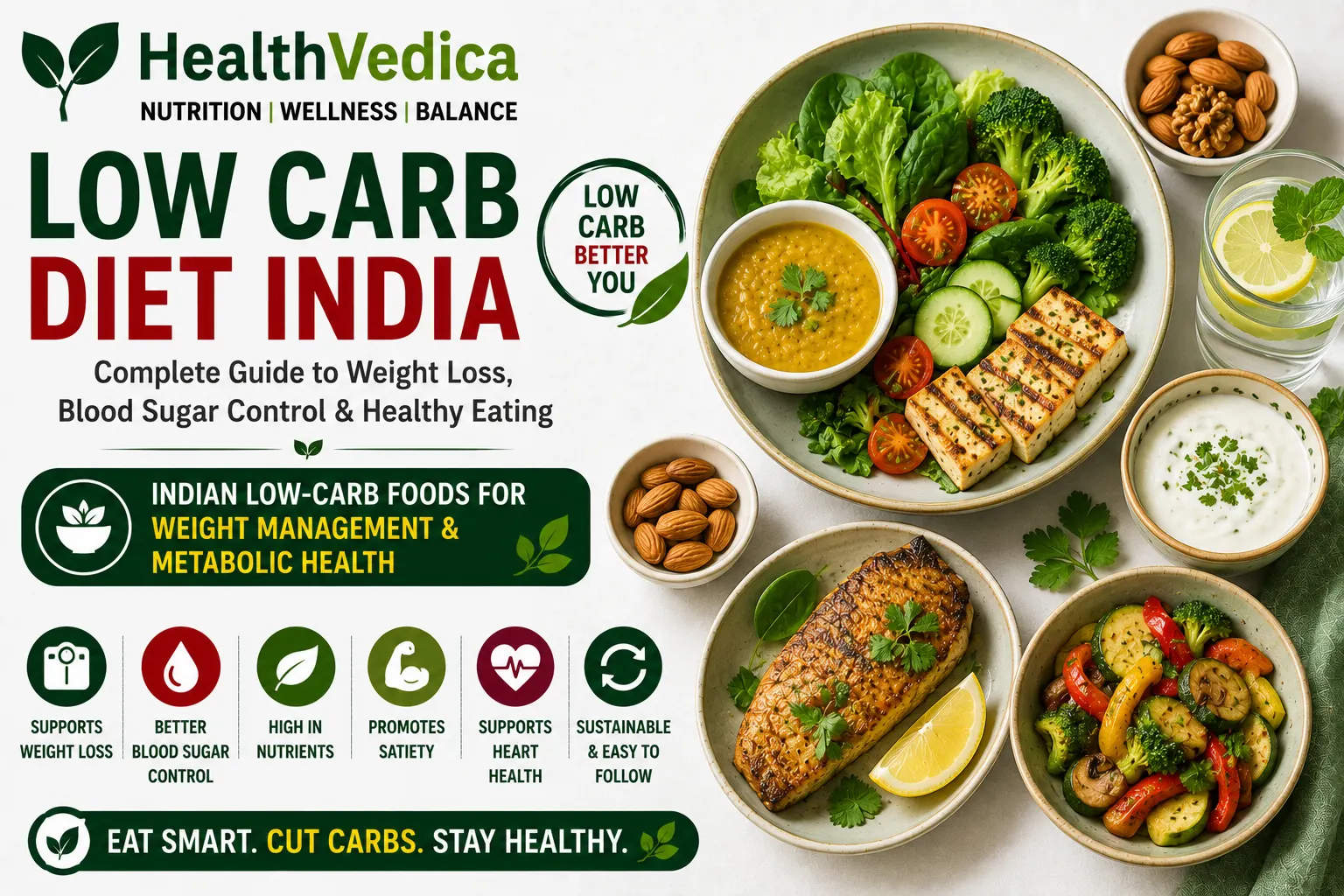
📊 Best Low-Carb Foods in India
| Food | Category | Why It Fits |
|---|---|---|
| Eggs | Protein | Very low in carbohydrate and rich in protein |
| Paneer | Dairy | Protein-rich vegetarian option |
| Fish | Protein | Very low in carbohydrate; fatty fish provide omega-3 fats |
| Chicken | Protein | Carbohydrate-free when minimally processed |
| Tofu | Plant protein | Useful vegetarian/vegan protein option |
| Spinach | Vegetable | Low in carbohydrate and rich in micronutrients |
| Cauliflower | Vegetable | Useful alternative to part of a rice-based meal |
| Broccoli | Vegetable | Provides fiber and micronutrients |
| Cucumber | Vegetable | Hydrating and relatively low in carbohydrate |
| Almonds & walnuts | Nuts | Provide healthy fats, fiber and some protein |
| Unsweetened curd/Greek yogurt | Dairy | Provides protein; check added sugar on packaged products |
🥚 Eggs, Paneer and Other Protein Foods
Protein is useful in a low-carb diet because it can improve fullness and helps support muscle maintenance. Indian choices include eggs, fish, chicken, paneer, tofu, unsweetened dairy and appropriate portions of pulses.
Do not turn a low-carb diet into a diet dominated by butter, ghee, cheese or processed meat. The quality of the overall dietary pattern matters.
🥦 Low-Carb Vegetables to Eat More Often
Make non-starchy vegetables a major part of lunch and dinner. Good choices include:
- Spinach and other leafy greens
- Broccoli
- Cauliflower
- Cabbage
- Cucumber
- Capsicum
- Zucchini
- Mushrooms
- Tomato
- Green beans
Vegetables add fiber and micronutrients without requiring you to depend on large portions of rice or bread.
🍓 What About Fruit?
Fruit does not need to be automatically removed from a low-carb diet. Portion size and the rest of the meal matter. Guava, berries where available, orange, apple and other whole fruits can fit into many moderate low-carb patterns.
Whole fruit is preferable to fruit juice when you want the fiber and greater satiety. WHO recommends regular fruit and vegetable intake and notes that fruit juice can contain substantial free sugars. citeturn0search0
🍚 Can You Eat Rice on a Low-Carb Diet?
Yes, depending on how strictly you are reducing carbohydrates. Rice is carbohydrate-rich, so the practical approach for a moderate low-carb diet is often to reduce the portion rather than treating rice as a forbidden food.
- Use a smaller rice serving.
- Add a large serving of vegetables.
- Include a protein source such as fish, eggs, chicken, paneer or tofu.
- Avoid combining a large rice portion with several other refined carbohydrate foods in the same meal.
Very-low-carb or ketogenic diets are different and may exclude rice almost completely.
🚫 Foods to Limit
| Food | Why Limit It |
|---|---|
| Sugary drinks | High in free sugar and low in satiety |
| Sweets and desserts | Concentrated source of sugar and calories |
| White bread and refined bakery foods | Refined carbohydrate with low dietary fiber |
| Large portions of white rice | High carbohydrate load |
| Biscuits and packaged snacks | Often contain refined flour, sugar, salt and unhealthy fats |
| Chips and fried snacks | Energy dense and easy to overeat |
🍽️ Simple Indian Low-Carb Meal Plan
Breakfast: Vegetable omelette or tofu/paneer bhurji + unsweetened tea/coffee.
Mid-morning: One whole fruit or a small portion of nuts, depending on your carbohydrate target.
Lunch: Grilled fish/chicken or paneer/tofu + a large vegetable portion + salad + a small serving of rice or roti if included in your plan.
Evening: Unsweetened curd or roasted nuts/seeds.
Dinner: Fish/chicken/paneer/tofu + sautéed or cooked vegetables.
Vegetarian note: Do not rely only on cheese and paneer. Rotate tofu, soy foods, curd and appropriately portioned pulses for variety.
📅 7-Day Indian Low-Carb Meal Ideas
| Day | Breakfast | Lunch | Dinner |
|---|---|---|---|
| 1 | Egg omelette + vegetables | Paneer + salad + small rice portion | Fish + sautéed vegetables |
| 2 | Paneer bhurji | Chicken + mixed vegetables | Tofu stir-fry |
| 3 | Greek yogurt/curd + nuts | Fish + salad + vegetables | Egg curry + cauliflower/vegetables |
| 4 | Vegetable omelette | Tofu/paneer + vegetable curry | Chicken + salad |
| 5 | Egg bhurji | Chicken + vegetables + small roti/rice portion | Paneer + sautéed greens |
| 6 | Unsweetened curd + seeds | Fish + vegetable curry | Tofu/paneer salad bowl |
| 7 | Masala omelette | Paneer/chicken + vegetables | Fish/tofu + mixed vegetables |
⚠️ Common Low-Carb Mistakes
- Replacing rice and roti with excessive cheese, butter or ghee.
- Eating too little protein.
- Removing vegetables because they contain some carbohydrate.
- Ignoring fiber and constipation.
- Using packaged “keto” or “low-carb” foods as everyday staples.
- Assuming low-carb automatically means low-calorie.
- Making an extremely restrictive plan without considering medical conditions or medicines.
⚖️ Low-Carb vs Keto
| Feature | Low-Carb | Keto |
|---|---|---|
| Carbohydrate restriction | Moderate to substantial, depending on the plan | Very strict |
| Rice/roti | May fit in controlled portions | Usually excluded |
| Fruit | Often included in portions | More restricted |
| Ketosis | Not required | Central goal |
| Flexibility | Usually greater | Usually lower |
🩺 Who Should Be Careful?
If you have diabetes and use insulin or glucose-lowering medicines, changing carbohydrate intake can affect medication needs. People with kidney disease, liver disease, pregnancy, a history of eating disorders, or other medical conditions should discuss major dietary changes with a qualified healthcare professional.
This article is educational and does not replace individualized medical or nutrition advice.
📌 Evidence-Based Takeaway
The strongest version of a low-carb diet is not the one with the fewest carbohydrates. It is the one that improves food quality while remaining nutritionally adequate and realistic. ICMR-NIN's Dietary Guidelines for Indians 2024 emphasizes balanced, varied food choices for Indian populations, while WHO recommends diets built around diverse, minimally processed foods and appropriate amounts of carbohydrates, protein and fats. citeturn0search48turn0search0
💡 Final Thoughts
A low-carb diet can be a useful eating pattern for some people, especially when it means fewer sugary drinks, sweets, refined snacks and oversized portions of refined grains. You do not need to fear every carbohydrate. Build meals around vegetables, adequate protein, sensible portions and minimally processed foods, then choose the carbohydrate level that you can maintain.