🍵 Green Tea: Healthy Drink or Overhyped Superfood?
Green tea has earned a reputation as a “fat burner,” “detox drink” and even a cancer-prevention cure. The reality is more useful: green tea is a low-calorie beverage containing catechins and caffeine, and research suggests several potential health benefits—but most effects are modest.
Green tea and black tea both come from Camellia sinensis. Green tea is processed in a way that preserves more catechins, including EGCG.
📊 Green Tea at a Glance
| Component | Why It Matters |
|---|---|
| Catechins, including EGCG | Antioxidant and biologically active polyphenols |
| Caffeine | Can increase alertness; may disturb sleep in sensitive people |
| L-theanine | Amino acid naturally present in tea |
| Calories | Very low when consumed plain |
⚖️ 1. Weight Loss: Helpful, But the Effect Is Small
Green tea catechins and caffeine may slightly increase energy expenditure and fat oxidation. Clinical trials generally show small changes in body weight, not dramatic fat loss.
If replacing a sugar-heavy chai or soft drink with unsweetened green tea helps reduce calorie intake, the practical benefit may be larger than the tea's direct metabolic effect.
Do not use green tea as a substitute for a calorie-appropriate diet, protein intake and regular activity.
❤️ 2. Heart and Metabolic Health
Tea consumption has been associated with favourable cardiovascular outcomes in observational research, and some trials report modest changes in cholesterol or blood pressure.
These findings support green tea as one healthy beverage option, not as a medicine for hypertension or high cholesterol.
🧠 3. Brain and Alertness
Caffeine can improve alertness, while L-theanine may influence attention and relaxation. The combination can feel smoother than a high-caffeine drink for some people.
Individual response varies. If caffeine causes anxiety, palpitations or insomnia, reduce the amount or choose a decaffeinated option.
🩸 4. Green Tea and Iron: An Important Indian Diet Tip
Tea contains tannins and other compounds that can reduce absorption of non-heme iron from plant foods. ICMR-NIN specifically advises keeping tea and coffee away from meals.
This matters when your diet relies heavily on dal, beans, leafy greens, millets and other plant sources of iron, especially if you already have low iron stores.
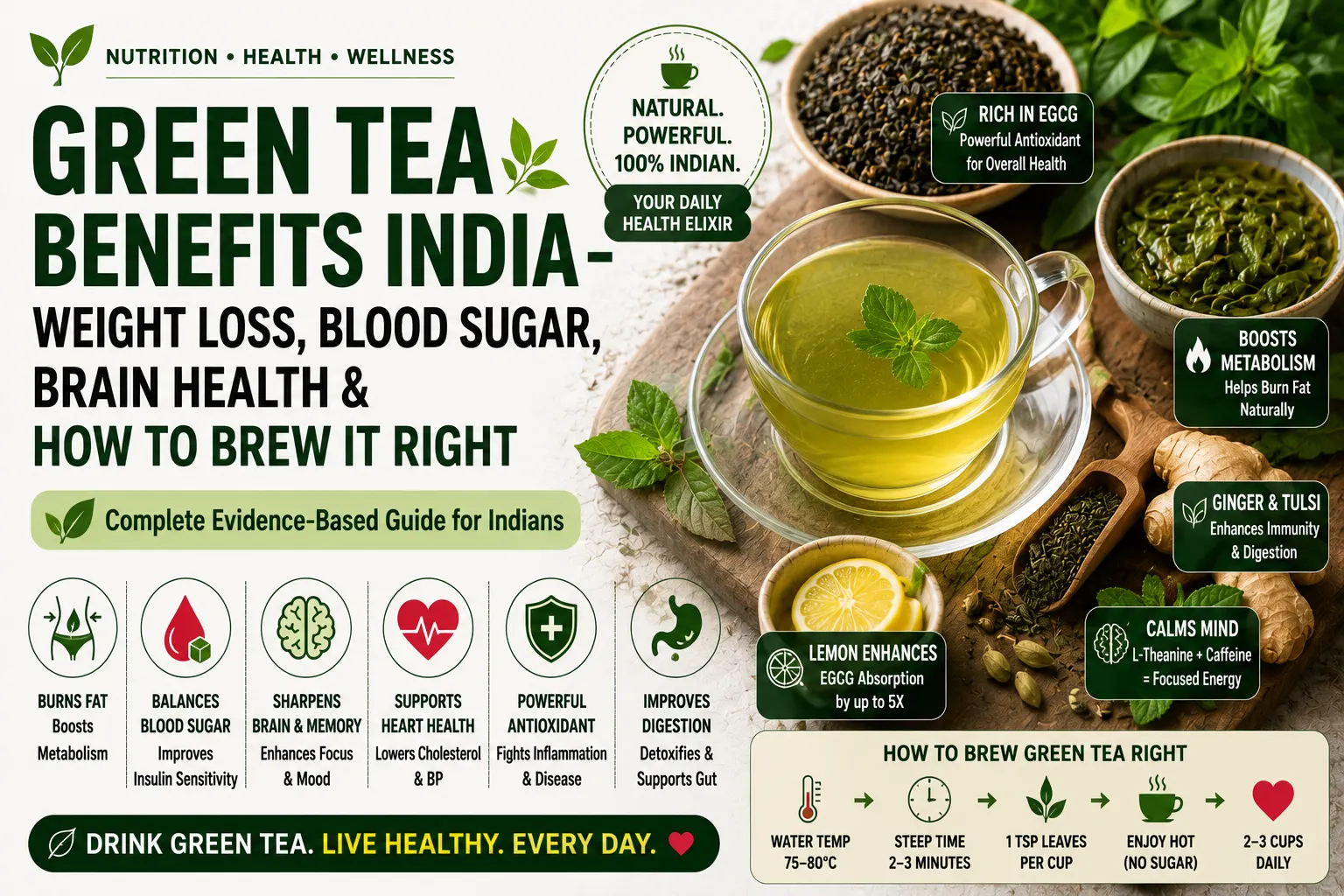
🍵 5. How to Brew Green Tea Without Making It Bitter
Use hot rather than aggressively boiling water and steep according to the tea manufacturer's instructions. Over-steeping commonly increases bitterness and astringency.
You do not need a complicated recipe. Plain green tea is enough. Lemon can be added for flavour, but it should not be marketed as a special “5× absorption” trick without context.
🚫 Who Should Be Cautious?
- People sensitive to caffeine or prone to insomnia.
- People who have difficulty maintaining adequate iron status.
- Anyone taking medicines or supplements for whom caffeine or concentrated green-tea products may be relevant.
- People considering concentrated green tea extract supplements rather than ordinary brewed tea.
🍃 Green Tea vs Masala Chai
Plain green tea is very low in calories. Masala chai can also be part of a healthy diet, but added sugar and large amounts of milk increase calories.
The healthier choice depends on how each drink is prepared. You do not have to give up chai to eat well; reducing added sugar may matter more than switching tea varieties.
💡 How Much Green Tea?
There is no universal number of cups that guarantees a health benefit. Use your caffeine tolerance and total daily caffeine intake as practical guides. ICMR-NIN advises keeping total caffeine intake within tolerable limits and avoiding excessive tea and coffee.
✅ Bottom Line
Green tea is a useful beverage, not a miracle food. Its strongest practical advantages are that it is low in calories and provides tea polyphenols. Expect modest benefits, not dramatic weight loss. If you enjoy it, drink it unsweetened, keep it away from iron-rich meals when iron absorption matters, and avoid concentrated extracts unless a qualified professional recommends them.