🩺 What Should You Eat for Piles and Constipation?
The most useful dietary strategy is to make stools softer and easier to pass: increase fibre gradually, drink enough fluid for your needs, stay active, and reduce the straining that aggravates hemorrhoids.
Piles (hemorrhoids) and constipation often overlap, but rectal bleeding should not automatically be assumed to be hemorrhoids. Persistent or unexplained bleeding deserves medical assessment.
🌾 Fibre Is the Main Lever
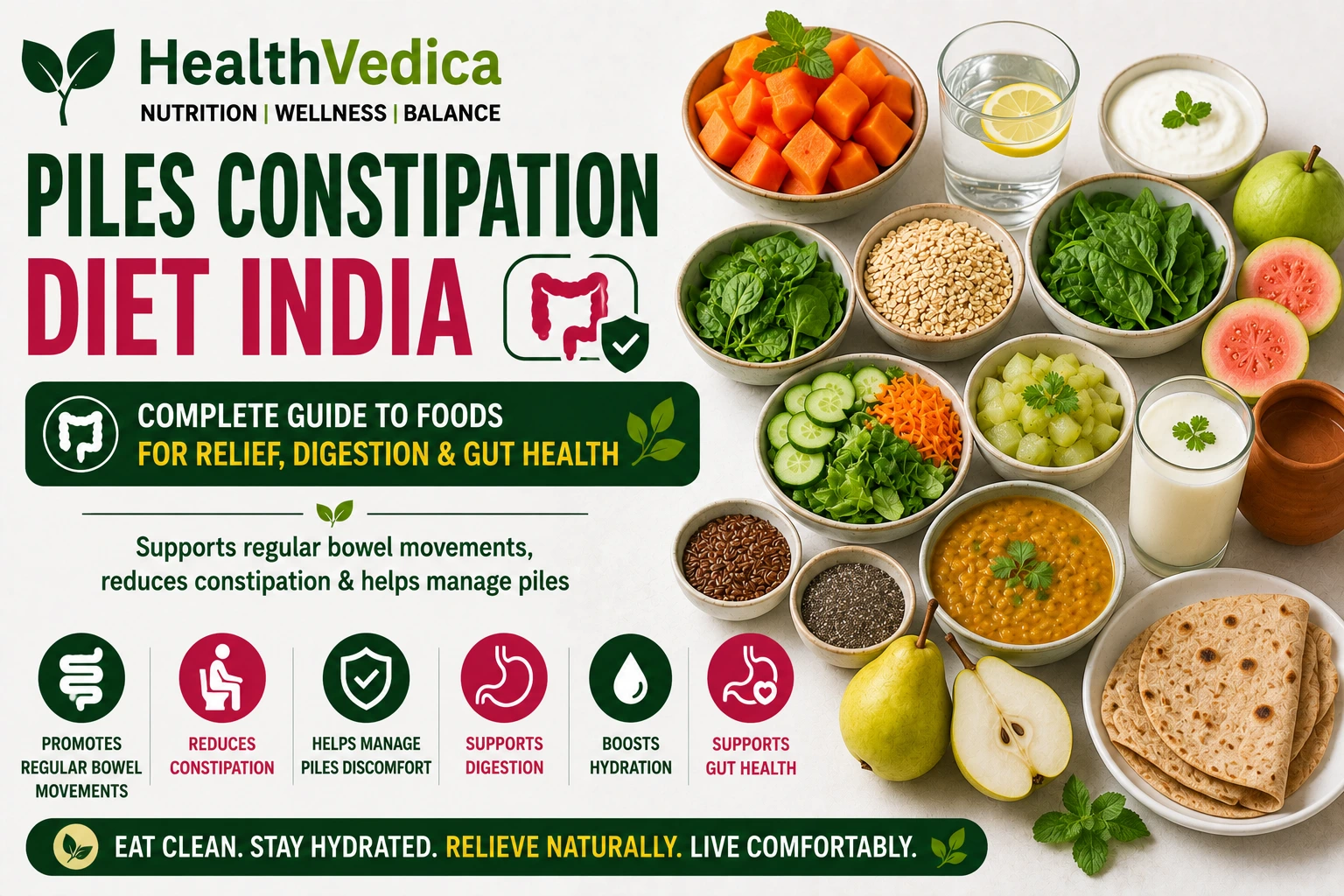
For most adults, gradually working toward an adequate daily fibre intake helps stool bulk and consistency. Sources include whole grains, oats, dal, beans, chickpeas, vegetables, fruits, nuts and seeds. ICMR-NIN dietary guidance also emphasizes a diverse, minimally processed diet rich in plant foods.
Go slowly: suddenly tripling fibre intake can cause gas and bloating. Increase it over days and pair it with adequate fluid.
💧 Water Makes Fibre Work Better
NIDDK notes that drinking water and other appropriate liquids helps fibre work better. There is no universal 'three-litre rule' for everyone; needs vary with body size, climate, activity and medical conditions.
✅ Best Indian Foods
| Food | Why It Helps | How to Use |
|---|---|---|
| Oats | Fibre, including beta-glucan | Breakfast or savoury oats |
| Dal/beans | Fibre + protein | Daily meal base |
| Pear/apple with skin | Fibre and water | Whole fruit |
| Guava | Fibre-rich fruit | Whole fruit |
| Papaya | Fruit, water and fibre | Breakfast/snack |
| Flaxseed/chia | Fibre and healthy fats | Small amount added to food |
| Vegetables | Fibre and fluid | Include at lunch and dinner |
🚽 Toilet Habits Matter More Than People Think
Do not repeatedly ignore the urge to pass stool. Avoid prolonged sitting on the toilet and excessive straining. Treating constipation early can reduce the mechanical stress that aggravates hemorrhoids.
⚠️ What to Reduce
Low-fibre ultra-processed foods such as chips, fast foods, heavily processed snacks and large amounts of refined flour can crowd higher-fibre foods out of the diet. Some people also notice constipation when their diet becomes very cheese-heavy or low in plant foods.
🌿 Traditional Indian Options
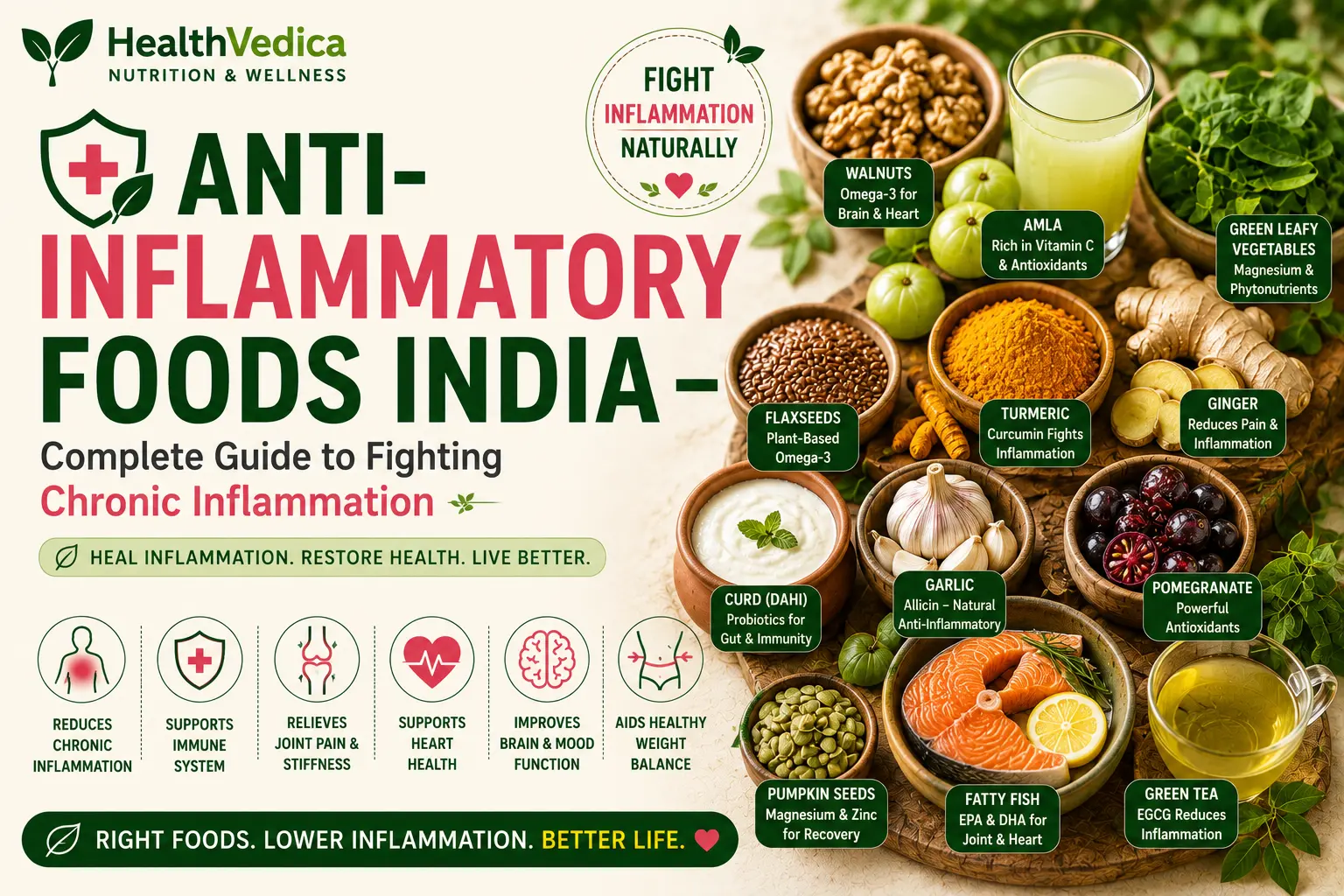
Foods such as soaked flaxseed, fruit, vegetables and plain buttermilk can be useful components of a fibre-rich diet. Herbal laxatives should not be used casually or for long periods without professional advice, because they can cause electrolyte problems or mask an underlying condition.
🍽️ Sample Day
Morning: Water + oats or vegetable breakfast.
Lunch: Dal + vegetables + whole grain + curd.
Snack: Guava/pear/apple or another whole fruit.
Dinner: Vegetable-rich meal + beans/dal + whole grain.
Optional fibre add-on: small amount of ground flaxseed or chia, increased gradually.
🏃 Movement Helps
Regular walking and general physical activity support normal bowel function. Exercise is especially helpful when constipation is partly related to a sedentary routine.
🚨 When to See a Doctor
NIDDK advises medical evaluation for rectal bleeding. Seek urgent care for severe anal pain with significant bleeding, fever, abdominal pain or other concerning symptoms. Persistent symptoms despite home measures also deserve evaluation.
✅ Bottom Line
Make the stool easy to pass. Gradually increase fibre, hydrate appropriately, move regularly and stop straining. That is far more evidence-based than chasing a single laxative food or juice.
📚 Trusted Sources & Further Reading
This guide is educational and is not a substitute for diagnosis or treatment. Nutrient and dietary guidance is aligned where applicable with Indian nutrition guidance and major clinical references.