🩺 Can Insulin Resistance Be Improved With Diet?
Yes. Insulin sensitivity can improve with better food quality, appropriate weight loss when needed, regular muscle activity, good sleep and reduced intake of added sugar and refined carbohydrates. But insulin resistance is not fixed by one ingredient or one detox routine.
Insulin resistance can exist before blood glucose reaches the prediabetes range. That makes it a useful early warning sign — but testing and diagnosis should be interpreted by a clinician rather than inferred from symptoms alone.
🔬 What Actually Happens?
Insulin helps tissues such as muscle, liver and fat use or store glucose. When those tissues become less responsive, the pancreas may produce more insulin to compensate. Over time, glucose can rise into the prediabetes or diabetes range.
The opportunity: skeletal muscle is a major site of glucose disposal. More regular movement and resistance training can therefore improve glucose handling even before dramatic weight loss occurs.
🥗 The Insulin-Sensitivity Meal Formula
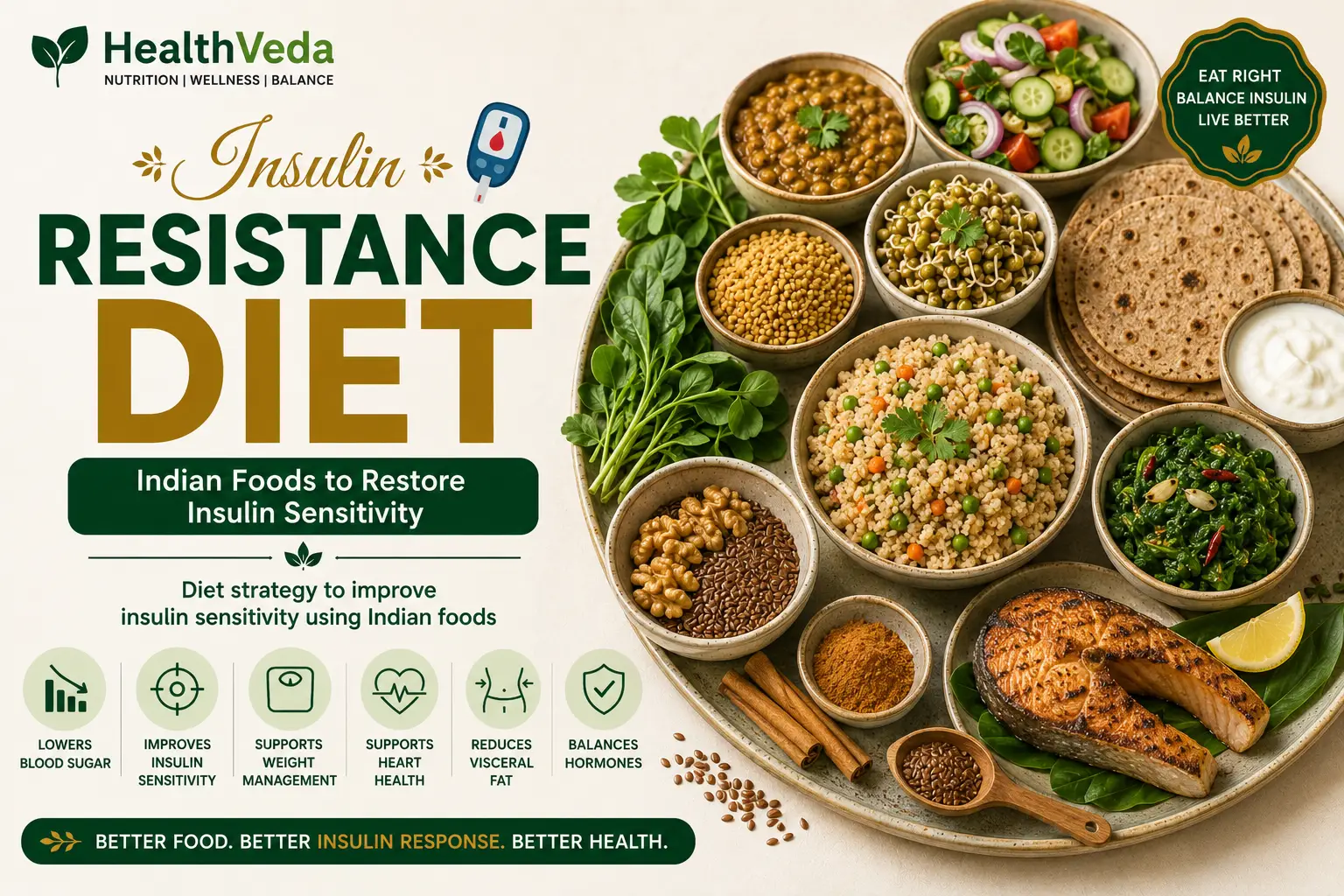
Vegetables first + protein at the meal + controlled whole-grain carbohydrate + unsaturated fat in a modest amount. This structure is more realistic than trying to eliminate all carbohydrate.
| Food | Why It Fits | Example |
|---|---|---|
| Dal and legumes | Fibre + protein + slower digestion | Dal with vegetable sabzi |
| Leafy greens | Low energy density and micronutrients | Palak dal |
| Jowar/bajra | Whole-grain alternative to refined flour | 1–2 small rotis |
| Nuts/seeds | Unsaturated fats and satiety | Small unsalted portion |
| Plain curd | Protein and meal versatility | Curd with lunch |
| Fish/eggs/tofu/paneer | Protein-rich options | Pair with vegetables |
🚫 Common Mistakes
Eating 'healthy' carbohydrates in oversized portions: Brown rice and millet still contain carbohydrate. Quality does not cancel quantity.
Constant grazing: Frequent mindless snacking can add calories without improving nutrition.
Drinking calories: Sweetened tea, juices and soft drinks can undermine otherwise good meals.
Ignoring sleep: Poor sleep can worsen appetite regulation and insulin sensitivity. Food is only one part of the metabolic picture.
🌿 Methi and Cinnamon: Useful, Not Magical
Fenugreek and cinnamon are reasonable culinary foods with research suggesting modest glucose-related effects. They should not be presented as replacements for weight management, exercise or prescribed therapy.
🏋️ The Best Non-Food Intervention
Resistance exercise deserves special attention. Building or preserving muscle increases the body's capacity to handle glucose. Combine strength training with walking or other aerobic activity, adjusted to your health status.
🕐 Do You Need Long Fasting Windows?
Not necessarily. Some time-restricted eating patterns can help selected people mainly because they reduce total calorie intake and late-night eating, but there is no requirement that everyone fast for 16 hours. Choose the pattern you can maintain and that fits your medication, work and health status.
🧪 How Is Insulin Resistance Assessed?
There is no single perfect routine test for every adult. Clinicians may interpret waist circumference, fasting glucose, HbA1c, lipids, blood pressure and, in selected cases, fasting insulin or derived measures such as HOMA-IR. Do not diagnose yourself from a social-media checklist.
✅ Bottom Line
Improve the metabolic environment, not one lab number. Eat mostly minimally processed foods, increase vegetables and pulses, moderate refined carbohydrate, move your muscles every day and prioritize sustainable weight management where needed.
📚 Trusted Sources & Further Reading
This guide is educational and is not a substitute for diagnosis or treatment. Nutrient and dietary guidance is aligned where applicable with Indian nutrition guidance and major clinical references.