Quick answer: what does a healthy teen diet look like?
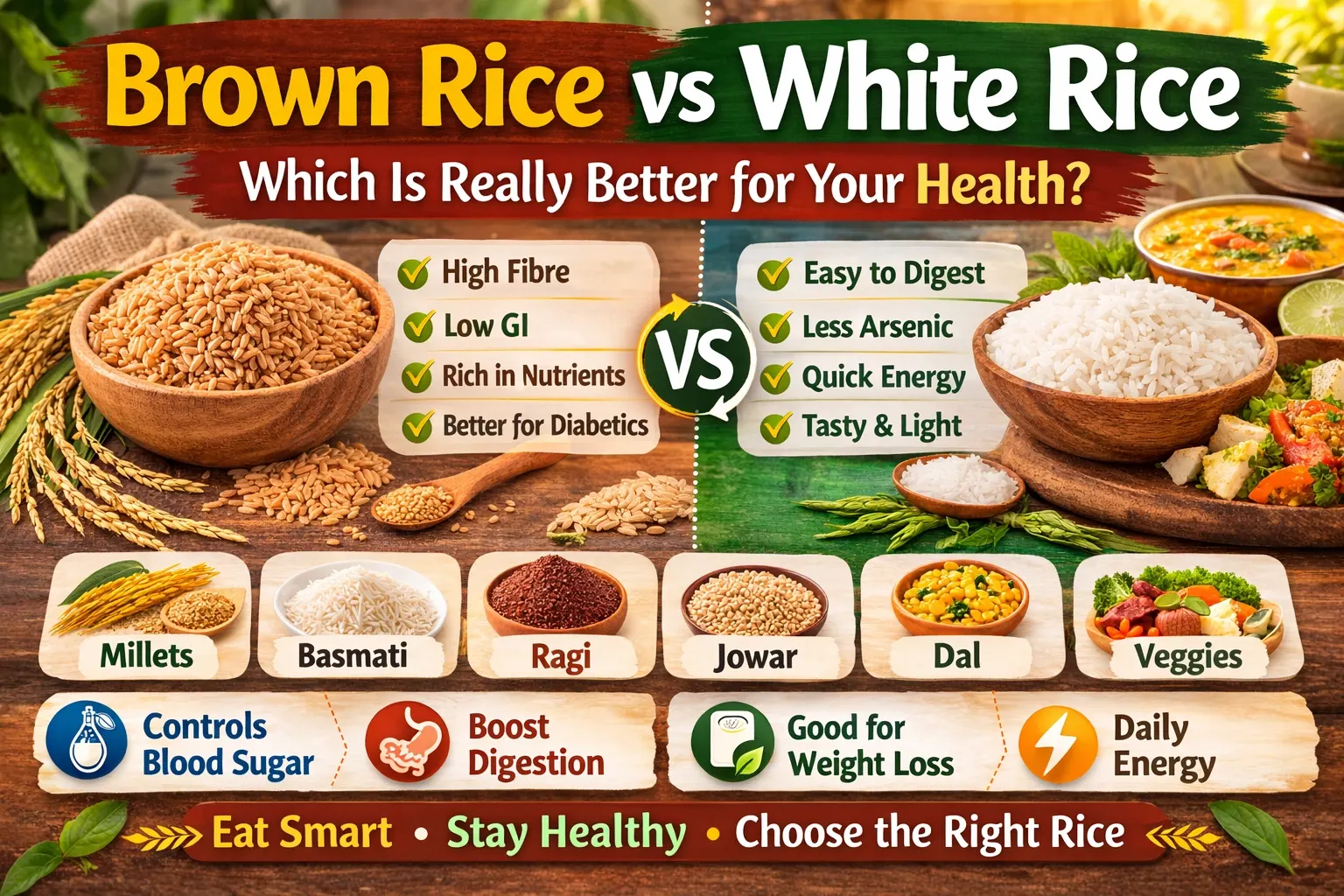
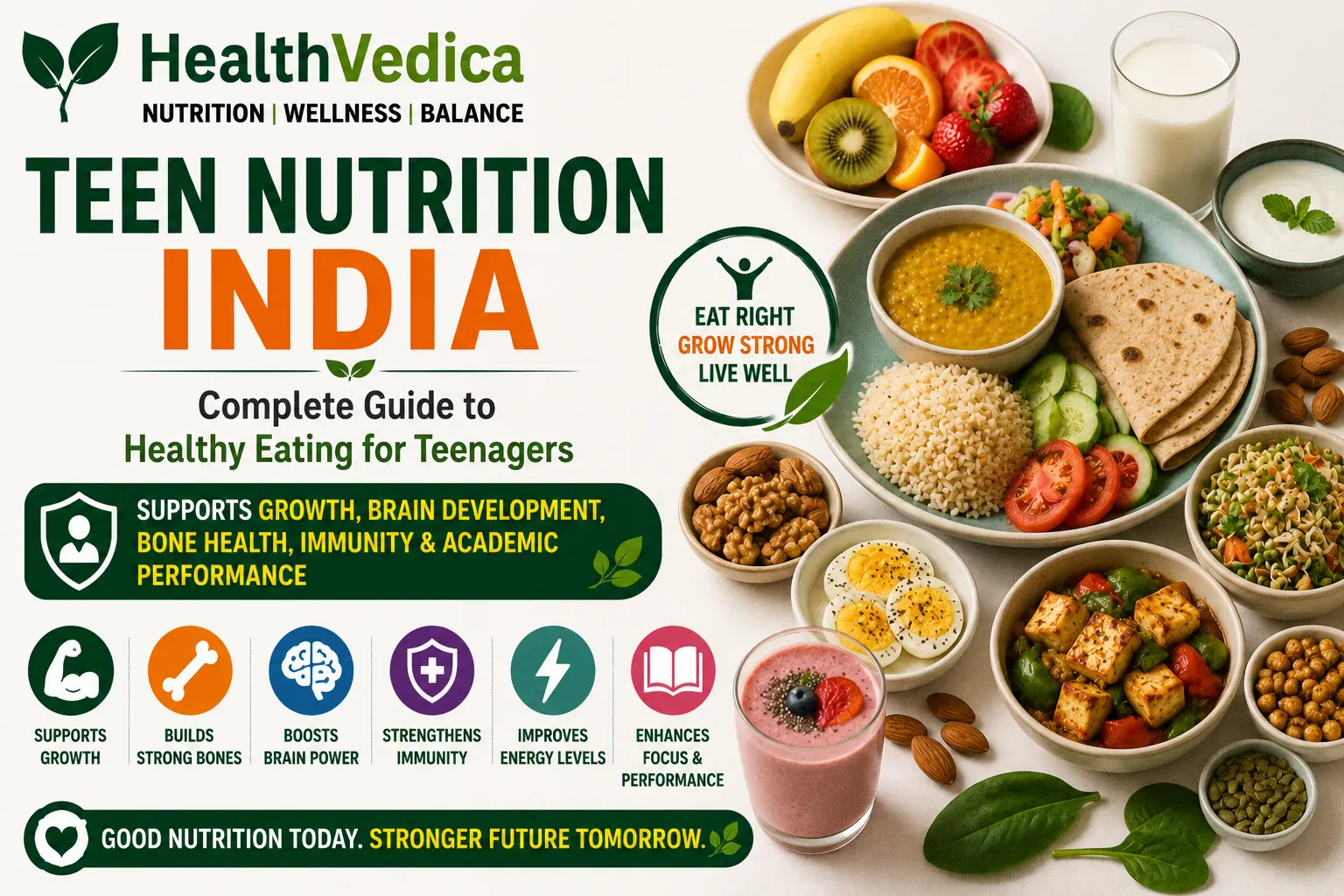
Teenagers need enough food—not a restrictive diet—to support rapid growth, bone development, school or sports activity and long-term health. A useful Indian plate includes a staple such as rice, roti, oats or millet; a protein food; vegetables; fruit; and a calcium-rich food such as milk or curd when suitable.
Nutrients to prioritise
| Nutrient | Why it matters | Food ideas |
|---|---|---|
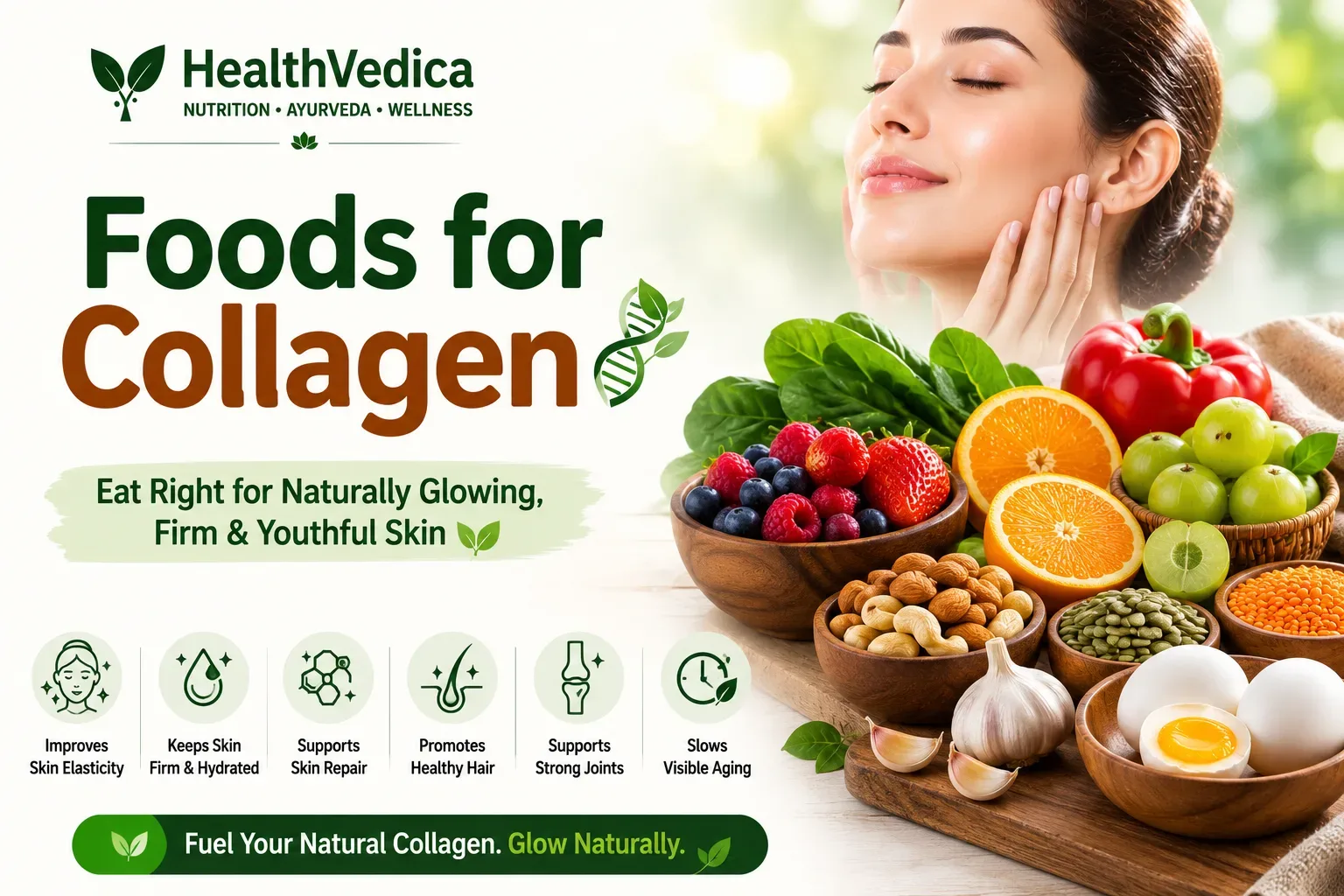
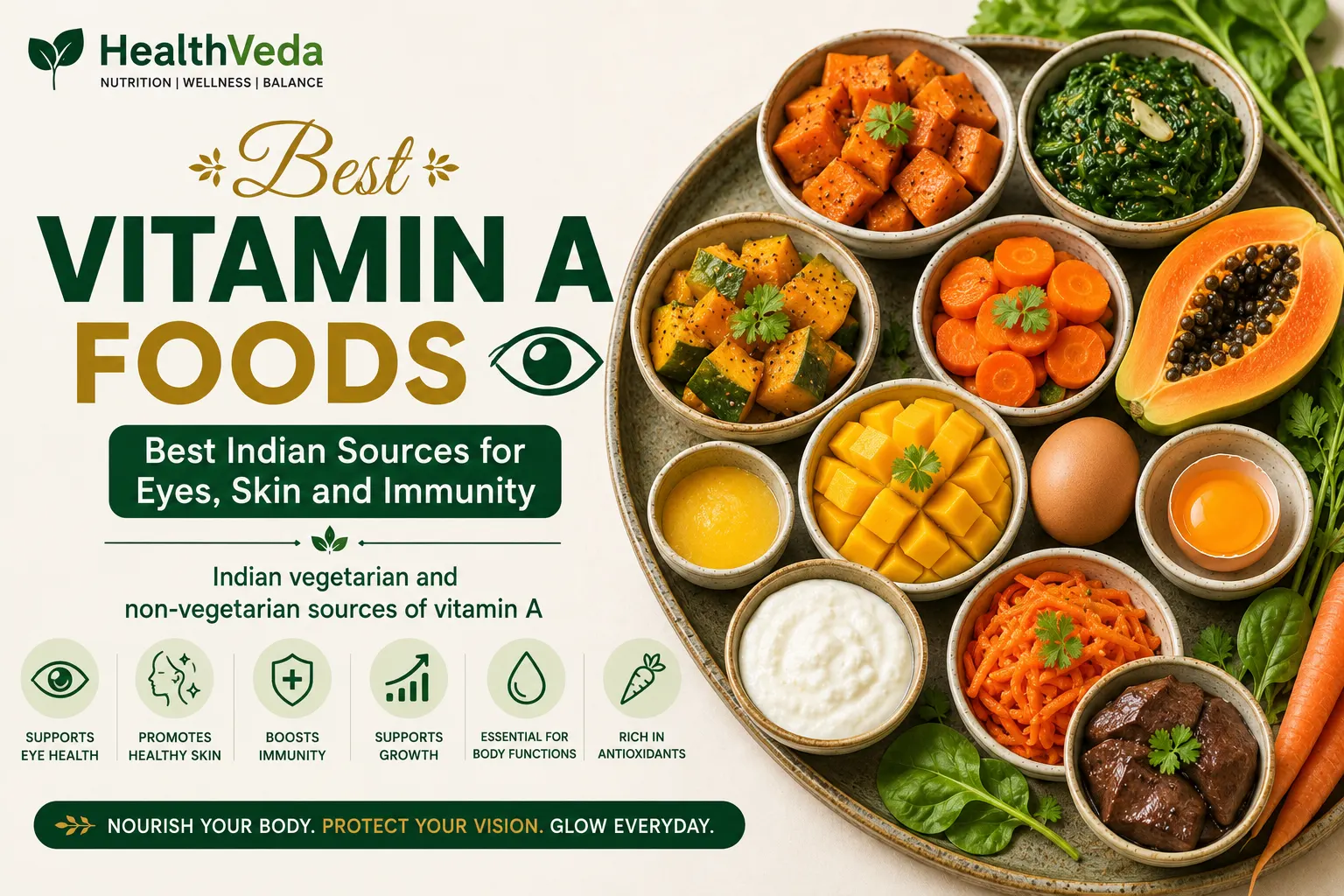
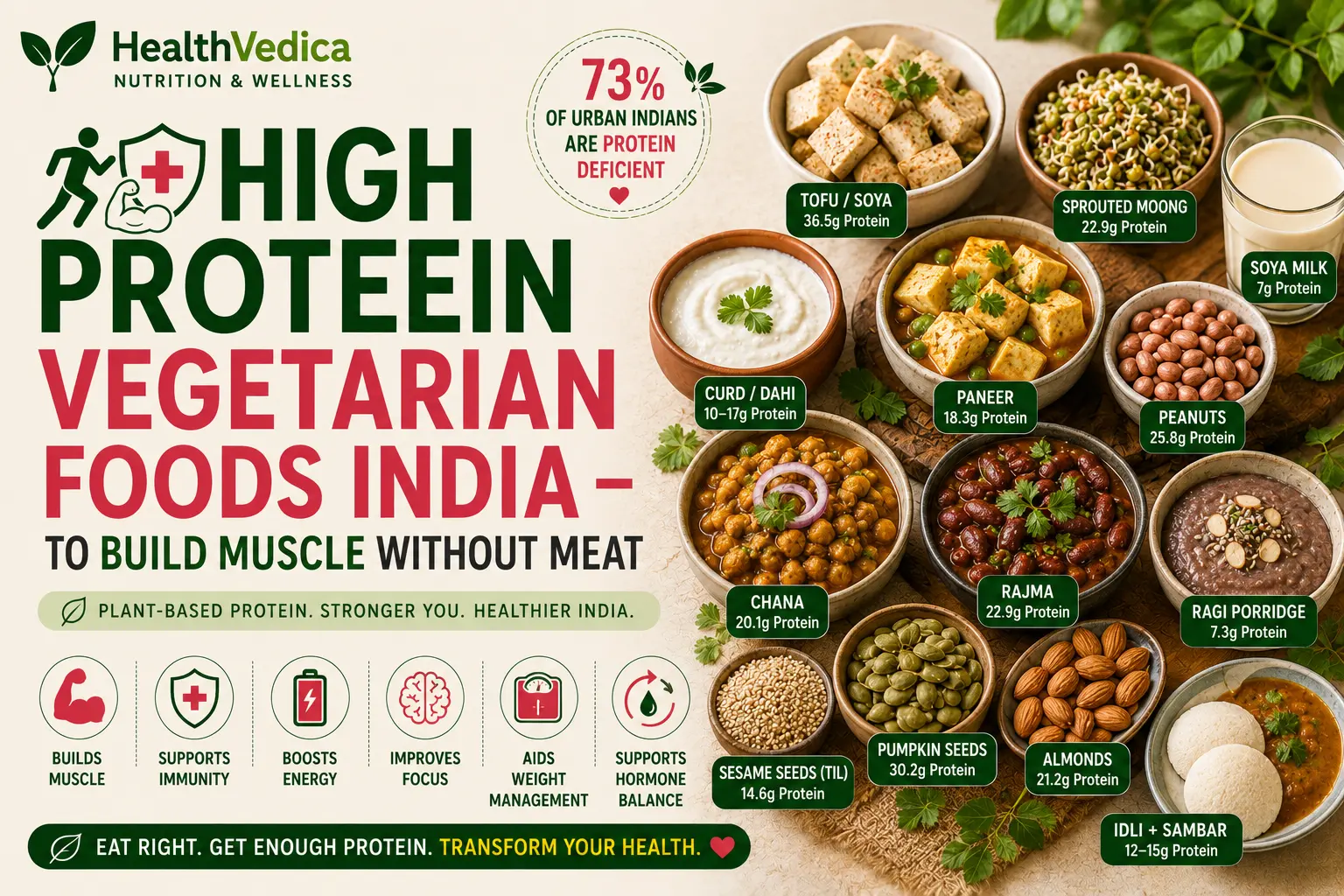
| Protein | Growth, tissue maintenance and recovery. | Dal, beans, soy, eggs, dairy, fish, chicken |
| Calcium | Bone mineralisation during adolescence. | Milk, curd, paneer, ragi, sesame, fortified foods |
| Iron | Supports haemoglobin and normal energy metabolism; needs can be especially important after menstruation begins. | Pulses, beans, leafy greens, eggs/meat, fortified foods |
| Healthy fats | Provide essential fatty acids and energy. | Nuts, seeds, fish and plant oils |
| Fruits & vegetables | Provide fibre, vitamins, minerals and other bioactive compounds. | Seasonal Indian fruit and a variety of vegetables |
A simple Indian teen meal pattern
- Breakfast: vegetable poha/upma + curd, or eggs + roti + fruit.
- Lunch: rice/roti + dal or another protein + vegetables + curd.
- Snack: fruit, roasted chana, nuts in a safe portion, or a homemade sandwich.
- Dinner: roti/rice + paneer/beans/fish/chicken + vegetables.
- Sports days: add food and fluids according to training load rather than relying on supplements.
Common habits that can work against nutrition
- Skipping meals regularly
- Frequent sugary drinks and highly processed snack foods
- Very restrictive diets for weight control
- Relying on protein powders or supplements without a clear need
- Low intake of fruit, vegetables or protein-rich foods
Body image and teen dieting
Adolescence is not the right time for crash diets or aggressive calorie restriction without professional supervision. Growth, puberty and activity levels vary widely. If weight, eating behaviour or body image is causing concern, involve a paediatrician or registered dietitian.
Source note
ICMR-NIN’s 2024 Dietary Guidelines include a dedicated guideline for adequate and appropriate diets for children and adolescents and emphasise dietary variety and balanced food choices.
Evidence & source context: This guide uses ICMR-NIN Dietary Guidelines for Indians 2024 as the primary Indian nutrition framework. Ayurveda is presented as a traditional perspective, not as proof of clinical effectiveness. Food-safety advice is aligned with FSSAI guidance.