Quick answer
There is no single food that is automatically healthier for everyone. Paneer vs Tofu Comparison are useful choices in different situations, and the better option depends on your overall diet, portion size, cooking method and personal needs. This guide compares the two foods in plain language so you can make an informed choice.
📊 Paneer vs Tofu: Nutritional Comparison (per 100g)
| Nutrient | Paneer | Tofu (firm) | Advantage |
|---|---|---|---|
| Protein | 18g | 8–17g (varies by firmness) | Paneer (typically higher) |
| Fat | 20g | 4–8g | Tofu (lower fat) |
| Calcium | 208mg | ~350mg (calcium-set varieties) | Tofu (calcium-set) |
| Calories | 265 kcal | 76–145 kcal | Tofu (lower) |
| Lactose | Present (small amount) | None | Tofu |
| Isoflavones (phytoestrogens) | None | Present | Tofu (context-dependent benefit) |
| Iron | 0.2mg | 2.7mg | Tofu (significantly higher) |
✅ Where Paneer Wins
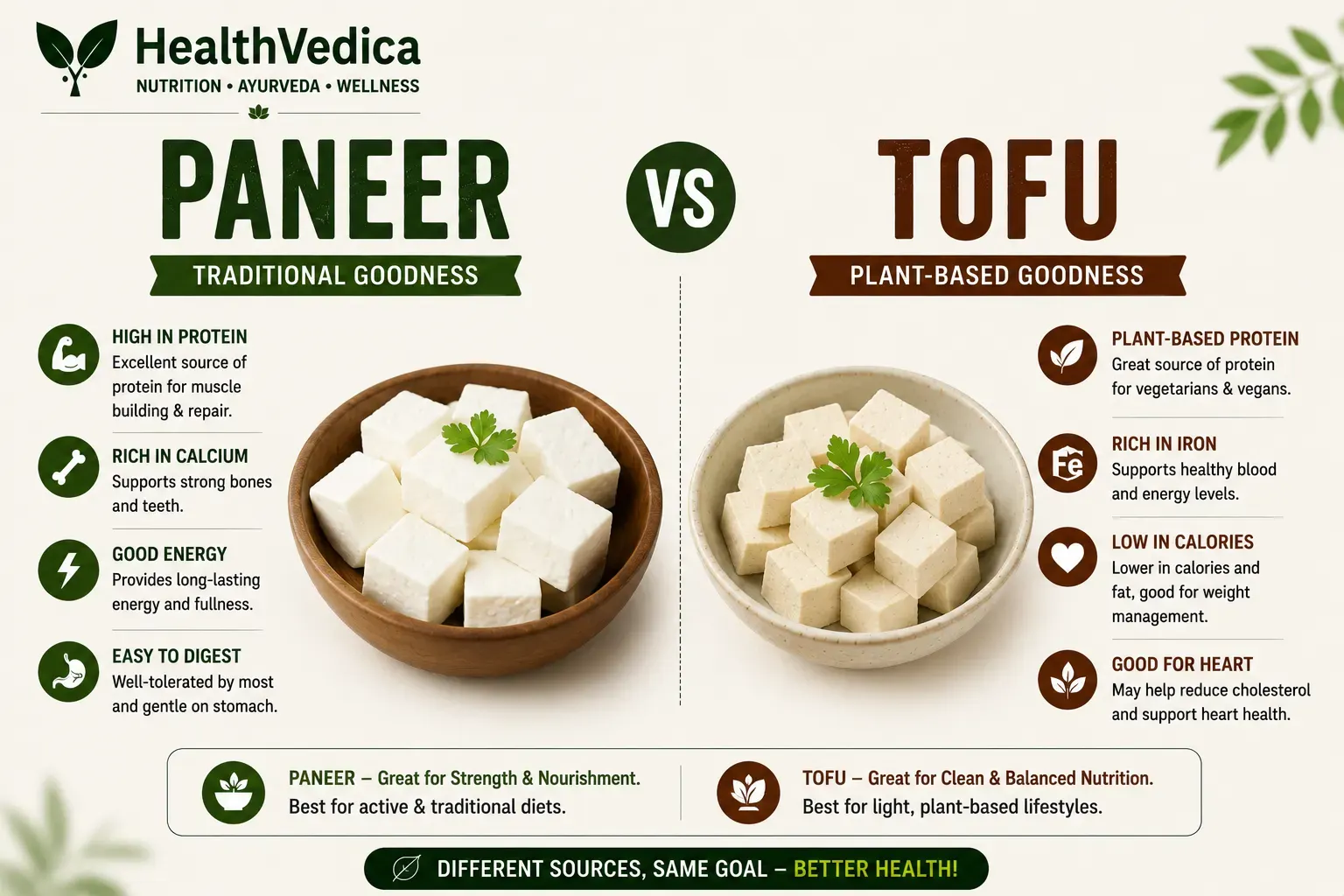
Higher protein density: Fresh paneer generally provides more protein per 100g than most tofu varieties, making it an efficient protein source for vegetarians building muscle or meeting daily protein targets.
Familiar culinary versatility: Paneer's mild, slightly tangy flavour and firm texture make it a natural fit for a wide range of Indian curries, tikkas, and snacks without needing marination to absorb flavour.
Complete amino acid profile: As a dairy protein, paneer naturally provides all essential amino acids in proportions well-suited to human needs, similar to other animal-derived proteins.
✅ Where Tofu Wins
Lower fat and calories: Tofu contains substantially less fat and fewer calories per 100g than paneer, making it a lighter option for those managing weight or fat intake.
Lactose-free: Tofu contains no dairy or lactose whatsoever, making it fully suitable for vegans, those with lactose intolerance, or milk protein allergies that paneer cannot accommodate.
Higher iron and calcium (when calcium-set): Tofu made with calcium sulfate as a coagulant can provide significantly more calcium than paneer, along with notably higher iron content, both valuable for plant-based diets.
🍽️ Which Should You Choose?
For those without dairy restrictions seeking maximum protein density in Indian cooking, paneer is an excellent, familiar choice. For vegans, the lactose intolerant, or those wanting a lower-fat, lower-calorie protein with added iron and calcium benefits, tofu is the better fit. Both can be used interchangeably in many Indian recipes, and rotating between the two adds nutritional variety to a vegetarian diet.
Sources and context
Nutrition guidance in this article is framed around Indian dietary guidance from ICMR–National Institute of Nutrition (ICMR-NIN). Where Ayurveda is discussed, it is presented as a traditional framework and kept separate from modern clinical evidence. The Ministry of AYUSH's published guidance emphasises factors such as food quality, preparation, quantity, timing and individual suitability; these principles are useful context, but they should not be treated as a substitute for diagnosis or medical treatment.
Important: Nutrition needs vary with age, pregnancy, medications and medical conditions. If you have diabetes, kidney disease, coeliac disease, a food allergy or another diagnosed condition, use personalised advice from a qualified clinician or dietitian.