🩺 Prediabetes Can Improve — This Is Your Window to Act
Prediabetes is a high-risk metabolic state, not an inevitable path to diabetes. The strongest evidence supports sustainable weight loss when appropriate, regular physical activity and a high-quality eating pattern with fewer refined carbohydrates and added sugars.
The goal is to improve blood glucose and cardiometabolic risk before diabetes develops. This is more useful than chasing a list of 'sugar-lowering foods'.
📌 What Prediabetes Means
Prediabetes means blood glucose is above the normal range but below the diagnostic range for diabetes. Common diagnostic markers include HbA1c 5.7–6.4%, fasting glucose 100–125 mg/dL, or an abnormal oral glucose tolerance test, depending on the testing context and guideline used.
⚖️ The First Target: 5–7% Weight Loss When Needed
Current diabetes prevention guidance supports aiming for at least 5–7% weight loss in people with overweight when appropriate. You do not need to become extremely thin for metabolic health to improve. Waist circumference, fitness, sleep and food quality matter too.
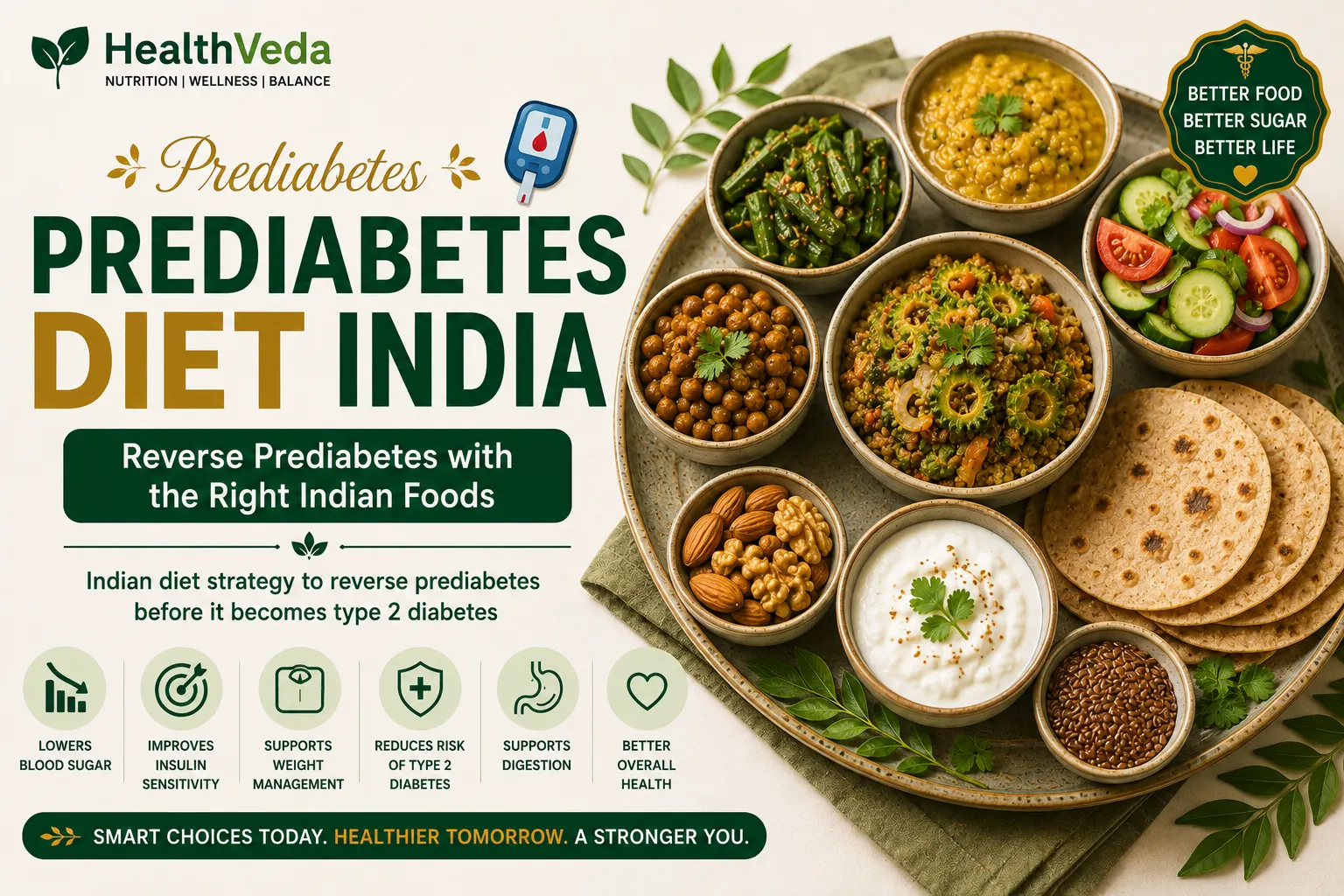
🥗 Indian Prediabetes Plate
| Component | Examples | Practical Tip |
|---|---|---|
| Vegetables | Palak, lauki, bhindi, beans, cabbage, tomato | Fill about half the plate |
| Protein | Dal, chana, rajma, eggs, paneer, fish | Include at each main meal |
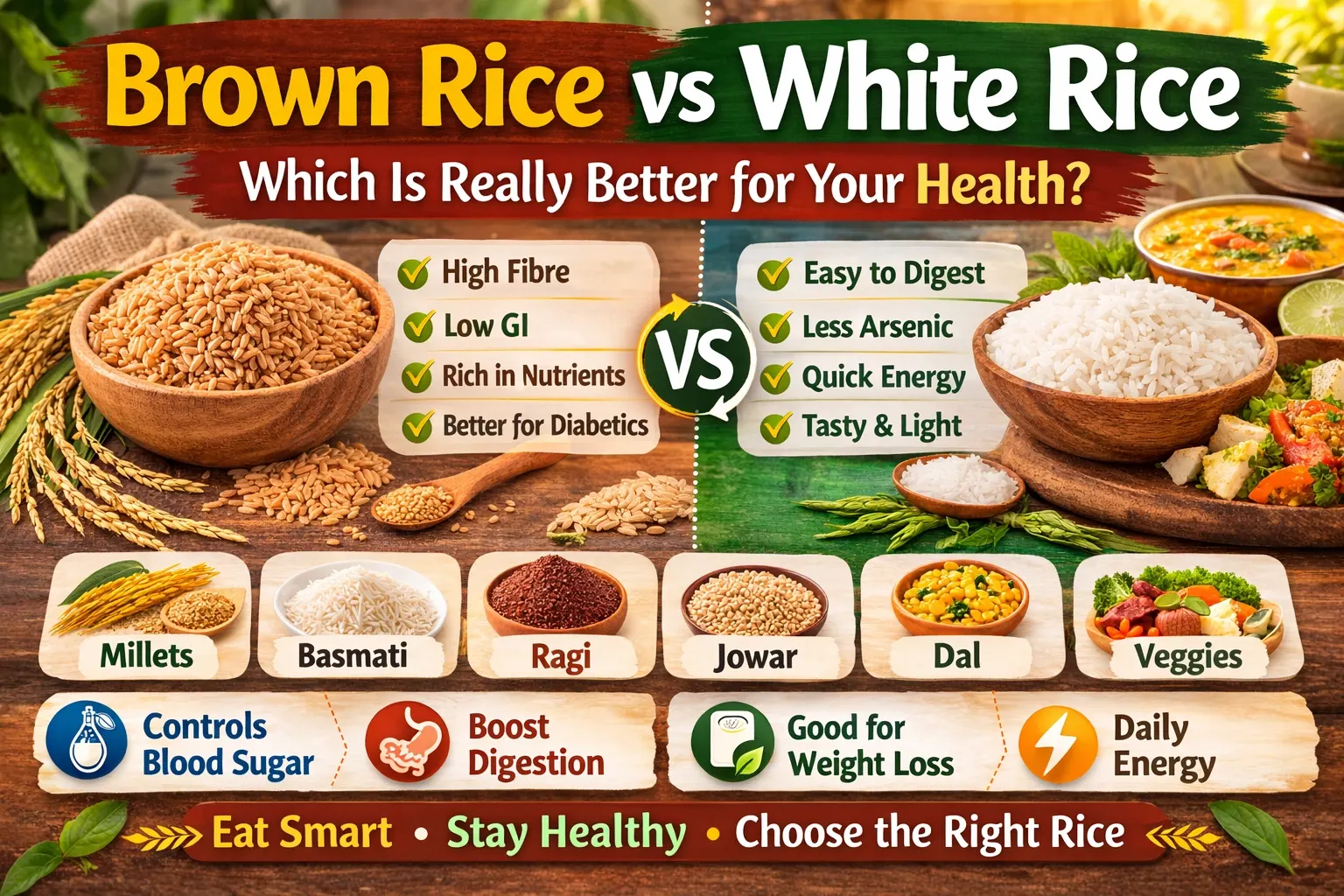
| Whole grains | Jowar, bajra, oats, whole wheat, brown rice | Moderate portions |
| Healthy snacks | Whole fruit, nuts, plain curd | Avoid liquid calories |
✅ Best Indian Foods to Prioritize
Pulses: Their combination of fibre and protein makes them a practical replacement for some refined-grain-heavy meals.
Vegetables: Increase the volume of non-starchy vegetables before increasing grain portions.
Whole grains and millets: Useful for variety and fibre. Do not confuse 'millet' with 'free of carbohydrate'; portions still count.
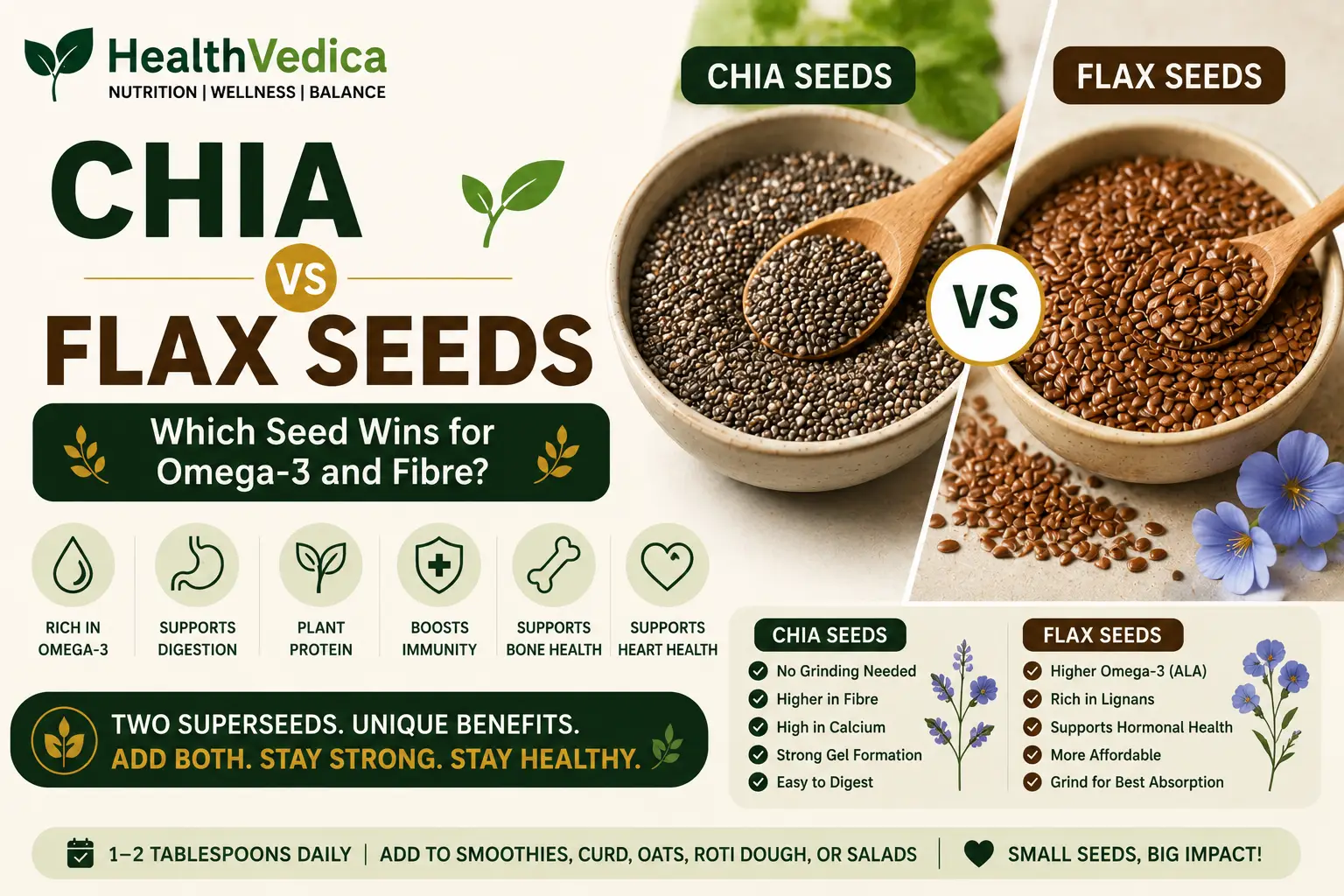
Nuts and seeds: A small unsalted portion can make breakfast or snacks more satisfying.
Whole fruit: One or two portions can fit in most prediabetes meal patterns. Juice is a different food experience because it is easier to consume rapidly and contains less intact fibre.
🚫 What to Reduce Aggressively
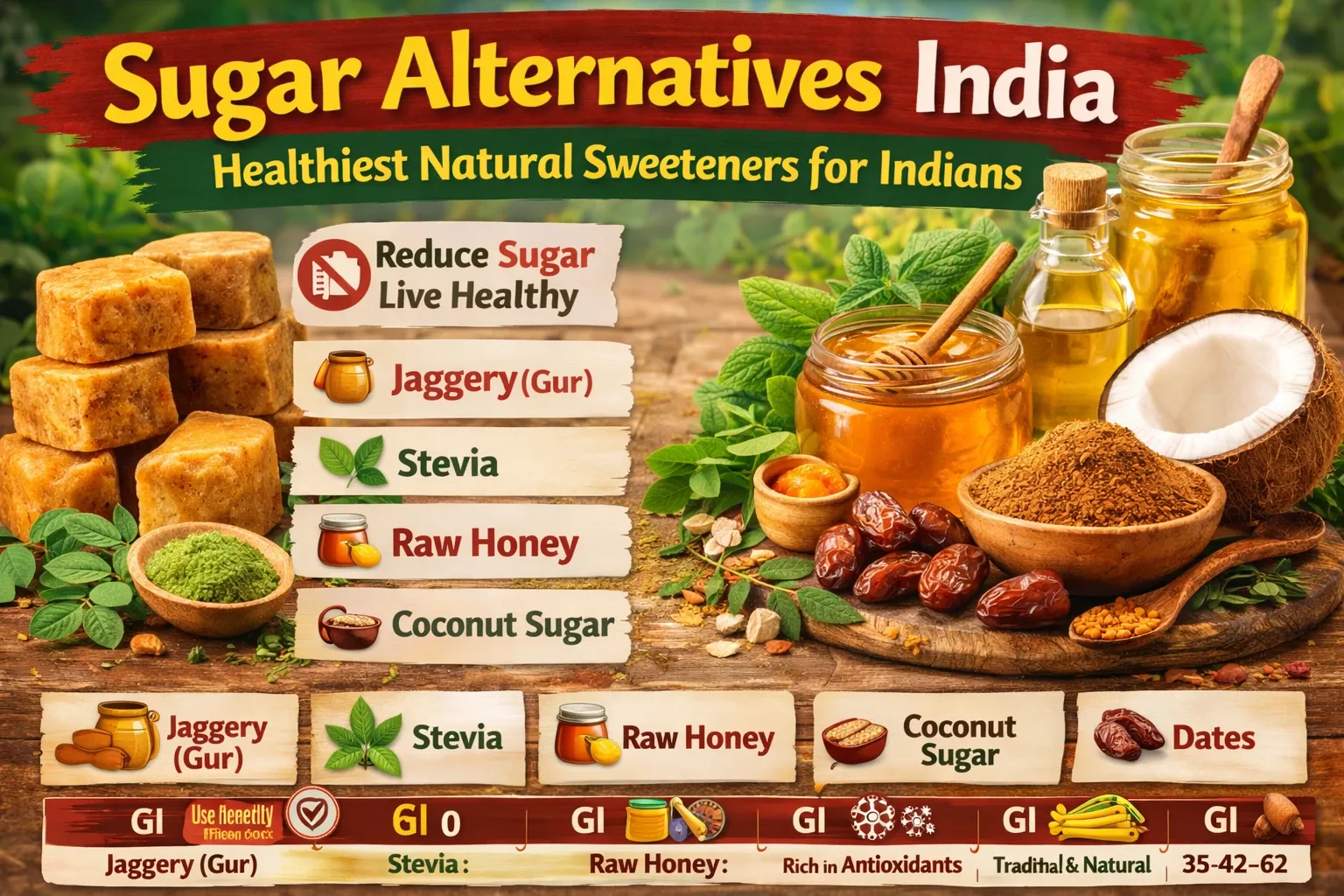
Start with sweetened beverages, added sugar, biscuits, bakery foods, sugary breakfast cereals, frequent fried snacks and very large portions of white rice or refined flour. These changes are often more useful than eliminating one specific fruit or vegetable.
🍽️ Sample Day
Breakfast: Moong chilla + curd + vegetables.
Lunch: Dal + two vegetable dishes + small jowar/brown-rice portion.
Snack: Guava/apple/orange + a few almonds.
Dinner: Protein-rich curry + vegetables + one small roti or another controlled whole-grain serving.
🚶 Walk After Meals
A short post-meal walk is a low-cost habit that can reduce the size of the post-meal glucose rise by increasing muscle glucose uptake. It is particularly useful for people who sit for long periods after eating.
🧪 When to Repeat Your Tests
HbA1c reflects average glucose over roughly the previous 2–3 months, so repeating it too quickly can give a misleading picture. Follow the retesting interval your clinician recommends and do not assume normal home readings mean prediabetes has disappeared.
✅ Bottom Line
Prediabetes is an opportunity for prevention. Focus on vegetables, pulses, whole grains, whole fruit, appropriate portions, regular movement and sustainable weight management rather than miracle foods or crash diets.
📚 Trusted Sources & Further Reading
This guide is educational and is not a substitute for diagnosis or treatment. Nutrient and dietary guidance is aligned where applicable with Indian nutrition guidance and major clinical references.