Quick answer: what should you eat during pregnancy?
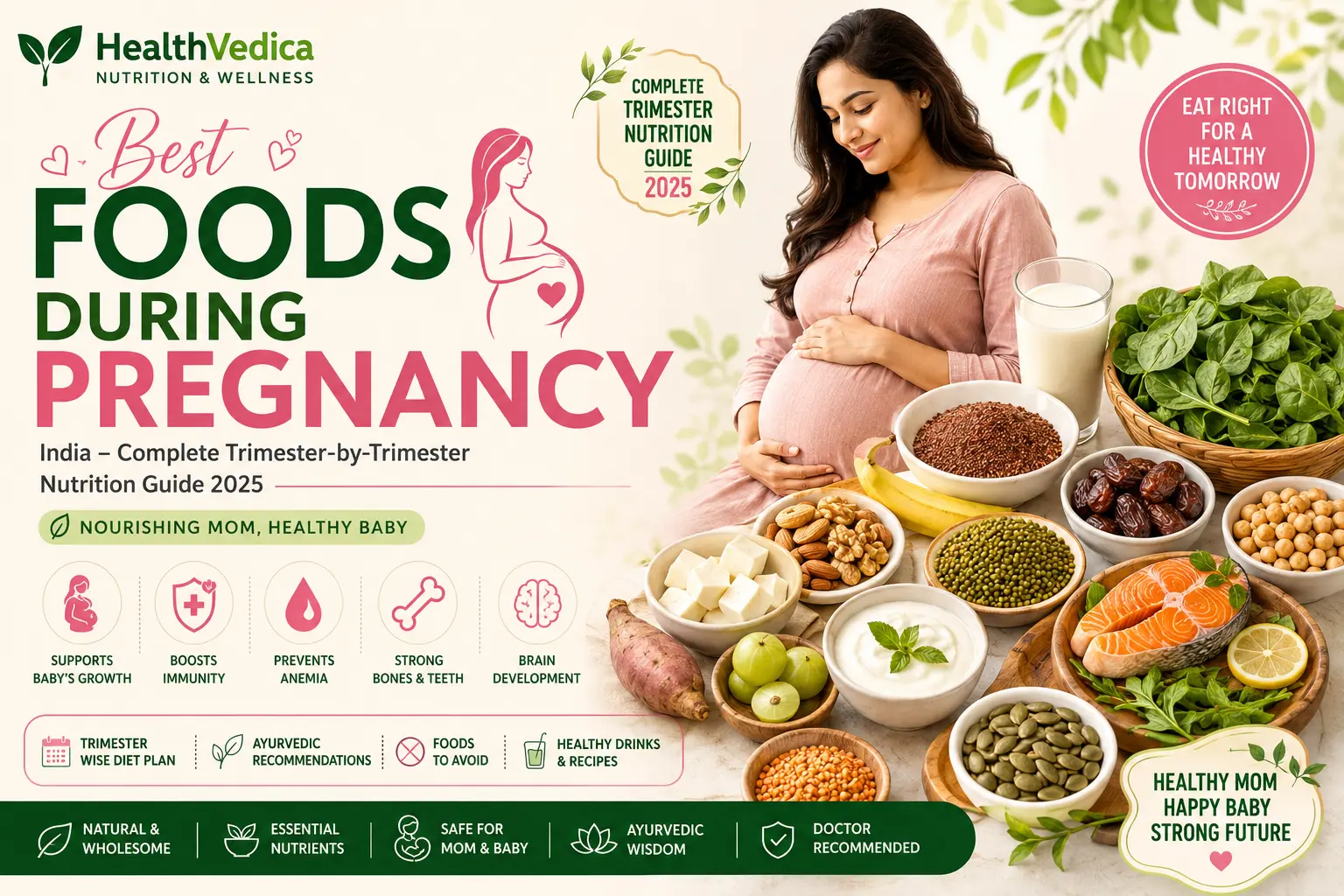
There is no single “best” pregnancy food. A balanced Indian diet built around whole grains or millets, dal and other protein foods, vegetables, fruit, dairy or suitable alternatives, nuts and seeds can help meet changing nutritional needs. During pregnancy, food is only one part of care: folic acid, iron and other supplements may be prescribed because diet alone may not cover every requirement.
Key nutrients to focus on
| Nutrient | Why it matters | Indian food examples |
|---|---|---|
| Folate | Important for early fetal development and neural-tube development. | Green leafy vegetables, pulses, beans and fortified foods |
| Iron | Supports haemoglobin and the increased blood volume of pregnancy. | Pulses, beans, leafy greens, meat/eggs if eaten, fortified foods |
| Protein | Needed for maternal tissues and fetal growth. | Dal, beans, soy, eggs, dairy, fish, chicken |
| Calcium | Supports maternal bone health and fetal skeletal development. | Milk, curd, paneer, ragi, sesame |
| Iodine | Needed for thyroid hormone production and fetal development. | Iodised salt, dairy and seafood where appropriate |
| Vitamin B12 | Important for blood and nervous-system function. | Dairy, eggs, meat, fish and fortified foods |
| Omega-3 fats | DHA is important for fetal brain and eye development. | Low-mercury fish; plant ALA sources include flax and walnuts |
What to eat in each trimester
First trimester: If nausea is a problem, smaller meals and simple foods may be easier to tolerate. Include folate-rich foods and follow your clinician’s folic-acid advice.
Second trimester: Keep meals varied and nutrient-dense. Include a protein source at meals, iron-rich foods, calcium-rich foods, vegetables and fruit.
Third trimester: Continue the same balanced pattern and pay attention to iron, protein, calcium, fibre and fluids. Appetite and meal size can change as the pregnancy progresses.
Simple Indian meal ideas
- Breakfast: vegetable upma or poha with curd, or eggs with whole-grain roti and fruit.
- Lunch: rice or roti + dal/beans + vegetables + curd.
- Snack: fruit with nuts/seeds, roasted chana or a small bowl of curd.
- Dinner: roti or millet + dal/paneer/fish/chicken + cooked vegetables.
- Fluids: water regularly through the day; choose unsweetened drinks most often.
Foods to handle carefully
Pregnancy food safety matters. Avoid alcohol, raw or undercooked animal foods, and unpasteurised dairy. Choose fish with lower mercury and follow local food-safety advice. Caffeine should be kept within the limit advised by your healthcare professional.
What about Ayurveda during pregnancy?
Ayurveda has traditional pregnancy-care concepts, including Garbhini Paricharya. These traditions can be discussed as part of cultural dietary practice, but herbal products and concentrated preparations should not be assumed to be safe simply because they are “natural.” During pregnancy, check any herb, supplement or medicinal preparation with your obstetric clinician.
Important note
Pregnancy nutrition is individual. Anaemia, diabetes, hypertension, thyroid disease, kidney disease, food allergies, vegetarian or vegan diets and multiple pregnancy can change nutritional needs. ICMR-NIN’s Dietary Guidelines for Indians 2024 specifically emphasise extra food and healthcare during pregnancy and lactation.
Evidence & source context: This guide uses ICMR-NIN Dietary Guidelines for Indians 2024 as the primary Indian nutrition framework. Ayurveda is presented as a traditional perspective, not as proof of clinical effectiveness. Food-safety advice is aligned with FSSAI guidance.