🧬 Your Body Makes Collagen—Food Provides the Building Blocks
Collagen is a structural protein found throughout the body, including skin, bone, cartilage and connective tissue. Eating collagen does not simply send collagen directly to your skin. Your body digests dietary proteins and uses amino acids and other nutrients to build and repair its own proteins.
That is why a 'collagen-supporting diet' is more useful than searching for one magical collagen food.
🔬 The Nutrients Involved in Collagen Production
Protein: supplies amino acids needed to build collagen and other tissues.
Vitamin C: is required for collagen biosynthesis and also functions as an antioxidant.
Copper and zinc: contribute to normal connective-tissue and enzyme functions.
Overall dietary adequacy matters. ICMR-NIN recommends obtaining nutrients through a diverse diet containing a variety of food groups.
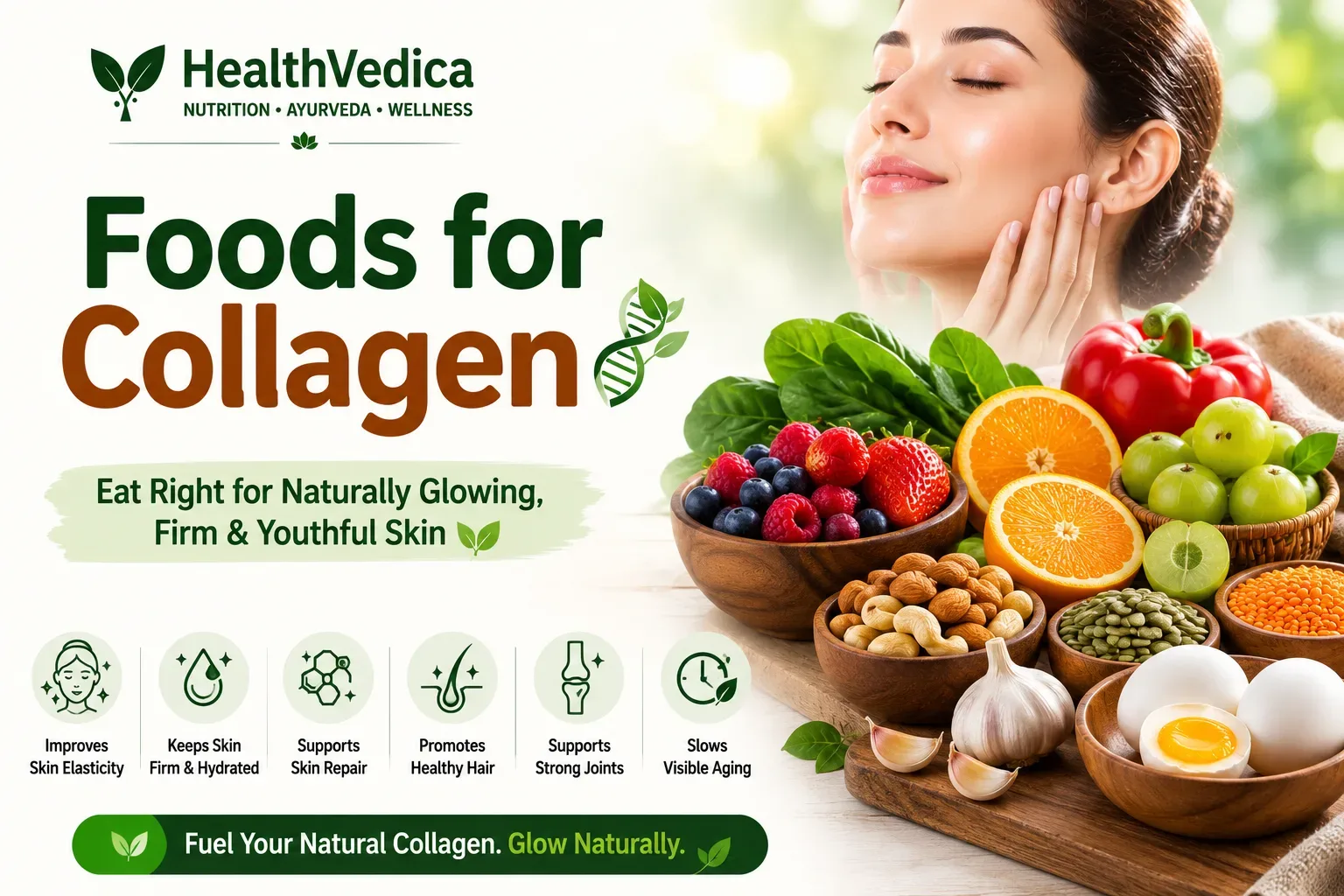
📊 Best Foods to Support Collagen Production
| Food | Main Contribution | Why It Matters |
|---|---|---|
| Amla and citrus fruits | Vitamin C | Required for collagen biosynthesis |
| Capsicum | Vitamin C | Convenient high-vitamin-C vegetable |
| Eggs and other protein foods | Protein/amino acids | Supplies raw material for tissue proteins |
| Dal and legumes | Protein and minerals | Plant-based protein option |
| Cashews & sesame | Copper and other minerals | Supports connective-tissue enzyme functions |
| Pumpkin seeds | Zinc and protein | Supports normal tissue repair |
| Tomatoes and colourful vegetables | Carotenoids and antioxidants | Helps provide a broad antioxidant intake |
| Berries and seasonal fruits | Vitamin C/polyphenols | Supports overall antioxidant intake |
⭐ The Most Important Combination: Protein + Vitamin C
A protein-adequate diet provides amino acids, while vitamin C is an essential cofactor for collagen biosynthesis. Vitamin C also helps absorb iron from plant foods.
In practice, this can be as simple as dal with vegetables and lemon, tofu with capsicum, or eggs with a vitamin-C-rich fruit.
🚫 What Can Damage Existing Collagen?
Nutrition is only part of skin ageing. Excessive UV exposure is a major contributor to collagen breakdown. Smoking also damages skin. High long-term blood glucose can promote glycation, which alters proteins such as collagen.
So eating vitamin C while ignoring sun protection would be an incomplete skin-health strategy.
🌿 An Ayurvedic Perspective
Ayurveda places importance on food quality, preparation, quantity, timing and the individual context in which food is consumed. Ministry of AYUSH guidance describes these principles through the classical framework of Ahara Vidhi.
This traditional perspective can complement a modern nutrition approach, but Ayurvedic concepts should not be presented as clinical proof that a specific food increases skin collagen.
📌 Bottom Line
You do not need a 'collagen superfood.' Focus on adequate protein, vitamin-C-rich fruits and vegetables, nuts and seeds, dietary variety, sun protection and overall healthy habits. These support the body's normal collagen production without making unrealistic promises about reversing ageing.