Quick answer
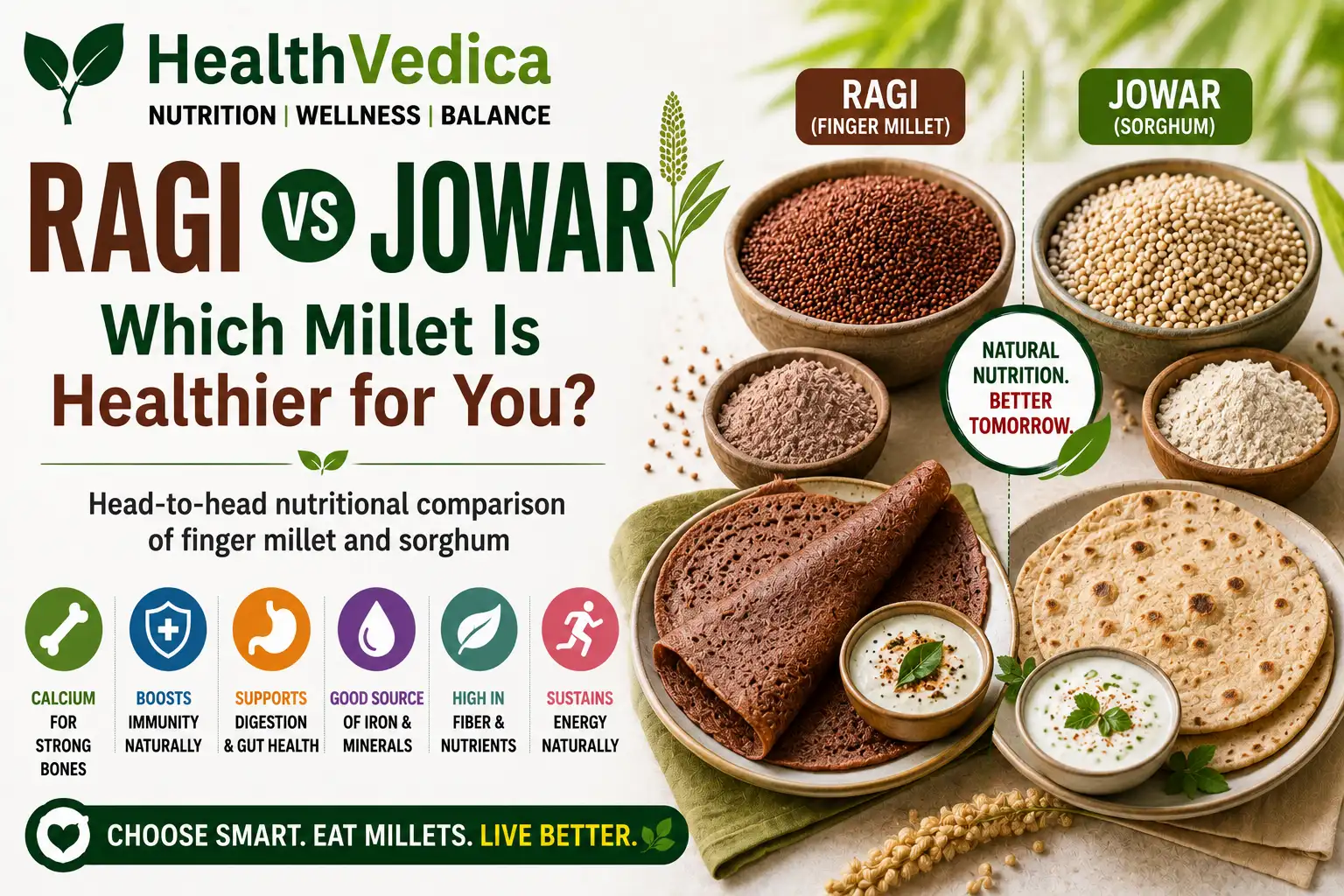
There is no single food that is automatically healthier for everyone. Ragi vs Jowar Comparison are useful choices in different situations, and the better option depends on your overall diet, portion size, cooking method and personal needs. This guide compares the two foods in plain language so you can make an informed choice.
📊 Ragi vs Jowar: Nutritional Comparison (per 100g, raw flour)
| Nutrient | Ragi | Jowar | Advantage |
|---|---|---|---|
| Calcium | 344mg | 25mg | Ragi (13x higher) |
| Iron | 3.9mg | 4.1mg | Roughly equal |
| Protein | 7.3g | 10.4g | Jowar |
| Fibre | 3.6g | 6.3g | Jowar |
| Glycaemic Index | ~54 (low-medium) | ~52 (low-medium) | Roughly equal |
| Gluten | Naturally gluten-free | Naturally gluten-free | Equal |
| Carbohydrates | 72g | 67g | Jowar (slightly lower) |
✅ Where Ragi Wins
Bone health: Ragi's calcium content is exceptional among grains — roughly equivalent to dairy sources gram for gram. This makes ragi particularly valuable for children's growth, post-menopausal women managing bone density, and anyone with limited dairy intake.
Diabetic-friendly preparations: Ragi's slow-digesting starch combined with its fibre content produces a gentler blood sugar response, especially when consumed as a fermented preparation like ragi dosa, where fermentation further lowers the glycaemic impact.
Infant and toddler nutrition: Ragi porridge (ragi malt) is a traditional first-food in many Indian households due to its digestibility and mineral density, often introduced before other grains.
✅ Where Jowar Wins
Higher protein: Jowar's protein content is meaningfully higher than ragi's, making it a better choice for those looking to increase protein intake from grain sources, particularly vegetarians building daily protein from multiple sources.
Higher fibre: Jowar's fibre content nearly doubles ragi's, supporting digestive regularity and satiety — useful for weight management goals.
Versatility in cooking: Jowar's neutral flavour and firmer texture make it well-suited to rotis that hold together more easily than ragi roti, which can be slightly more crumbly and requires more practice to roll.
🍽️ Which Should You Choose?
If your priority is bone health, calcium intake, or you're feeding growing children, ragi is the stronger choice. If your priority is protein, fibre for digestion or weight management, or you want a roti that's easier to prepare, jowar has the edge. Many nutritionists recommend rotating both through the week rather than committing exclusively to one — alternating ragi roti, jowar roti, and occasional wheat roti provides a broader nutrient spread than relying on a single grain daily.
Sources and context
Nutrition guidance in this article is framed around Indian dietary guidance from ICMR–National Institute of Nutrition (ICMR-NIN). Where Ayurveda is discussed, it is presented as a traditional framework and kept separate from modern clinical evidence. The Ministry of AYUSH's published guidance emphasises factors such as food quality, preparation, quantity, timing and individual suitability; these principles are useful context, but they should not be treated as a substitute for diagnosis or medical treatment.
Important: Nutrition needs vary with age, pregnancy, medications and medical conditions. If you have diabetes, kidney disease, coeliac disease, a food allergy or another diagnosed condition, use personalised advice from a qualified clinician or dietitian.