Quick answer
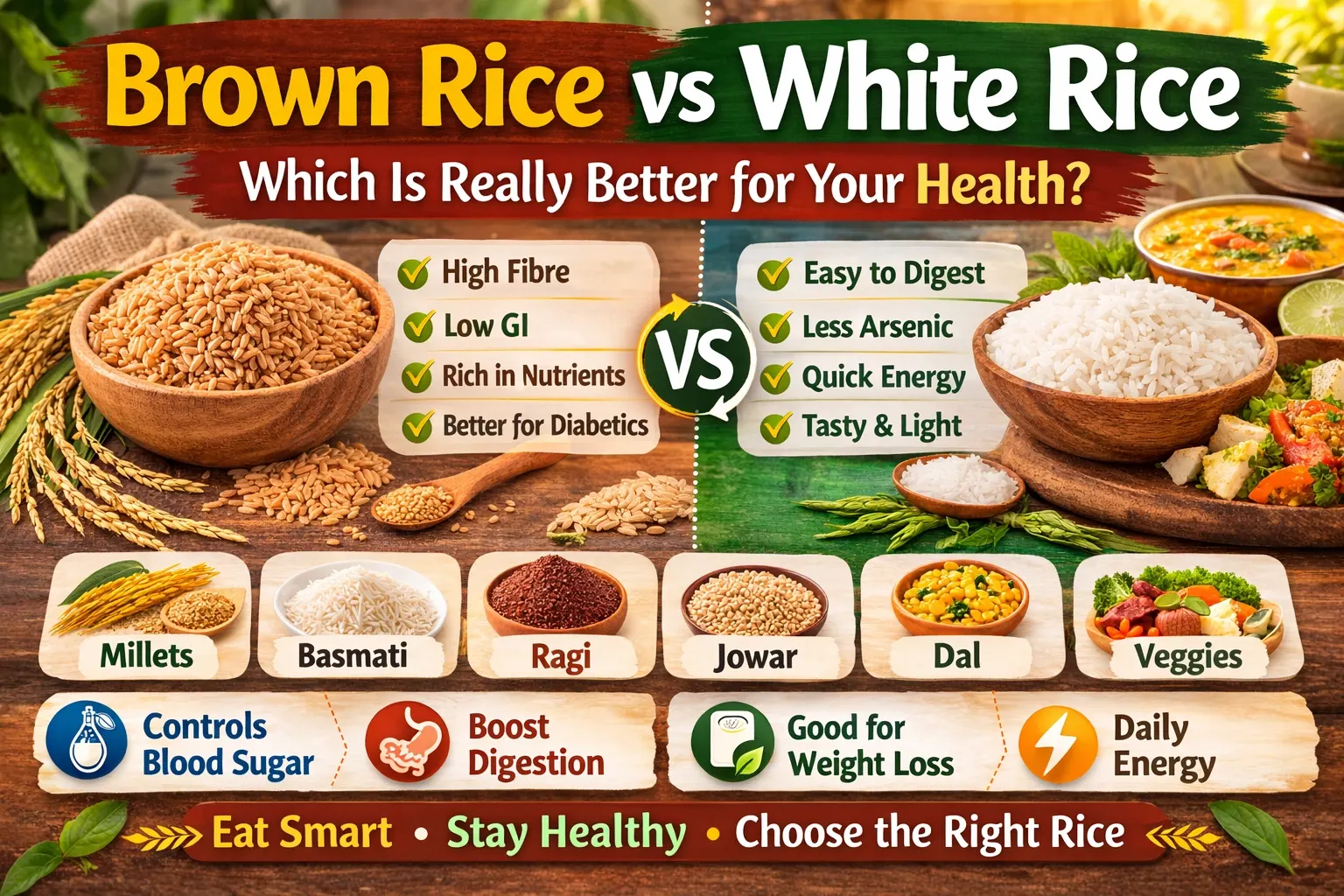
There is no single food that is automatically healthier for everyone. Brown Rice vs White Rice Which is Better are useful choices in different situations, and the better option depends on your overall diet, portion size, cooking method and personal needs. This guide compares the two foods in plain language so you can make an informed choice.
🔬 The Milling Science: What's Lost and What Remains
Rice grain anatomy determines the nutritional difference between brown and white:
Brown rice = complete grain: bran layer + germ + endosperm. The bran contains fibre, B vitamins (thiamine, niacin, B6), minerals (magnesium, phosphorus, zinc), and antioxidants. The germ contains vitamin E, healthy fats, and additional B vitamins.
White rice = endosperm only. Milling removes bran (with 60–80% of nutrients) and germ. What remains is predominantly starch — a rapidly digestible carbohydrate with minimal fibre, fat, or micronutrients.
The specific losses in milling: 75–90% of thiamine (B1), 50–60% of niacin (B3), 55–65% of B6, 60% of magnesium, 50% of phosphorus, 85% of manganese, and significant amounts of zinc, fibre, and antioxidants.
The case for white rice: After milling, white rice is easier to digest (lower fibre = faster gastric emptying), cooks faster, stores longer without rancidity (brown rice oils go rancid in 3–6 months), and in the context of a nutrient-rich Indian meal (with dal, vegetables, dahi), the overall meal is not depleted despite white rice's lower nutrient density.
📊 Brown Rice vs White Rice: Head-to-Head Comparison
| Parameter | Brown Rice (100g cooked) | White Rice (100g cooked) | Winner |
|---|---|---|---|
| Calories | 123 kcal | 130 kcal | Draw |
| Carbohydrates | 26g | 28g | Draw |
| Protein | 2.7g | 2.7g | Draw |
| Fibre | 1.8g | 0.4g | Brown |
| Glycaemic Index | 50–68 | 65–90 | Brown |
| Magnesium | 44mg | 12mg | Brown |
| Phosphorus | 83mg | 43mg | Brown |
| Zinc | 0.6mg | 0.5mg | Brown (marginal) |
| Phytic Acid | High (blocks minerals) | Low | White |
| Arsenic Content | Higher (in bran) | Lower | White |
| Digestibility | Moderate | High | White |
| Cooking time | 35–45 minutes | 15–20 minutes | White |
| Storage life | 3–6 months | Years | White |
✅ Key Advantages of Brown Rice
1. Lower Glycaemic Index — Critical for India
Brown rice GI ranges from 50–68 depending on variety and cooking method; white rice GI ranges from 65–90. This difference is significant for India's 101 million diabetics and hundreds of millions of prediabetics. The lower GI means slower glucose release, lower post-meal insulin spike, and better blood sugar management. Studies show that replacing white rice with brown rice reduces type 2 diabetes risk by 16% — one of the strongest dietary interventions for diabetes prevention in rice-eating populations.
2. Higher Fibre Content
Brown rice provides 4.5× more fibre per serving (1.8g vs 0.4g per 100g cooked). This fibre imsuggests gut microbiome diversity, reduces constipation, feeds beneficial bacteria, and provides modest cholesterol-lowering effects. For Indians already low in dietary fibre (average intake 14–17g/day vs recommended 25–35g), every additional fibre source matters.
3. More Micronutrients
The retained bran provides meaningfully more magnesium (4× more), phosphorus (2× more), manganese, B vitamins, and antioxidants. In the context of India's widespread micronutrient deficiencies, these additional nutrients from a staple food have population-level significance.
4. Weight Management
The higher fibre and slightly lower caloric density of brown rice contributes to greater satiety — people eating brown rice report feeling fuller longer. Meta-analyses show brown rice consumption correlates with lower BMI and body weight compared to white rice in observational studies of Asian populations.
⚠️ The Concerns About Brown Rice Indians Must Know
Arsenic accumulation — A significant concern: Rice naturally absorbs arsenic from soil and water. Critically, arsenic concentrates in the bran layer — meaning brown rice contains 80% more inorganic arsenic than equivalent white rice. India's arsenic-contaminated groundwater regions (West Bengal, Bihar, Uttar Pradesh, Assam) compound this risk. For people eating rice 2–3 times daily, brown rice arsenic exposure is not trivial. Mitigation: rinse rice thoroughly before cooking (removes 10–30% of arsenic), cook in excess water and drain (removes additional 25–45%), and vary grain sources rather than eating only brown rice daily.
Phytic acid blocks mineral absorption: Brown rice's bran contains phytic acid that binds calcium, zinc, iron, and magnesium — reducing their bioavailability from the meal. In a population with already high rates of iron deficiency anaemia, calcium deficiency, and zinc deficiency, this anti-nutrient effect is relevant. Soaking brown rice for 8+ hours before cooking significantly reduces phytic acid content.
Digestibility issues: The higher fibre content of brown rice can cause bloating, gas, and digestive discomfort — particularly in elderly Indians, those with irritable bowel syndrome, or those with compromised digestive capacity. Ayurveda would classify brown rice as heavier (Guru) than white rice, potentially aggravating Vata and causing digestive weakness in sensitive individuals.
🌿 Ayurvedic Perspective on Rice
Ayurvedic texts have extensive, nuanced discussion of different rice varieties. Classical Ayurveda actually recommends Shali varieties (aged white rice) as the most therapeutic food — light, easy to digest, nourishing, and sattvic. Brown rice, being heavier and more difficult to digest, would be recommended for robust Kapha constitutions but not for Vata or Pitta types with delicate digestion.
Interestingly, Ayurveda recommends Purana Shali — rice aged for at least one year — as the most digestible and therapeutic. Modern science shows aged rice has lower glycaemic index than freshly harvested rice, validating this ancient observation. Parboiled rice (partially boiled in husk before milling) — common as basmati and South Indian parboiled rice — retains some bran nutrients while being more digestible than brown rice, representing an interesting middle ground.
💡 The Indian Verdict: Practical Recommendations
For diabetics and prediabetics: Switch to brown rice or parboiled basmati (lower GI than regular white) and reduce portion size. Cook rice with a bay leaf or a few fenugreek seeds (further lowers GI). Eat rice as part of a complete meal (with dal and vegetables — the protein and fibre combination significantly lowers the meal's glycaemic impact).
For healthy active adults: Either works well within a balanced Indian meal. If choosing white rice, ensure overall meal is high in fibre and protein (dal, vegetables, dahi). If choosing brown rice, soak overnight to reduce phytate and arsenic content.
For weight management: Choose brown rice or parboiled rice for slightly better satiety, but focus more on portion control and meal composition — a medium portion of white rice with large quantities of dal and vegetables is more effective for weight management than a large portion of brown rice alone.
The best rice strategy for India: Millets first, then rice. Replace at least 50% of rice meals with millets (bajra, jowar, ragi) — which have lower GI, more fibre, no arsenic concerns, and superior micronutrient profiles. When eating rice, choose parboiled basmati or brown rice in reasonable portions as part of balanced meals.
Sources and context
Nutrition guidance in this article is framed around Indian dietary guidance from ICMR–National Institute of Nutrition (ICMR-NIN). Where Ayurveda is discussed, it is presented as a traditional framework and kept separate from modern clinical evidence. The Ministry of AYUSH's published guidance emphasises factors such as food quality, preparation, quantity, timing and individual suitability; these principles are useful context, but they should not be treated as a substitute for diagnosis or medical treatment.
Important: Nutrition needs vary with age, pregnancy, medications and medical conditions. If you have diabetes, kidney disease, coeliac disease, a food allergy or another diagnosed condition, use personalised advice from a qualified clinician or dietitian.