❤️ The Indian Heart Crisis
A heart-friendly diet is built from everyday foods rather than a single supplement. More vegetables, fruit, pulses, whole grains, nuts and seeds—and less excess salt, saturated fat, trans fat and highly processed food is a useful foundation. Your overall pattern matters more than any one 'heart superfood'.
Quick takeaways: For heart health, build meals around vegetables, fruit, pulses, whole grains, nuts and healthier fats while keeping excess salt, saturated fat and highly processed foods in check.
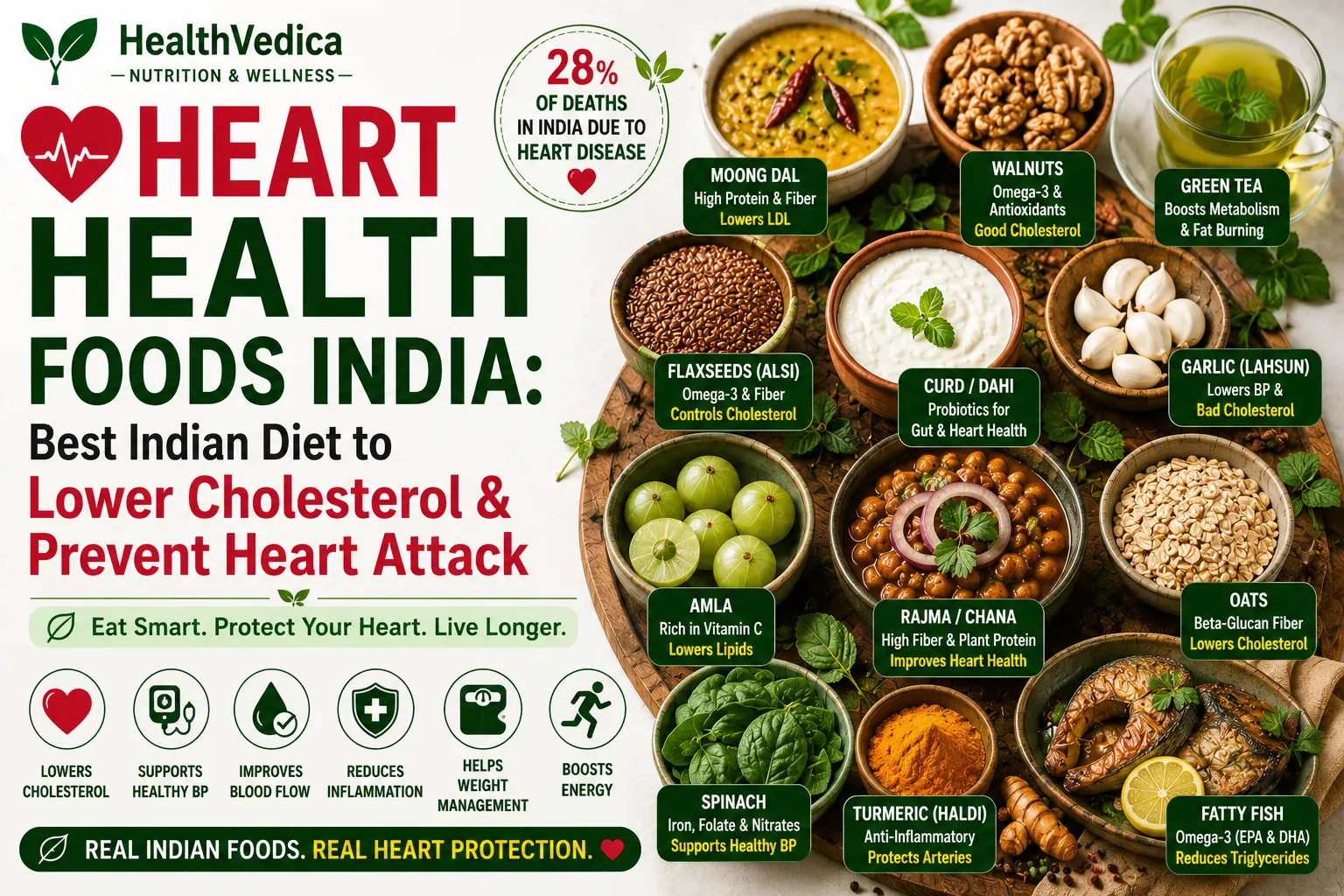
The traditional Indian diet — rich in legumes, vegetables, spices, and whole grains — was actually highly cardioprotective. But urbanisation has brought refined oils, white rice, maida, trans fats, excessive salt, and sugar into the Indian kitchen. The result: an epidemic of high blood pressure, high cholesterol, type 2 diabetes, and coronary artery disease among people in their 30s and 40s.
The hopeful truth: the traditional Indian kitchen contains some of the world's most traditional heart medicines. Turmeric, garlic, fenugreek, amla, flaxseeds, and a rainbow of lentils and vegetables — all proven to reduce cardiovascular risk when eaten consistently. This guide shows you exactly how to eat for a lifetime of heart health.
🔬 Understanding Cardiovascular Risk: The Indian Context
Heart disease is driven by several modifiable risk factors, most of which respond meaningfully to dietary change:
LDL Cholesterol (the bad kind): Saturated fats (ghee, coconut oil in excess, fatty meats) and trans fats (vanaspati, partially hydrogenated oils in biscuits and namkeen) raise LDL. Target LDL below 100 mg/dL (below 70 if high-risk).
HDL Cholesterol (the protective kind): Exercise, olive oil, nuts, and omega-3 fatty acids raise HDL. Indians tend to have naturally low HDL — dietary intervention is critical.
Triglycerides: Refined carbohydrates (white rice, maida, sugar) spike triglycerides. Indians with central obesity are particularly susceptible. Target below 150 mg/dL.
Inflammation (hsCRP): Chronic low-grade inflammation damages artery walls. Anti-inflammatory foods (turmeric, omega-3s, berries, leafy greens) may directly reduce this risk.
Homocysteine: B-vitamin deficiency raises homocysteine, which damages arteries. Indian vegetarians are at risk due to B12 deficiency.
📊 Heart-Healthy Indian Foods: Nutritional Comparison
| Food | Key Heart Nutrient | Benefit | Serving Size |
|---|---|---|---|
| Flaxseeds (Alsi) | ALA Omega-3: 6.4g/tbsp | Lowers triglycerides & inflammation | 1 tbsp/day |
| Walnuts | ALA Omega-3 + Polyphenols | Reduces LDL, raises HDL | 4–5 walnut halves |
| Garlic | Allicin | Lowers BP & LDL cholesterol | 2–3 raw cloves |
| Turmeric | Curcumin 3–5% | Anti-inflammatory, anti-platelet | ½ tsp/day in cooking |
| Rajma/Kidney Beans | Soluble Fibre 6.4g/100g | Lowers LDL cholesterol | ½ cup cooked |
| Amla | Vitamin C 600mg/100g | Antioxidant, lowers lipids | 1–2 fresh or juice |
| Oats | Beta-glucan fibre | FDA-approved cholesterol reducer | ½ cup dry |
| Fatty Fish (Surmai) | EPA+DHA Omega-3 | Reduces triglycerides, inflammation | 100g, 2–3×/week |
| Tomatoes | Lycopene | Reduces oxidised LDL | 2 tomatoes/day |
| Dark Leafy Greens | Nitrates + Folate | Lowers BP, reduces homocysteine | 1 cup cooked/day |
✅ Top Cardioprotective Indian Foods
1. Flaxseeds (Alsi / Tisi)
India's most accessible omega-3 source. Just 1 tablespoon provides 6.4g of ALA omega-3 — more than most fish. ALA reduces inflammation, lowers triglycerides, and improves arterial flexibility. Always grind flaxseeds before eating as whole seeds pass through undigested. Add to roti dough, sprinkle on salads, or blend into lassi.
2. Walnuts(Akhrot)
The only nut with significant omega-3 content. Multiple studies confirm: eating 4–5 walnuts daily for 8 weeks significantly reduces total cholesterol, LDL, and triglycerides. Polyphenols in walnuts also may directly protect blood vessel walls from oxidative damage.
3. Garlic (Lahsun)
Two to three raw garlic cloves daily can lower LDL by 10–15% and systolic blood pressure by 8–10 mmHg — effects comparable to mild medications, without side effects. Allicin (formed when garlic is crushed) is the active compound. Let crushed garlic rest 10 minutes before cooking to stabilise allicin.
4. Turmeric (Haldi)
Curcumin is one of the most studied natural anti-inflammatory compounds. It inhibits NF-kB (master inflammation switch), prevents platelet aggregation (clot formation), reduces LDL oxidation, and improves arterial function. Use daily in cooking with black pepper (increases curcumin absorption by 2000%).
5. Soluble Fibre Foods (Oats, Barley, Rajma, Moong)
Soluble fibre forms a gel in the digestive tract that binds to cholesterol and removes it from the body before absorption. Oat beta-glucan is FDA-approved for cholesterol reduction. The DASH diet — globally proven to reduce cardiovascular risk — is high in exactly these fibre-rich foods which Indians already eat.
6. Fatty Fish (Surmai, Bangda, Rohu)
Marine omega-3s (EPA and DHA) reduce triglycerides by 20–50%, decrease blood pressure, prevent irregular heartbeat, and reduce risk of sudden cardiac death. Two to three servings weekly is the American Heart Association recommendation. For vegetarians, algae-based omega-3 supplements are a useful alternative.
7. Pomegranate (Anar)
Pomegranate juice and seeds are extraordinarily rich in punicalagins — antioxidants 3× more potent than red wine and green tea combined. Studies show daily pomegranate juice consumption reduces carotid artery plaque by 30% over three years and lowers blood pressure significantly.
8. Amla (Indian Gooseberry)
Traditional wisdom backed by modern science: amla significantly reduces total cholesterol, LDL, and triglycerides while raising HDL. A 2012 study in the European Journal of Clinical Nutrition found amla effective as statins for lipid management with zero side effects. Eat 1–2 fresh amla daily or consume as juice.
🌿 Ayurveda for Heart Health (Hridaya Roga)
Ayurveda's heart formulations have centuries of empirical validation, now being confirmed by modern science:
Arjuna (Terminalia arjuna): The Ayurvedic heart herb. Bark extract strengthens heart muscle, improves cardiac function, and reduces chest pain frequency. Widely studied at All India Institute of Medical Sciences (AIIMS). Arjunarishtam is a classical formulation used by millions.
Garlic-Honey Combination: Morning ritual of 2 crushed garlic cloves + 1 tsp honey in warm water provides allicin + antioxidants for arterial protection.
Triphala: Reduces oxidative stress, lowers lipid peroxidation, and gently support normal body functionsifies the liver, improving lipid metabolism over time.
Saffron (Kesar): Emerging research shows crocin and safranal in saffron reduce arterial inflammation and improve endothelial function. Even small amounts (30 mg/day) show benefits.
🚫 Heart-Harmful Foods Common in Indian Diets
Vanaspati / Partially Hydrogenated Oils: Trans fats raise LDL and lower HDL simultaneously — the worst combination for heart disease. Common in restaurants, street food, and cheap packaged goods. Always check labels and avoid hydrogenated oils completely.
Excessive Salt: Average Indian consumes 10–12g salt daily — 2–4× the recommended maximum. Salt raises blood pressure, the primary driver of heart disease and stroke. Use less salt, choose low-sodium options, and avoid adding table salt.
White Rice in Excess: High glycaemic index rice raises triglycerides and blood glucose over time. Limit portions and switch to millets for at least half your grain intake.
Organ Meats (Liver, Brain, Kidney): Very high in dietary cholesterol and saturated fat. Limit to occasional consumption if at all.
Sugary Beverages: Packaged juices, soft drinks, sweetened chai and coffee may directly raise triglycerides and contribute to visceral obesity — a major cardiac risk factor.
💡 7-Day Cardioprotective Indian Meal Plan
Daily rituals: Morning — 2 crushed garlic cloves + warm water | 4–5 walnuts as snack | 1 tbsp ground flaxseeds in meal | Cooking in canard oil or ghee (small amounts)
Monday: Breakfast: Oats upma + amla juice | Lunch: Rajma + brown rice/millet + palak sabzi + dahi | Dinner: Fish curry + jowar roti + stir-fry
Tuesday: Breakfast: Moong dal chilla + green chutney | Lunch: Dal + millet + mixed vegetables + salad | Dinner: Light soup + 2 chapati + sabzi
Wednesday: Breakfast: Daliya (broken wheat) porridge + banana | Lunch: Chole + rice (small) + cucumber raita | Dinner: Grilled fish + sautéed greens + roti
Thursday: Breakfast: Idli + sambar | Lunch: Mixed dal + millet + bitter gourd (karela) + dahi | Dinner: Khichdi + buttermilk
Friday: Breakfast: Ragi dosa + tomato chutney | Lunch: Palak paneer + bajra roti + salad | Dinner: Lentil soup + 2 roti + salad
Saturday: Breakfast: Besan chilla + pomegranate | Lunch: Soybean curry + jowar + raita | Dinner: Grilled chicken/paneer + salad + soup
Sunday: Breakfast: Oat poha + amla | Lunch: Mutton dalcha (once a week) or mushroom curry + millet | Dinner: Light khichdi
Evidence note: This article is an educational nutrition guide. General diet guidance is aligned where applicable with ICMR-NIN Dietary Guidelines for Indians, WHO healthy-diet guidance, and relevant Ministry of Ayush materials. Ayurvedic concepts are presented as traditional perspectives and are not a substitute for medical diagnosis or treatment.