🩺 Can Type 2 Diabetes Go Into Remission?
Yes — some people with type 2 diabetes can achieve remission, especially when substantial and sustained weight loss is achieved early in the disease. Remission is not the same as a permanent cure: blood glucose can rise again if weight returns or the underlying metabolic problem progresses.
The practical goal is not to chase a dramatic 'diabetes cure' claim. It is to improve HbA1c, reduce cardiometabolic risk, reduce medication burden where medically appropriate, and build an eating pattern you can maintain for years. Current diabetes guidance recognizes that nutrition, physical activity and weight management can produce major improvements, and that greater sustained weight loss may support remission in some people.
🔎 Who Has the Best Chance of Remission?
Remission is more likely when type 2 diabetes is relatively recent, insulin-producing pancreatic function is still reasonably preserved, and meaningful weight loss can be achieved and maintained. It is less predictable in long-standing diabetes, advanced complications, or when insulin production has become severely impaired. That is why the right question is not 'Which food cures diabetes?' but 'What combination of food, weight management, activity and medical care gives me the best metabolic improvement?'
Important: Never stop insulin, metformin, sulfonylureas or other glucose-lowering medicines on your own. A large improvement in diet can itself lower glucose, so medication sometimes needs adjustment under medical supervision.
📊 The Indian Diabetes Plate
| Plate Part | What to Choose | Why It Matters |
|---|---|---|
| ½ plate | Non-starchy vegetables: palak, bhindi, lauki, beans, cauliflower, cabbage, cucumber | More fibre and volume with less carbohydrate density |
| ¼ plate | Protein: dal, chana, rajma, eggs, fish, chicken, paneer or tofu | Supports fullness and helps reduce the glucose impact of a carbohydrate-heavy meal |
| ¼ plate | Whole grains or traditional staples: jowar, bajra, oats, brown rice or a controlled portion of rice/roti | Portion and carbohydrate quality matter more than banning one staple |
| Small serving | Nuts, seeds, curd or healthy cooking fats | Supports satiety and overall diet quality |
🥗 Foods That Deserve a Place on Your Plate
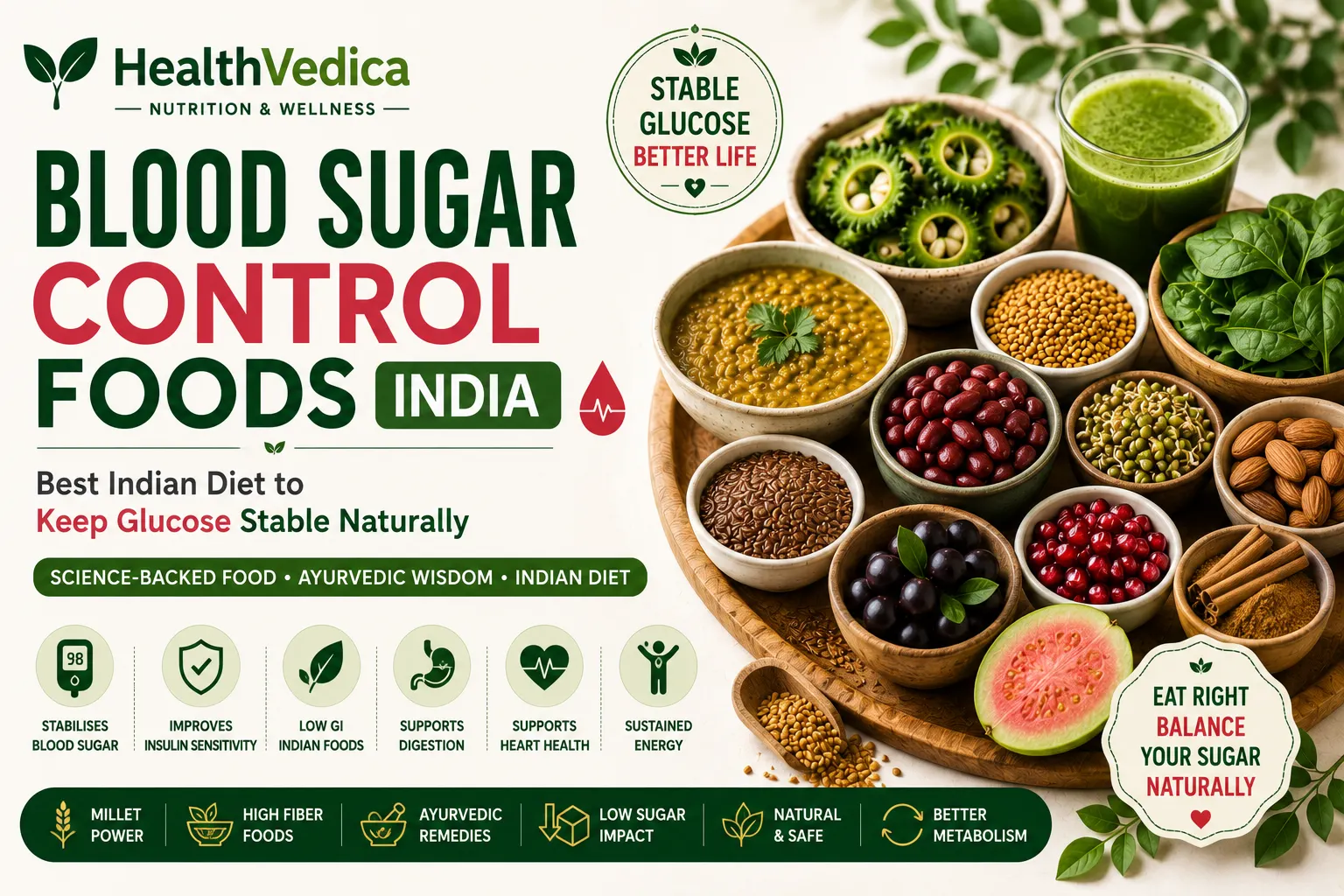
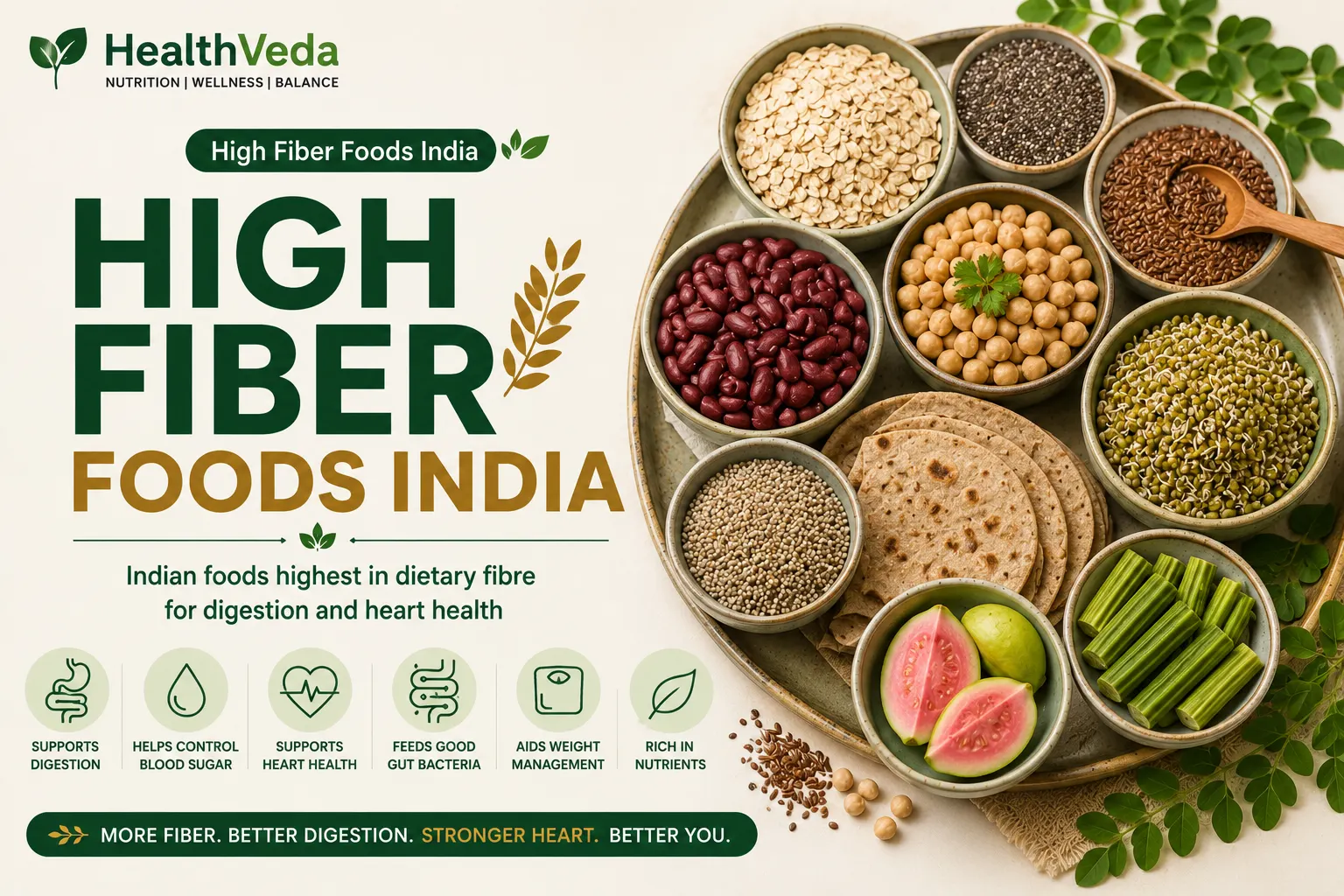
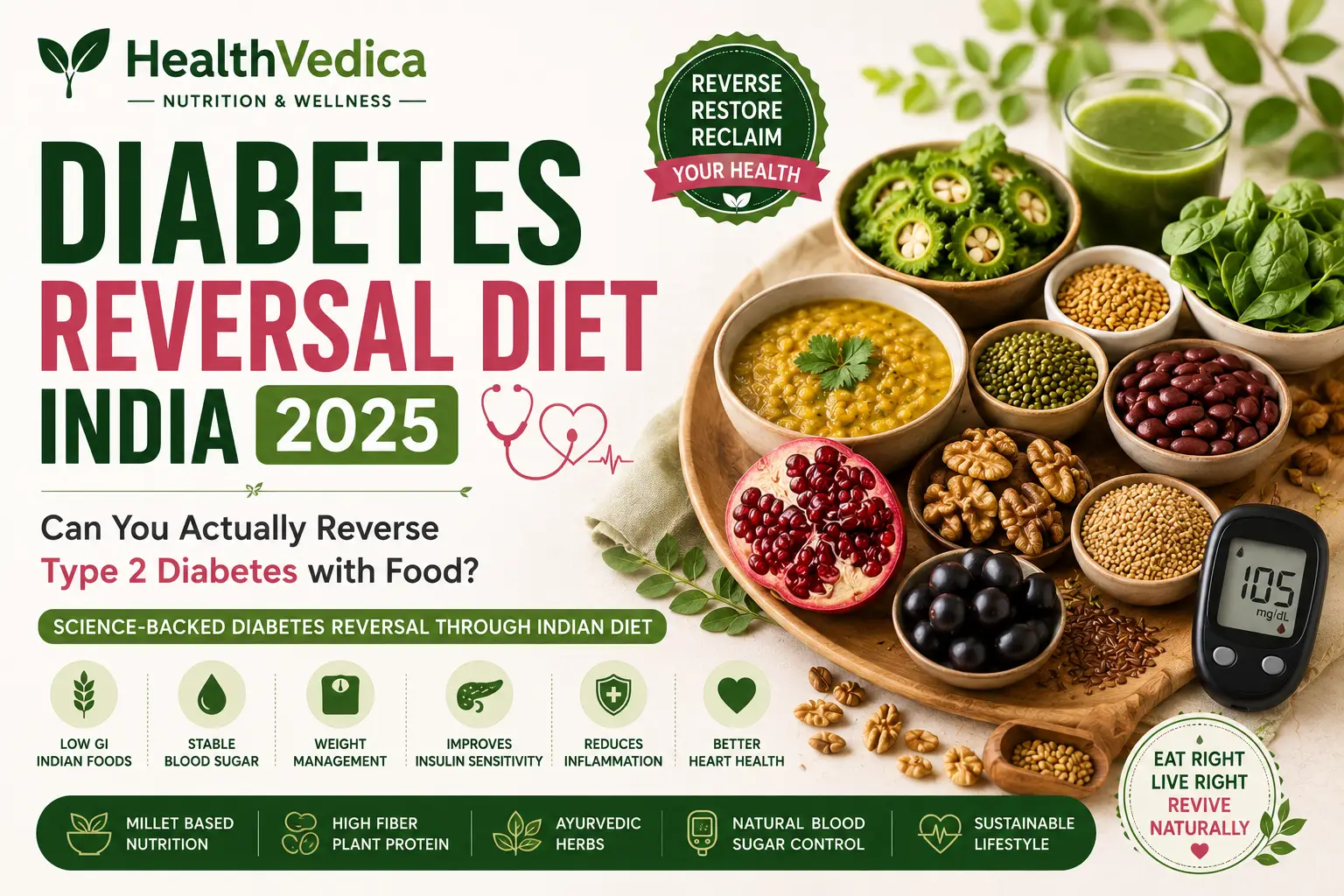
1. Dal, beans and pulses: Moong, masoor, chana and rajma combine carbohydrate with protein and fibre. They are much more useful than treating dal as a tiny side dish next to a very large rice portion.
2. Non-starchy vegetables: Build volume with gourds, leafy greens, okra, beans, capsicum, tomato, cucumber, cauliflower and other vegetables. ICMR-NIN dietary guidance emphasizes variety, minimally processed foods and a balanced plate rather than dependence on one 'superfood'.
3. Millets and other whole grains: Jowar, bajra and other millets can replace part of the refined-grain load in an Indian diet. They are useful because of their fibre and whole-grain structure, but millets are not unlimited foods; portion size still matters because they contain carbohydrate.
4. Whole fruit instead of juice: Guava, apple, orange, papaya and other whole fruits provide fibre and micronutrients. Juice removes much of the physical structure that slows eating and can make a large amount of sugar easier to consume quickly.
5. Nuts and seeds: Almonds, walnuts, flaxseed and pumpkin seeds can improve the overall nutritional quality of meals. Keep portions sensible because they are energy dense.
🚫 What to Cut First
The highest-return changes are usually sugary drinks, sweets, frequent biscuits/snacks, oversized rice portions, refined flour foods and highly processed foods. Jaggery, honey and 'natural sugar' still contribute sugar; replacing white sugar with jaggery does not make a high-sugar diet diabetes-friendly.
Do not automatically ban every carbohydrate. Extreme restriction can be unnecessary and difficult to sustain. A better strategy is to control portions, choose higher-fibre carbohydrate sources, and pair them with vegetables and protein.
⚖️ Weight Loss Matters — But It Is Not the Only Goal
For people with type 2 diabetes and overweight or obesity, current ADA guidance states that even 5–7% weight loss can improve glycaemia, while sustained weight loss above 10% generally provides larger benefits and may support remission in some people. This gives you a measurable target without pretending that everyone needs the same amount of weight loss.
🚶 The Simple Habit Many People Ignore
Regular walking and resistance exercise improve glucose handling by increasing muscle glucose uptake. A practical starting point is a short walk after meals plus regular strength training if medically appropriate. Exercise should be part of the treatment plan, not a punishment for eating.
🍽️ 7-Day Indian Diabetes-Friendly Meal Framework
Monday: Moong chilla + curd | Lunch: dal + jowar roti + bhindi + salad | Dinner: grilled fish/paneer + vegetables + small rice portion.
Tuesday: Eggs + vegetable omelette | Lunch: rajma + controlled rice portion + cucumber raita | Dinner: moong dal + mixed vegetables + millet roti.
Wednesday: Oats with nuts, no added sugar | Lunch: chana + roti + palak | Dinner: chicken/tofu + vegetables + small millet serving.
Thursday: Besan chilla + curd | Lunch: sambar + vegetables + small rice portion | Dinner: paneer bhurji + salad + one roti.
Friday: Vegetable dal dosa | Lunch: masoor dal + jowar roti + lauki | Dinner: fish/beans + vegetables.
Saturday: Unsweetened dahi + nuts + whole fruit | Lunch: rajma/chole + roti + large salad | Dinner: egg curry/paneer + vegetables.
Sunday: Vegetable poha with peanuts | Lunch: dal + brown rice + two vegetables | Dinner: light vegetable soup + protein-rich main dish.
🧪 What to Monitor
Use the measures your clinician recommends: HbA1c, fasting glucose, blood pressure, lipids, kidney function and diabetes complications. If you are trying to reduce medication, glucose should be monitored more closely because improvement can happen faster than expected.
✅ Bottom Line
Think remission, not miracle cure. The evidence supports sustainable weight management, improved food quality, regular activity and appropriate medical treatment. You do not need exotic foods. The strongest foundation is vegetables, pulses, appropriate portions of whole grains, whole fruit, protein and fewer liquid calories and ultra-processed foods.
📚 Trusted Sources & Further Reading
This guide is educational and is not a substitute for diagnosis or treatment. Nutrient and dietary guidance is aligned where applicable with Indian nutrition guidance and major clinical references.