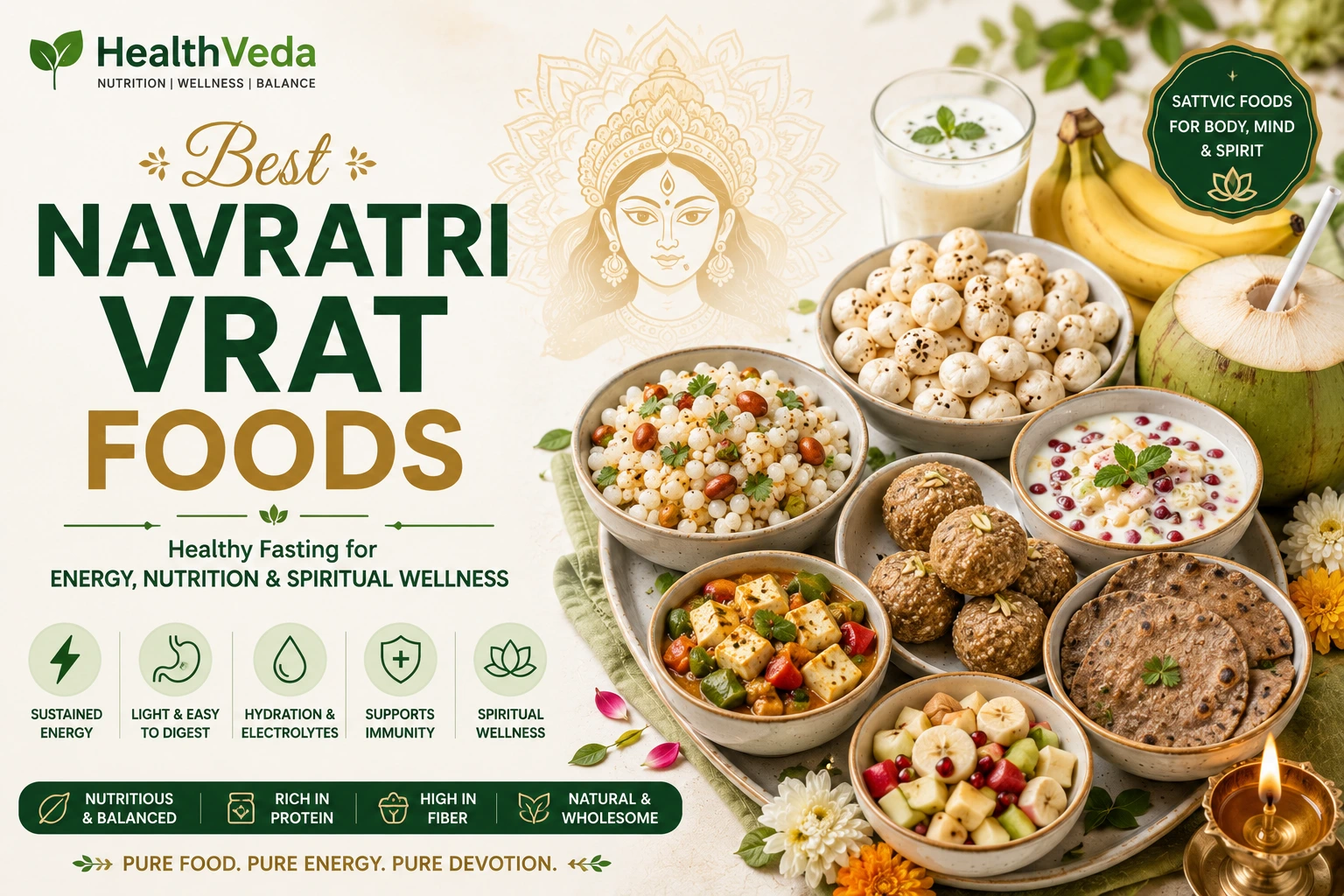
🙏 What Is Navratri Vrat?
Navratri fasting is observed in different ways across India. Some people avoid grains and pulses, some eat one meal a day, while others follow a fruit-based or more restrictive fast. There is no single universal Navratri diet. Food rules vary according to family, region, tradition and personal practice.
That distinction matters because a nutritionally balanced vrat is very different from surviving for nine days on potatoes, fried snacks and sweets.
🥗 The Goal: Traditional Fasting Without Nutritional Chaos
If your fasting rules allow food, build meals around foods that provide protein, fibre, micronutrients and adequate energy.
- Protein: milk, curd, paneer, nuts and permitted protein-rich foods
- Carbohydrates: rajgira, kuttu, singhara and other permitted foods
- Fruit and vegetables: according to your fasting tradition
- Healthy fats: nuts and seeds in moderate portions
- Fluids: water and other suitable unsweetened beverages
📊 Best Vrat-Friendly Foods
| Food | What It Provides | Easy Use |
|---|---|---|
| Rajgira | Protein, carbohydrate and minerals | Roti, porridge |
| Kuttu | Carbohydrate, fibre and minerals | Roti, cheela |
| Singhara | Carbohydrate and minerals | Flour-based dishes |
| Makhana | Carbohydrate, some protein and minerals | Roasted snack |
| Curd | Protein and calcium | Side dish |
| Paneer | Protein and calcium | Sabzi |
| Fruit | Fibre, vitamins and fluids | Whole fruit |
| Nuts | Unsaturated fats, protein and minerals | Small snack |
| Sweet potato | Carbohydrate, fibre and potassium | Boiled or roasted |
🥔 What About Sabudana?
Sabudana is primarily a source of carbohydrate and can provide quick energy. By itself, it is not a particularly protein-rich meal.
A sabudana preparation containing peanuts and served with curd can be more nutritionally balanced than a plate consisting almost entirely of sabudana.
🥜 Makhana and Nuts
Roasted makhana can be a convenient snack, while nuts provide healthy fats and some protein. Because nuts and seeds are calorie-dense, a small handful is usually sufficient.
🍌 Fruit During Navratri
Whole fruits can provide fibre, potassium, vitamin C and other micronutrients. Choose a variety of seasonal fruits rather than relying only on fruit juice.
💧 Hydration During Fasting
If your fasting practice permits fluids, drink water regularly. Buttermilk, milk or coconut water may also fit depending on individual tolerance and fasting rules.
Headache, dizziness, weakness or confusion should not automatically be interpreted as a normal sign that a fast is 'working'. Persistent or severe symptoms deserve medical attention.
⚠️ Who Should Be Careful With Fasting?
People with diabetes, kidney disease, significant liver disease, eating disorders, pregnancy, breastfeeding, frailty or those taking medicines that depend on regular food intake should discuss fasting with a healthcare professional before changing their eating pattern.
🍽️ Example Balanced Navratri Meal Plan
Breakfast: rajgira porridge + milk + fruit
Mid-morning: coconut water or whole fruit if permitted
Lunch: kuttu roti + paneer/curd + permitted vegetables
Evening: roasted makhana + nuts
Dinner: sweet potato + curd/paneer + permitted vegetables
Modify this according to your personal fasting tradition and medical needs.
🌿 Ayurveda and Fasting
Ayurveda discusses food, digestion, daily routines and seasonal routines through its own traditional concepts. The idea of adapting diet and routine to season is part of the Ayurvedic framework of Ritucharya.
AYUSH educational resources describe Ayurveda's preventive approach as including diet and lifestyle, daily routines and seasonal routines.
These traditional concepts can be discussed alongside modern nutrition science, but they should not be presented as clinical evidence that fasting cures disease.
🚫 Common Navratri Fasting Mistakes
- Eating fried vrat snacks repeatedly
- Drinking large amounts of sugary beverages
- Eating mostly potatoes and sabudana without protein
- Not drinking enough fluids when fluids are permitted
- Overeating after a long fasting period
- Ignoring medical conditions or medication requirements
💡 Bottom Line
Healthy Navratri fasting is about balancing tradition with adequate nutrition and personal safety. When permitted by your fasting practice, prioritise nutrient-dense foods such as rajgira, kuttu, dairy, nuts, fruits, vegetables and moderate portions of sabudana or sweet potato.
You do not need to turn vrat into a nine-day feast of fried snacks. Simple food, sensible portions and adequate hydration make the practice easier to sustain.