Quick answer
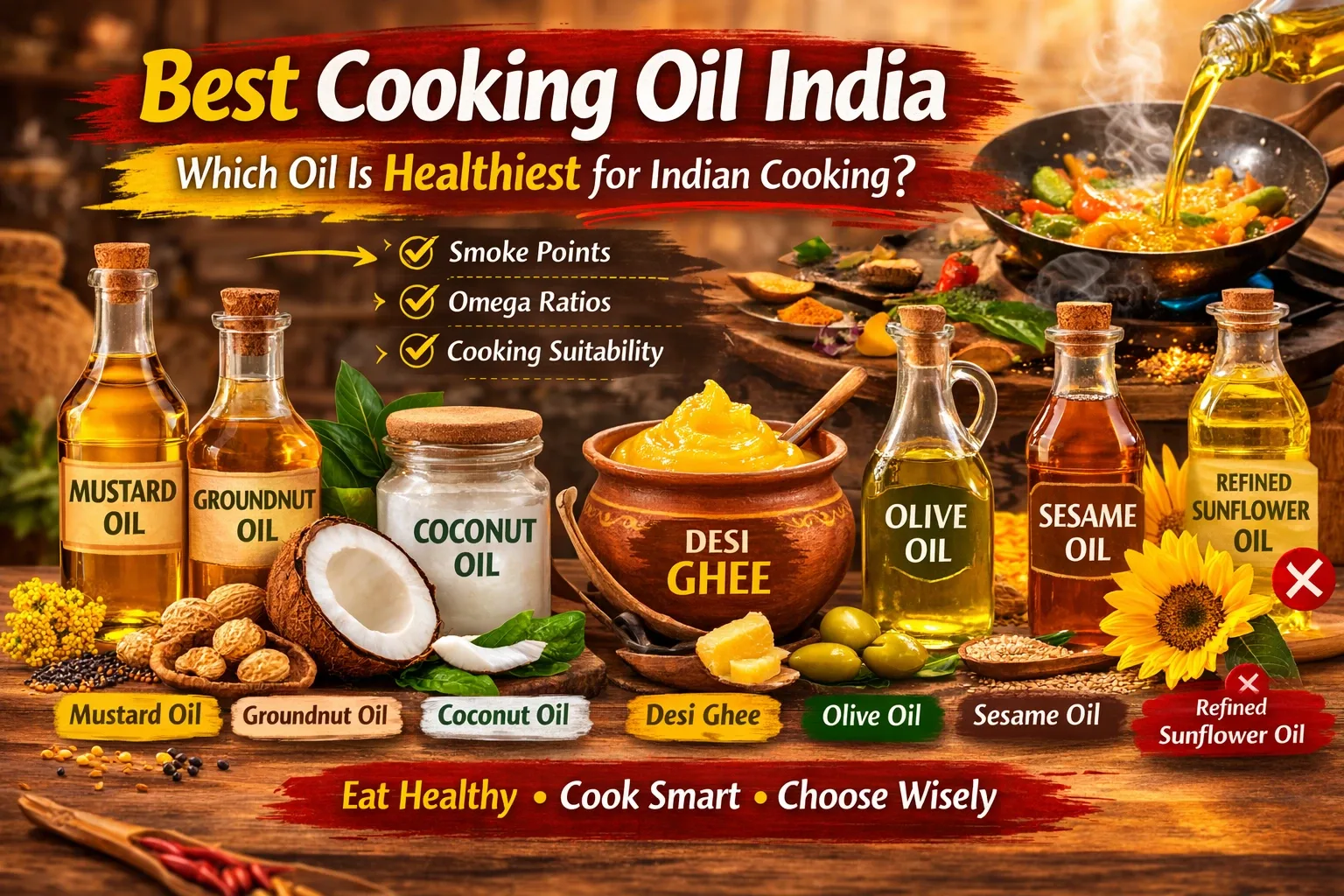
Best Cooking Oil for Health in India can be part of a balanced Indian diet, but health claims need context. The most useful questions are how much you eat, how the food is prepared, what you eat with it, and whether you have a condition that changes your dietary needs. This guide focuses on practical, evidence-informed choices rather than miracle-food claims.
🔬 The Science of Cooking Oils: What Actually Matters
Smoke point: The temperature at which oil begins to smoke and break down into harmful compounds. Indian cooking methods — tempering (tadka), deep frying, stir-frying — often exceed 180–220°C. An oil with a smoke point below your cooking temperature produces harmful aldehydes, trans fats, and free radicals. This is critical — and it's why many 'healthy' oils like flaxseed or extra virgin olive oil are inappropriate for Indian cooking.
Omega-6 to Omega-3 ratio: The ideal dietary ratio is approximately 4:1 (omega-6 to omega-3). Modern Indian diets have ratios of 30:1 to 50:1 due to heavy use of refined sunflower and soybean oils — both extremely high in omega-6. This imbalance promotes systemic inflammation. Traditional Indian oils (mustard, groundnut, coconut) naturally have more balanced ratios.
Saturated vs Unsaturated: Saturated fats (coconut oil, ghee) are more stable at high heat but were long demonised for heart disease — a position being revised. Monounsaturated fats (olive oil, groundnut oil) are moderately stable. Polyunsaturated fats (sunflower, soybean) are highly unstable at heat, oxidising rapidly into harmful compounds.
Processing: Cold-pressed/wood-pressed oils retain natural antioxidants that protect against oxidation. Refined oils have antioxidants stripped away, making them more susceptible to oxidative damage during cooking — directly contradicting their 'heart-healthy' marketing.
📊 Cooking Oil Comparison Chart for Indian Kitchen
| Oil | Smoke Point | Omega-6:3 Ratio | Best For | Key point |
|---|---|---|---|---|
| Mustard Oil (Kachi Ghani) | 250°C | 2:1 (excellent) | Tadka, curry, stir-fry | ⭐⭐⭐⭐⭐ |
| Desi Ghee | 250°C | Balanced | All Indian cooking, tadka | ⭐⭐⭐⭐⭐ |
| Groundnut Oil (Cold-pressed) | 230°C | 4:1 (good) | Deep frying, curry | ⭐⭐⭐⭐ |
| Coconut Oil (Virgin) | 177°C | Balanced (minimal PUFA) | South Indian cooking, medium heat | ⭐⭐⭐⭐ |
| Sesame Oil (Cold-pressed) | 177–210°C | 10:1 | Finishing, South Indian tadka | ⭐⭐⭐⭐ |
| Extra Virgin Olive Oil | 190°C | 3:1 | Salads, low-heat cooking | ⭐⭐⭐⭐ |
| Refined Sunflower Oil | 230°C | 40:1 (very poor) | Widely used but not ideal | ⭐⭐ |
| Refined Soybean Oil | 238°C | 7:1 (poor) | Widely used — avoid | ⭐⭐ |
| Rice Bran Oil | 254°C | 20:1 | High-heat frying | ⭐⭐⭐ |
| Vanaspati (Dalda) | — | Worst (trans fats) | Best avoided | ❌ |
✅ Best Cooking Oils for Indian Kitchen (Ranked)
1. Mustard Oil (Sarson ka Tel / Kachi Ghani) — India's Heritage Heart Oil
Mustard oil is North India's traditional cooking fat and one of the world's most nutritionally intelligent oils. Its omega-6 to omega-3 ratio of approximately 2:1 is exceptional — among the best of any vegetable oil. It contains erucic acid (debated but likely neutral in typical culinary doses), glucosinolates (antimicrobial), and allyl isothiocyanate (anti-inflammatory). High smoke point (250°C) makes it perfect for all Indian cooking. Studies on rural North Indian populations who exclusively use mustard oil show significantly lower cardiovascular disease rates than urban populations using refined oils. Always choose Kachi Ghani (cold-pressed) variety — the dark, pungent oil with the raw mustard smell. This is the one that retains all health benefits.
2. Desi Ghee — India's Sacred Cooking Fat
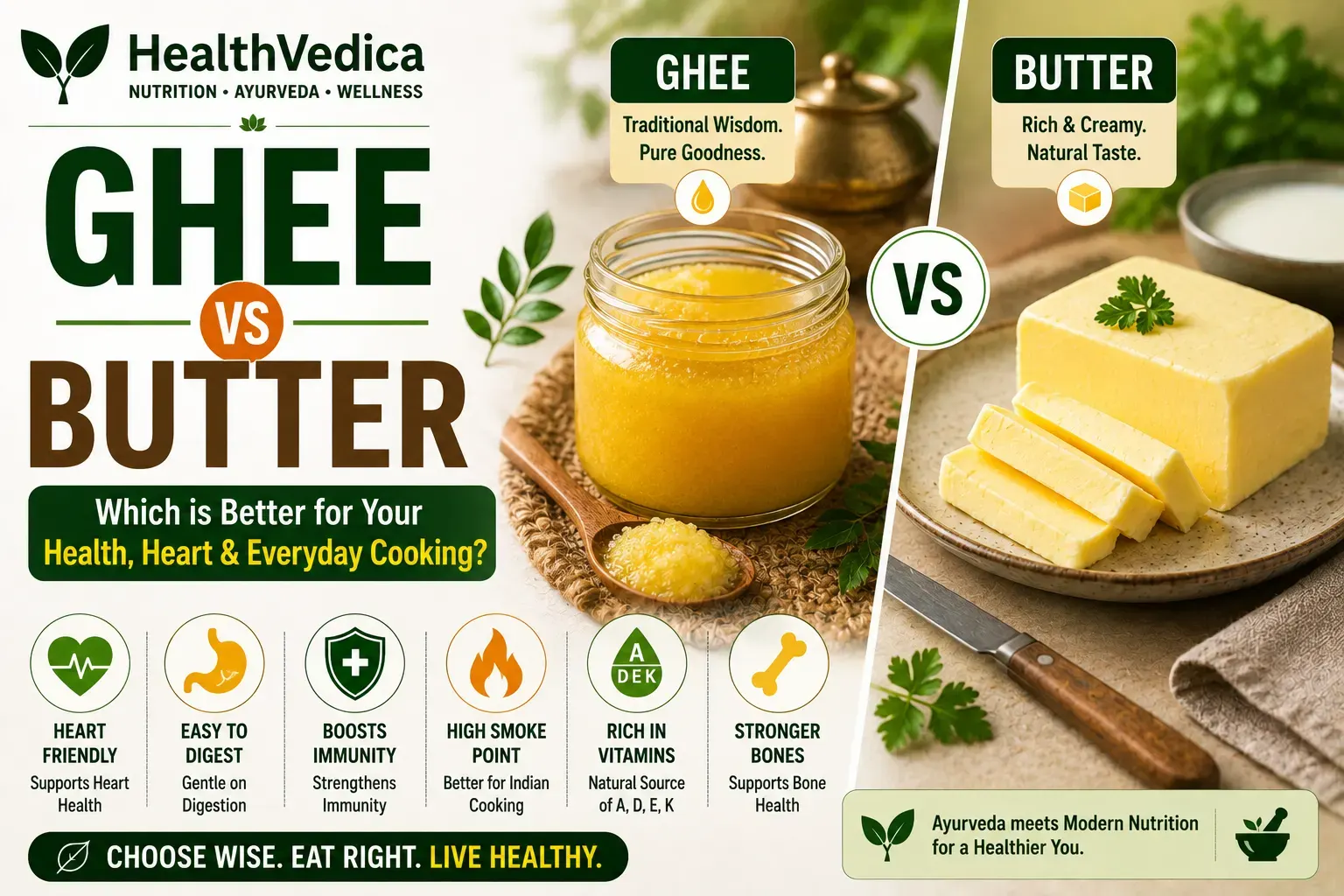
Pure clarified butter from indigenous cow breeds. Ghee has been unfairly demonised — modern research shows moderate ghee consumption (1–2 tsp per meal) does not raise cardiovascular risk in healthy individuals. Ghee provides: butyrate (anti-inflammatory gut fuel), fat-soluble vitamins A/D/E/K, conjugated linoleic acid (CLA — anti-cancer, metabolism-supporting), and an extraordinarily high smoke point (250°C). Ghee is the ideal fat for tadka, cooking vegetables, and flavouring dal. A2 ghee from indigenous desi breeds is superior. Use 1–2 tsp per meal — not tablespoons.
3. Cold-Pressed Groundnut Oil (Mungfali ka Tel)
Traditional South Indian and Gujarati cooking oil. Excellent smoke point (230°C), good omega ratio (4:1), rich in monounsaturated oleic acid and natural vitamin E (antioxidant protection against oxidation). Groundnut oil has a natural high-oleic content that makes it more stable than sunflower oil. Cold-pressed (wood-pressed/chekku) varieties retain resveratrol and other polyphenols. Studies show populations in Andhra Pradesh and Gujarat traditionally using groundnut oil have lower cardiovascular disease rates than those switching to refined oils.
4. Virgin Coconut Oil (for South Indian cooking)
Coconut oil is 90% saturated fat — which sounds alarming but behaves differently than animal saturated fats. Medium-chain triglycerides (MCTs) in coconut oil are metabolised directly for energy rather than stored. Virgin coconut oil contains lauric acid (strongly antimicrobial, supports gut health) and natural antioxidants. Ideal for South Indian preparations: coconut chutneys, Kerala curries, moderate-heat stir-fries. Smoke point (177°C) limits high-heat use. The key: use traditional coconut oil for traditional coconut-based dishes where it makes culinary sense — not as a universal replacement.
5. Sesame Oil (Til ka Tel) for Finishing and Tadka
India's ancient oil — used in Ayurveda for 5,000 years. Cold-pressed sesame oil contains sesamol and sesamin — powerful antioxidants that make sesame oil remarkably heat-stable despite its unsaturated fat content. Studies show sesame oil reduces blood pressure, lowers LDL, and has anti-inflammatory effects. Use as a finishing oil on dal or rice, or for South Indian tadka with curry leaves and mustard seeds.
🌿 Ayurvedic Perspective on Cooking Fats
Ayurveda has detailed guidance on fats (Sneha). The classical texts rank fats in therapeutic quality: Ghee (1st) — Sattvik, builds Ojas, nourishes all dhatus (tissues). Sesame oil (2nd) — Tridoshic, most therapeutic vegetable oil, especially for Vata. Mustard oil (3rd) — Heating, Kapha-reducing, excellent for massage and cooking in cold climates. Coconut oil — cooling, Pitta-reducing, ideal for tropical preparations.
The concept of Satmya (habitual suitability) is important — the best oil is often the one your ancestors and region traditionally used, as your gut microbiome and digestive enzymes have co-evolved with it. North Indians do well with mustard oil; South Indians with coconut and sesame; Gujaratis and Maharashtrians with groundnut.
🚫 Oils to Minimise or Eliminate
Vanaspati (Hydrogenated Vegetable Fat / Dalda): Contains industrially produced trans fats — the worst dietary fat for cardiovascular health. Completely eliminate. Still used in cheap restaurants, street food, and budget biscuits. Read labels carefully.
Refined Sunflower Oil (as primary cooking oil): The omega-6:3 ratio of 40:1 promotes severe inflammatory imbalance with daily use. Fine occasionally but should not be the primary cooking fat for any Indian family using it multiple times daily.
Blended 'Heart-Healthy' Oils: These marketing products mix various refined oils and are often presented as balanced. Most are primarily refined rice bran and sunflower — high omega-6. The 'heart-healthy' label is marketing, not science. Stick to single-source, cold-pressed traditional oils.
💡 Practical Oil Strategy for Indian Homes
The 2-oil system for Indian cooking:
Primary cooking oil: Kachi Ghani mustard oil (North/East Indians) OR cold-pressed groundnut oil (South/West Indians) OR virgin coconut oil (Kerala/Tamil households). Use for all daily cooking — curry, tadka, vegetables, roti.
Premium finishing fat: 1 tsp desi ghee on dal, khichdi, rice, or roti for flavour, nutrition, and fat-soluble vitamin absorption.
Total daily oil/fat: 3–5 tsp per person per day is the recommended range. Most Indians use 8–10 tsp — a significant excess that contributes to caloric surplus and lipid abnormalities.
Storage: Store cold-pressed oils in dark glass bottles away from heat. Use within 3 months of opening. Never reuse frying oil — repeated heating produces dangerous aldehydes.
Sources and context
Nutrition guidance in this article is framed around Indian dietary guidance from ICMR–National Institute of Nutrition (ICMR-NIN). Where Ayurveda is discussed, it is presented as a traditional framework and kept separate from modern clinical evidence. The Ministry of AYUSH's published guidance emphasises factors such as food quality, preparation, quantity, timing and individual suitability; these principles are useful context, but they should not be treated as a substitute for diagnosis or medical treatment.
Important: Nutrition needs vary with age, pregnancy, medications and medical conditions. If you have diabetes, kidney disease, coeliac disease, a food allergy or another diagnosed condition, use personalised advice from a qualified clinician or dietitian.