Quick answer
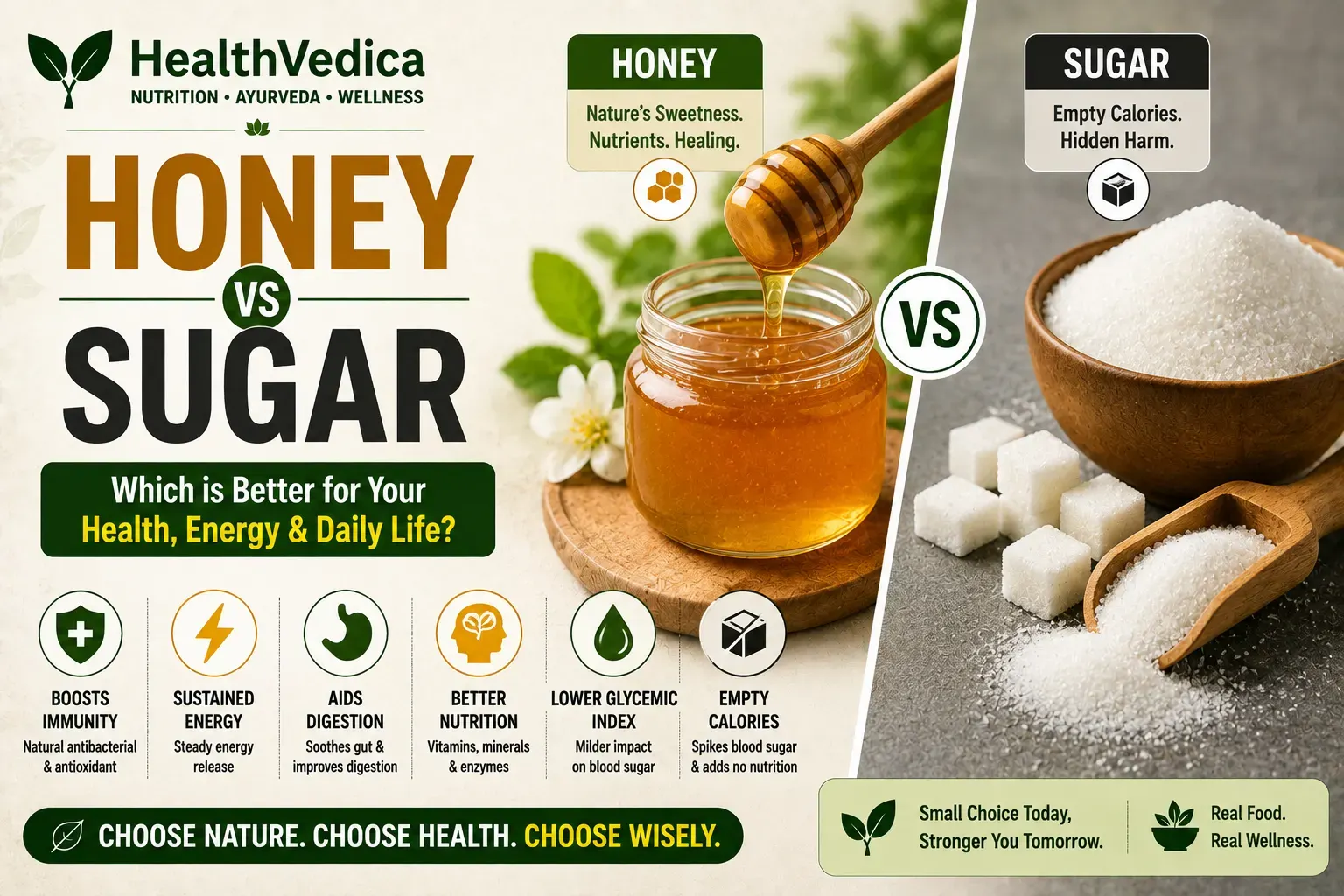
There is no single food that is automatically healthier for everyone. Honey vs Sugar Comparison are useful choices in different situations, and the better option depends on your overall diet, portion size, cooking method and personal needs. This guide compares the two foods in plain language so you can make an informed choice.
📊 Honey vs Sugar: Nutritional Comparison (per 100g)
| Nutrient | Honey | White Sugar | Advantage |
|---|---|---|---|
| Glycaemic Index | ~58 | ~65 | Honey |
| Calories | 304 kcal | 387 kcal | Honey (lower) |
| Sweetness relative to sugar | 1.3–1.5× | 1× (reference) | Honey (use less) |
| Antioxidants | Present (flavonoids, phenolic acids) | None | Honey |
| Antimicrobial properties | Yes (raw, unheated honey) | None | Honey |
| Trace minerals | Small amounts (iron, potassium) | None | Honey |
| Processing | Minimal (raw) to moderate (commercial) | Heavily refined | Honey |
✅ Where Honey Wins
Lower glycaemic impact: Honey's GI of around 58 is meaningfully lower than sugar's 65, meaning it causes a gentler rise in blood glucose, particularly when raw and unheated.
Antioxidant and antimicrobial content: Raw honey contains flavonoids and phenolic compounds with measurable antioxidant activity, along with natural antimicrobial properties that white sugar entirely lacks.
Greater sweetness per gram: Because honey is sweeter than sugar by volume, less is typically needed to achieve the same taste, which can modestly reduce total sweetener intake.
✅ Where Sugar Wins
Consistency and predictability: White sugar has a uniform composition every time, making it more predictable for baking chemistry where honey's moisture content and acidity can alter texture and rise.
Cost and shelf stability: Sugar is generally cheaper and has an essentially indefinite shelf life without any risk of crystallisation issues affecting recipes the way honey sometimes can.
Suitability for infants: White sugar carries no risk of infant botulism, whereas raw honey should never be given to children under one year old due to this specific risk — an important safety distinction sugar does not share.
🍽️ Which Should You Choose?
For general health, raw honey used in moderation is the better choice over refined sugar, offering a lower glycaemic impact plus antioxidants sugar cannot provide. However, honey is still a sugar and should be portion-controlled just like white sugar — it is not a free food for diabetics or those managing weight. For baking precision or infant safety, sugar remains necessary in specific contexts.
Sources and context
Nutrition guidance in this article is framed around Indian dietary guidance from ICMR–National Institute of Nutrition (ICMR-NIN). Where Ayurveda is discussed, it is presented as a traditional framework and kept separate from modern clinical evidence. The Ministry of AYUSH's published guidance emphasises factors such as food quality, preparation, quantity, timing and individual suitability; these principles are useful context, but they should not be treated as a substitute for diagnosis or medical treatment.
Important: Nutrition needs vary with age, pregnancy, medications and medical conditions. If you have diabetes, kidney disease, coeliac disease, a food allergy or another diagnosed condition, use personalised advice from a qualified clinician or dietitian.