✈️ Healthy Travel Eating Is Mostly About Preparation
Travel does not require a perfect diet. The practical goals are to stay hydrated, get enough protein and fibre, avoid foodborne illness, and keep energy intake reasonable. ICMR-NIN’s dietary guidance emphasizes dietary diversity and minimally processed foods, which is a useful framework even when you are away from home.
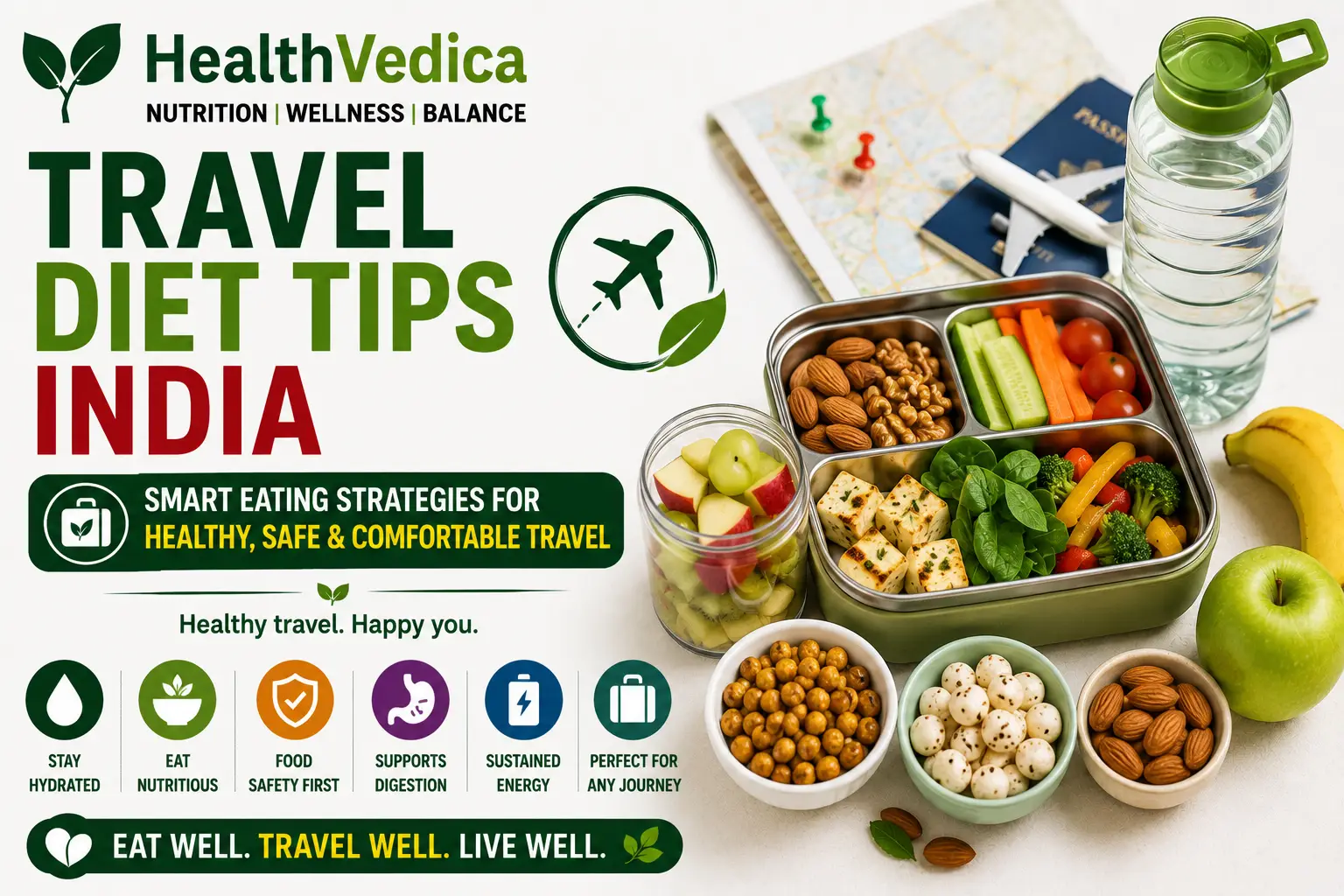
- Water from a safe source.
- Whole fruit such as apples, oranges or bananas.
- Roasted chana, nuts or seeds in sensible portions.
- A homemade, safely packed meal for shorter journeys where appropriate.
- Hand hygiene supplies and a plan for refrigeration when carrying perishable foods.
🥜 Best Travel-Friendly Foods
| Food | Why it works | Travel note |
|---|---|---|
| Roasted chana | Protein, fibre and portable | Keep dry and portioned. |
| Almonds/walnuts | Unsaturated fats, protein and minerals | Calorie-dense, so a small handful is enough. |
| Whole fruit | Fibre, water and micronutrients | Choose sturdy fruits. |
| Makhana | Light snack; can be roasted | Avoid heavily salted versions. |
| Homemade sandwich/roti roll | Can provide a balanced meal | Keep perishable fillings cold and consume safely. |
| Plain curd/yoghurt | Protein and calcium | Requires reliable refrigeration/cold chain. |
| Boiled eggs | High-quality protein | Carry only with safe temperature control. |
🚆 What to Choose at Stations, Airports and Highway Stops
Look for freshly cooked food served hot, sealed packaged water from a reliable source, whole fruit that you can wash or peel, and simple meals with dal, vegetables and roti/rice. Avoid foods that have been sitting uncovered for long periods, especially in hot conditions.
💧 Hydration During Travel
Drink regularly rather than waiting until you are extremely thirsty. Flights, air-conditioned cabins, hot road journeys and physical activity can change fluid needs. Water is the default choice; electrolyte solutions have specific uses and are not necessary for every normal journey.
🍎 Two Smart Travel Snack Combinations
- Apple or orange + a small handful of nuts.
- Roasted chana + banana + water.
🚫 Common Travel Food Mistakes
- Skipping meals and then overeating at the next stop.
- Relying on biscuits, chips and sugary drinks because they are convenient.
- Buying cut fruit, raw salads or drinks from visibly unhygienic sources.
- Carrying perishable foods for many hours without temperature control.
- Assuming packaged food is automatically healthy—check the label for sugar, salt and saturated fat.
🛡️ Food-Safety Checklist
- Wash hands before eating or use hand sanitizer when soap and water are unavailable.
- Use safe drinking water and ice.
- Choose food that is thoroughly cooked and served hot.
- Keep perishable food chilled and follow storage instructions.
- When in doubt about spoilage, discard the food rather than tasting it.
🍽️ Example Travel Day
Breakfast: eggs/moong chilla + fruit. Mid-morning: water + nuts. Lunch: dal + rice/roti + cooked vegetables. Snack: roasted chana + fruit. Dinner: fresh, hot meal with vegetables and a protein source. Adjust portions to hunger, activity and trip duration.