Quick answer
There is no single food that is automatically healthier for everyone. Quinoa vs Rice Comparison are useful choices in different situations, and the better option depends on your overall diet, portion size, cooking method and personal needs. This guide compares the two foods in plain language so you can make an informed choice.
📊 Quinoa vs Rice: Nutritional Comparison (per 100g cooked)
| Nutrient | Quinoa | White Rice | Advantage |
|---|---|---|---|
| Protein | 4.4g | 2.7g | Quinoa |
| Protein quality | Complete (all 9 essential amino acids) | Incomplete (low in lysine) | Quinoa |
| Fibre | 2.8g | 0.4g | Quinoa (7× higher) |
| Glycaemic Index | ~53 | 65–90 | Quinoa |
| Iron | 1.5mg | 0.2mg | Quinoa |
| Calories | 120 kcal | 130 kcal | Roughly equal |
| Cost & accessibility in India | Higher cost, less common | Low cost, universally available | Rice |
✅ Where Quinoa Wins
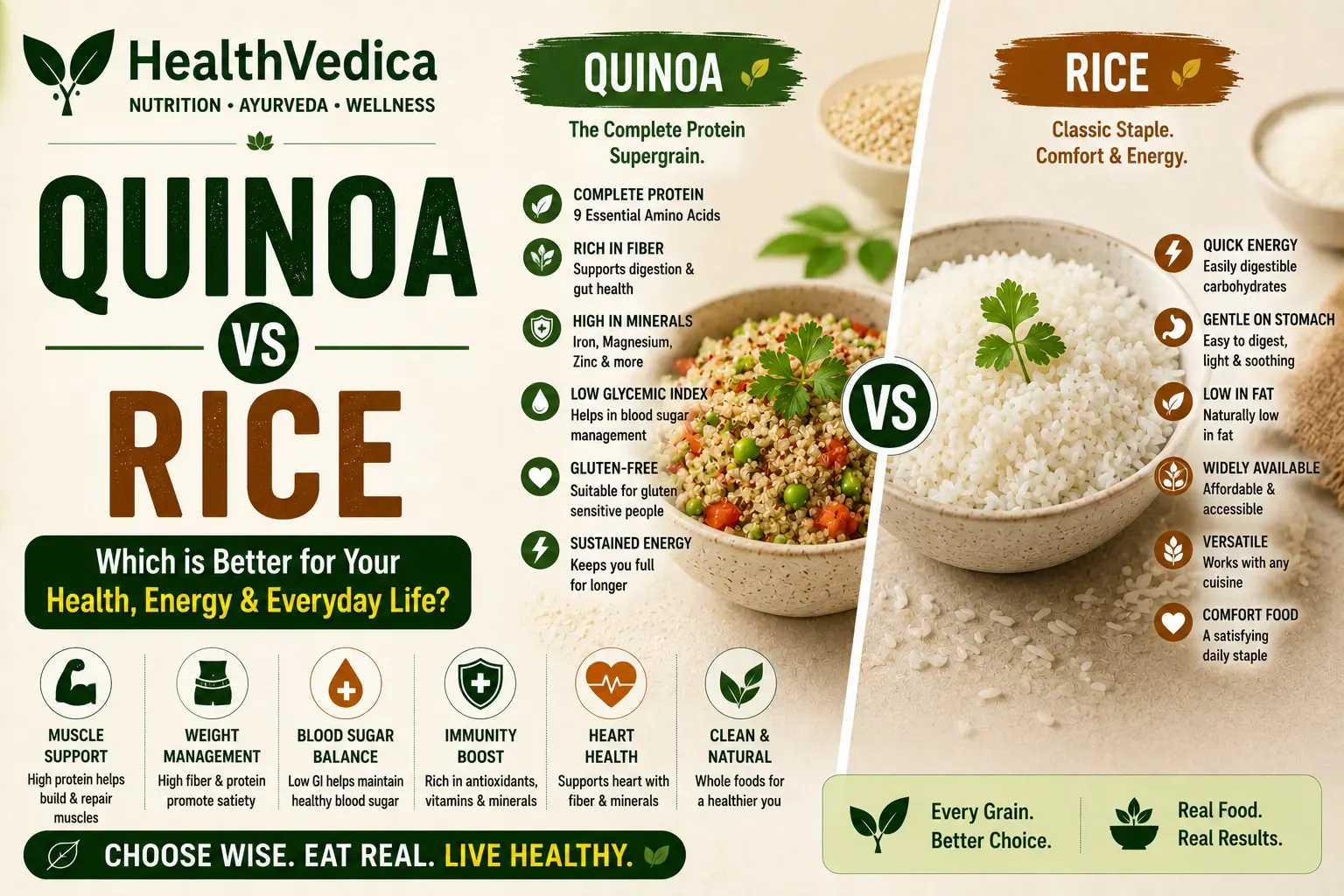
Complete protein: Quinoa is one of the few plant foods containing all nine essential amino acids in meaningful amounts, including lysine, which is typically low in rice and other cereal grains — a significant advantage for vegetarians.
Higher fibre and lower glycaemic index: Quinoa provides roughly seven times more fibre than white rice and has a notably lower glycaemic index, supporting better blood sugar control and satiety.
More iron and micronutrients: Quinoa contains substantially more iron along with magnesium and manganese compared to white rice, which loses most of these nutrients during milling.
✅ Where Rice Wins
Cost and accessibility: Rice is far cheaper and more universally available across India than quinoa, which is often imported or sold at a premium, making rice the practical daily staple for most households.
Culinary familiarity and versatility: Rice integrates seamlessly into virtually every regional Indian cuisine and cooking method, from biryani to idli batter, in ways quinoa's distinct flavour and texture cannot always replicate.
Easier digestibility for some: White rice's lower fibre content can be gentler on sensitive digestive systems, including for young children, the elderly, or during illness recovery, compared to quinoa's higher fibre load.
🍽️ Which Should You Choose?
For protein quality, blood sugar management, and micronutrient density, quinoa has a genuine nutritional edge over white rice, particularly valuable for vegetarians and those managing diabetes. For everyday affordability, culinary versatility, and digestibility, rice remains the sensible staple for most Indian households. A practical middle ground is substituting quinoa for rice in a few weekly meals — such as quinoa upma or quinoa pulao — rather than replacing rice entirely.
Sources and context
Nutrition guidance in this article is framed around Indian dietary guidance from ICMR–National Institute of Nutrition (ICMR-NIN). Where Ayurveda is discussed, it is presented as a traditional framework and kept separate from modern clinical evidence. The Ministry of AYUSH's published guidance emphasises factors such as food quality, preparation, quantity, timing and individual suitability; these principles are useful context, but they should not be treated as a substitute for diagnosis or medical treatment.
Important: Nutrition needs vary with age, pregnancy, medications and medical conditions. If you have diabetes, kidney disease, coeliac disease, a food allergy or another diagnosed condition, use personalised advice from a qualified clinician or dietitian.