👁️ Why Do Dark Circles Happen?
Dark circles are not one condition with one cause. Genetics, naturally thin under-eye skin, pigmentation, allergies, lack of sleep, ageing, dehydration and some nutritional problems can all contribute.
That means food may help in selected cases, but no diet can guarantee that genetic or pigment-related dark circles will disappear.
🔎 When Nutrition May Matter
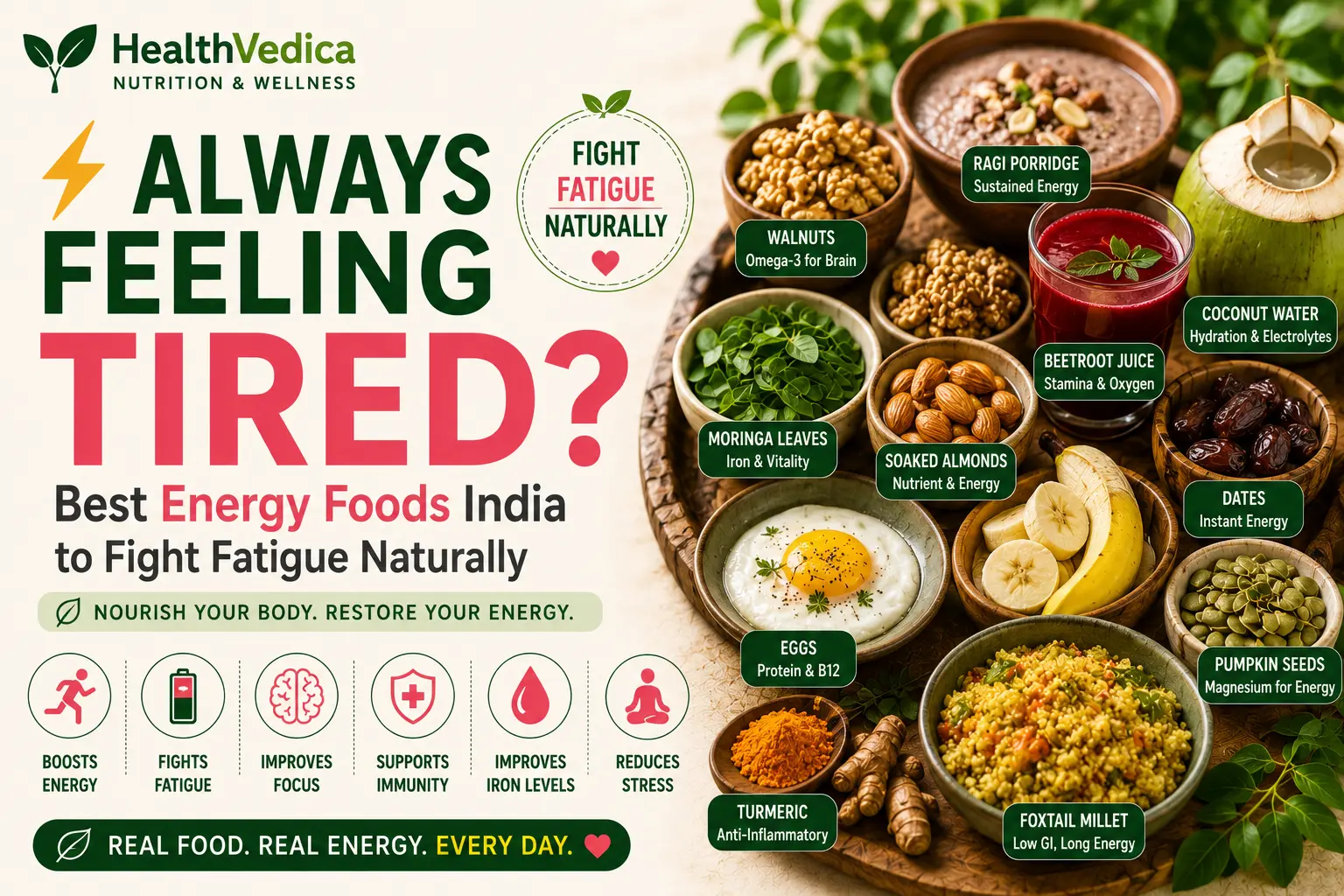
Iron deficiency can contribute to pallor and tired-looking skin, particularly when associated with anaemia. If you also experience unusual fatigue, weakness, breathlessness or pale skin, testing is more useful than simply eating more iron-rich foods.
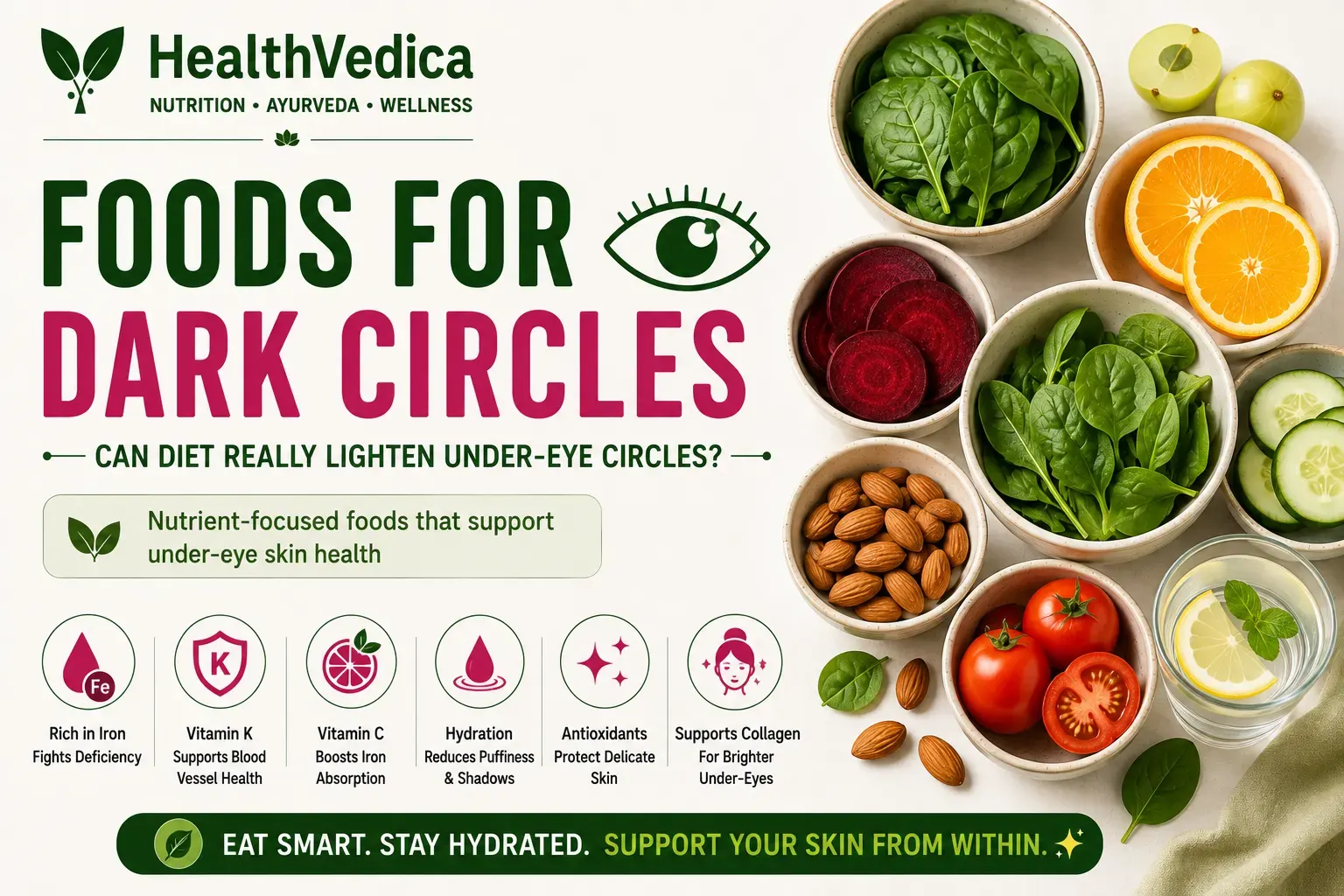
Vitamin C is useful because it supports collagen production and improves absorption of non-heme iron from plant foods.
📊 Foods to Include
| Food | Nutrients | Why It Matters |
|---|---|---|
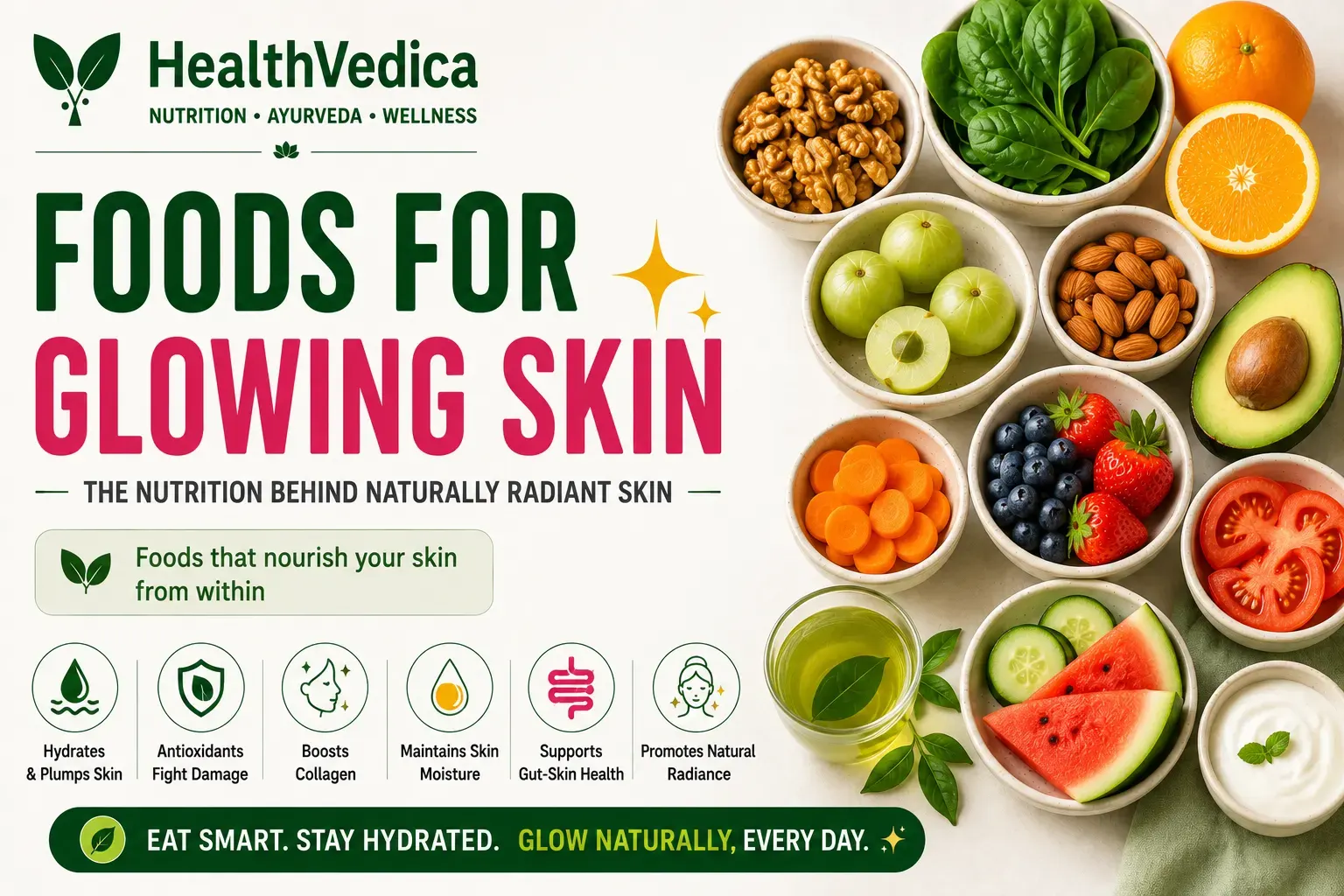
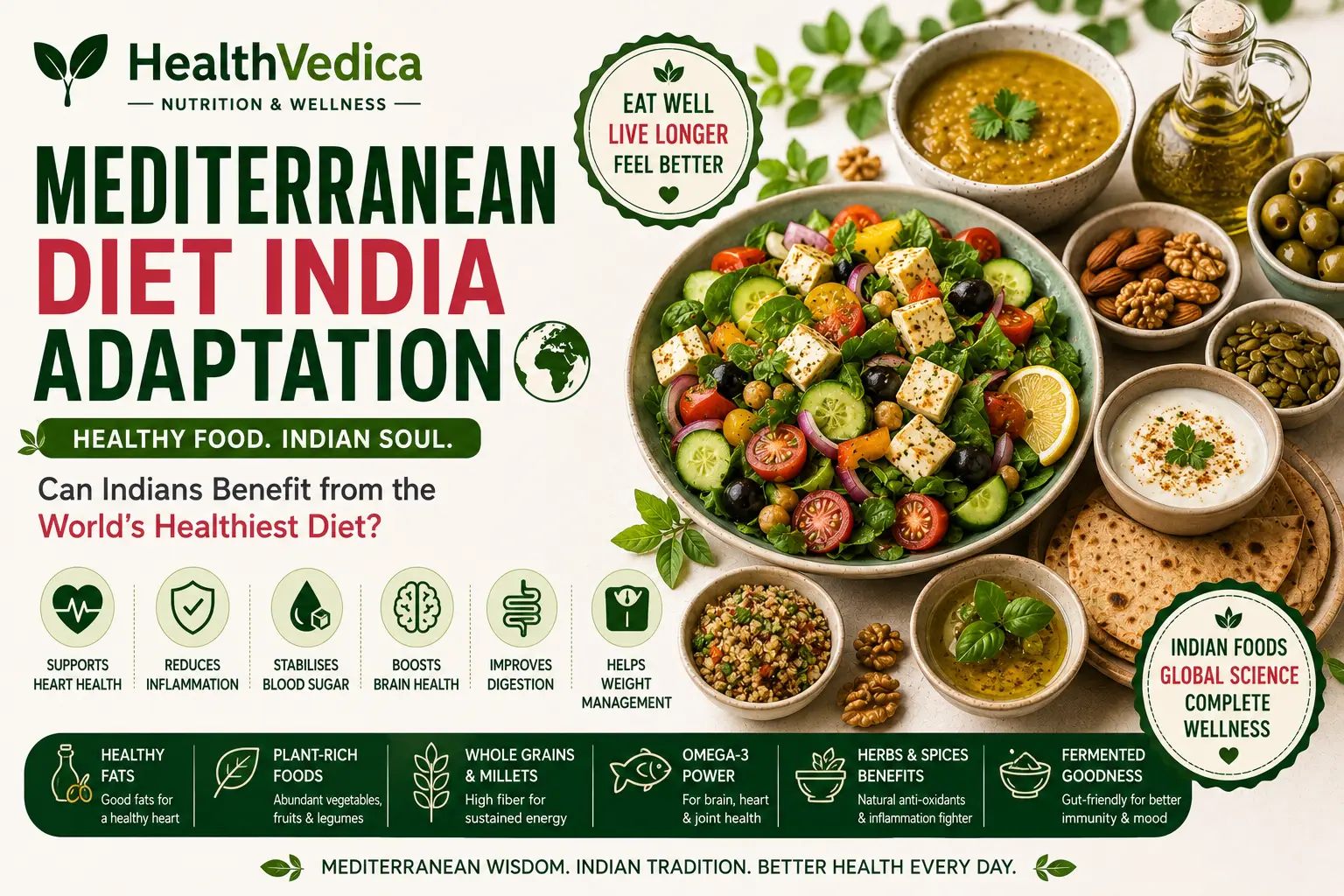
| Leafy greens | Iron, folate, vitamin K | Supports overall blood and tissue health |
| Amla and citrus | Vitamin C | Improves plant-iron absorption and supports collagen |
| Lentils and beans | Iron and protein | Useful plant iron sources |
| Tomatoes | Vitamin C and carotenoids | Supports antioxidant intake |
| Almonds | Vitamin E and healthy fats | Supports overall skin nutrition |
| Cucumber and watermelon | Water | Contribute to overall fluid intake |
| Seeds and nuts | Healthy fats and minerals | Support a balanced diet |
⭐ Try the Iron + Vitamin C Combination
For plant-based meals, combine foods such as dal, chickpeas or leafy greens with lemon, amla, tomatoes or another vitamin-C-rich food. Vitamin C improves absorption of non-heme iron.
💧 What About Water?
Dehydration can make the skin look less plump and may make shadows appear more noticeable. Adequate fluid intake is sensible, but drinking excessive amounts of water will not remove genetically determined dark circles.
🚫 When Food Probably Won't Fix Dark Circles
If the main cause is pigmentation, allergies, tear-trough anatomy or naturally thin skin, changing your diet may have little visible effect. Sleep, allergy management, sun protection and dermatologist-guided treatment may be more relevant.
📌 Bottom Line
Eat a varied diet rich in iron-containing foods, vitamin C, vegetables, nuts and seeds, and stay adequately hydrated. If dark circles are new, pronounced or accompanied by symptoms of anaemia, get evaluated instead of treating them as a cosmetic nutrition problem.