🩺 What Should You Eat If You Get Migraines?
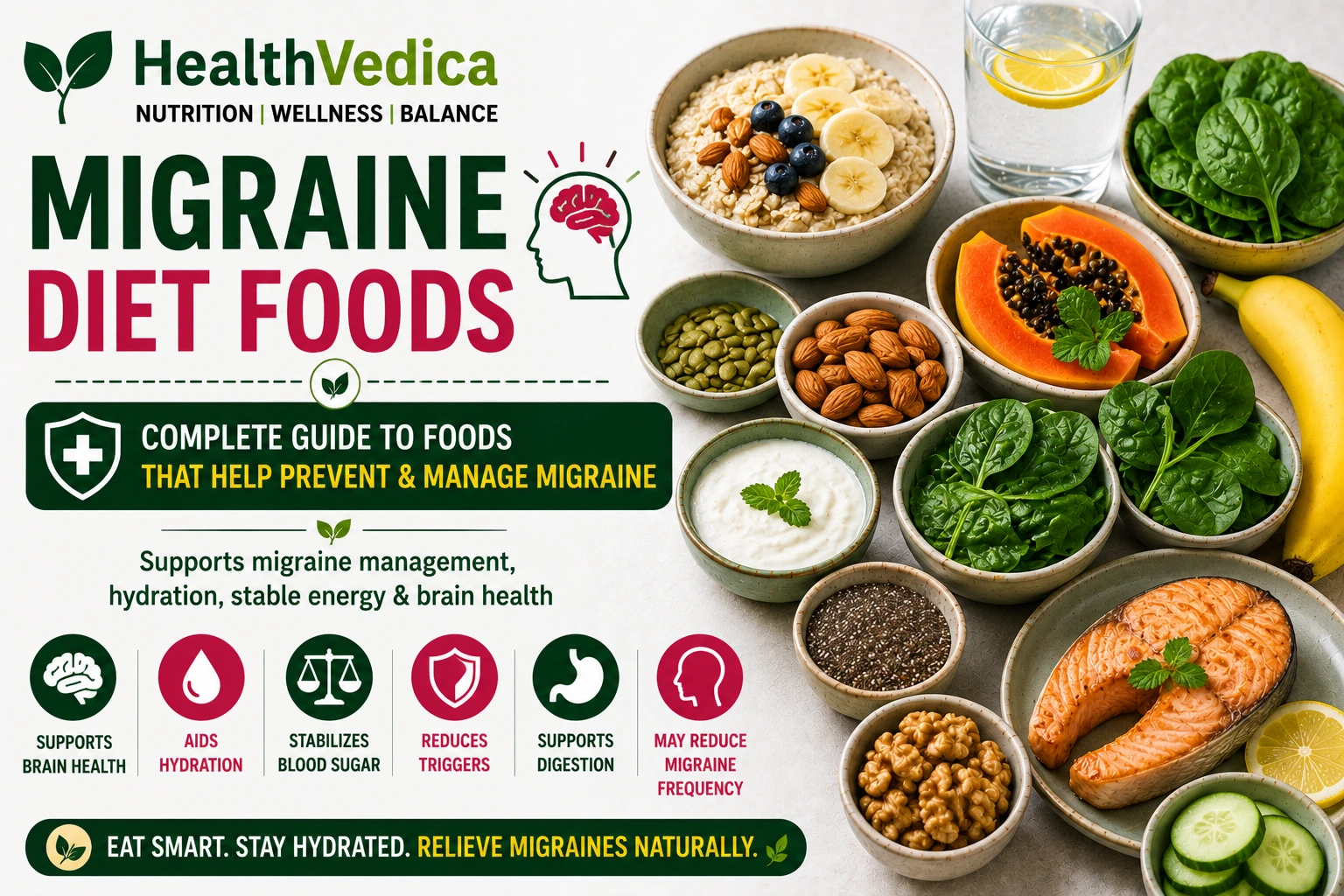
A migraine-friendly diet is less about a universal banned-food list and more about regular meals, adequate hydration, consistent caffeine intake and identifying your personal triggers. Foods rich in magnesium and omega-3 fats can fit a healthy pattern, but no food is a guaranteed migraine cure.
Migraine is a neurological disorder. Nutrition is one part of management, alongside appropriate diagnosis, medication when needed, sleep, hydration and trigger management.
⚡ Four Diet Habits That Commonly Matter
1. Do not skip meals. Long gaps can trigger attacks in some people.
2. Hydrate consistently. Dehydration is a common trigger for some people, especially in hot weather.
3. Keep caffeine consistent. Both high intake and sudden withdrawal can contribute to headaches in susceptible people.
4. Avoid over-restricting. The more foods you eliminate without evidence, the harder it becomes to maintain a nutritious diet.
🥗 Migraine-Friendly Indian Foods
| Food | Why It Fits | Indian Use |
|---|---|---|
| Leafy greens | Magnesium and folate | Palak dal, methi sabzi |
| Pumpkin seeds | Magnesium and healthy fats | Small unsalted snack |
| Almonds | Magnesium and vitamin E | Small portion with fruit/curd |
| Oats | Slow-digesting whole grain | Breakfast |
| Whole fruit | Hydration and micronutrients | Snack rather than juice |
| Fatty fish | EPA/DHA omega-3 fats | Grilled/curry, as preferred |
⚠️ Commonly Reported Triggers — But Only If They Trigger You
Aged cheese, alcohol, processed meats containing nitrates/nitrites, MSG, artificial sweeteners and large amounts of caffeine are reported triggers for some people. The key phrase is some people. Do not assume that a food is a trigger because it appears on an internet list.
☕ Caffeine: Consistency Beats Extremes
If you drink tea or coffee daily and it does not trigger your migraine, keeping the amount fairly consistent may be more sensible than swinging from multiple cups one day to zero the next.
📖 Use a 2–4 Week Food-and-Symptom Diary
Record meals, approximate times, hydration, sleep, menstrual cycle if relevant, stress and migraine symptoms. Look for repeated patterns. A trigger is more convincing when the same exposure is followed by symptoms repeatedly, rather than after a single episode.
🍽️ Sample Indian Day
Breakfast: oats with fruit and a small portion of almonds.
Lunch: dal + rice/roti + spinach or other vegetables + curd.
Snack: fruit + pumpkin seeds.
Dinner: fish/tofu/paneer + vegetables + whole grain.
Fluids: water regularly through the day.
🚨 When Headache Needs Medical Care
A new severe headache, sudden 'thunderclap' headache, headache with weakness, fainting, confusion, fever/neck stiffness, major vision changes or a significant change from your usual migraine pattern needs urgent medical assessment rather than diet experiments.
✅ Bottom Line
Do not build your life around a 30-food trigger list. Eat regularly, hydrate, keep caffeine consistent, favor nutrient-rich whole foods and use a diary to identify your own reproducible triggers.
📚 Trusted Sources & Further Reading
This guide is educational and is not a substitute for diagnosis or treatment. Nutrient and dietary guidance is aligned where applicable with Indian nutrition guidance and major clinical references.