🌟 Can What You Eat Really Affect Acne?
Yes—but diet is only one piece of the acne puzzle. Hormones, genetics, skin-cell turnover, sebum production, inflammation, skincare and medications can all influence breakouts. Research suggests that dietary patterns, particularly diets high in rapidly digested carbohydrates, may worsen acne in some people.
The most useful takeaway is not that one 'superfood' clears pimples. It is that a consistent eating pattern built around vegetables, pulses, whole grains, nuts, seeds, adequate protein and minimally processed foods may support healthier skin.
🔬 The Diet–Acne Connection
High-glycemic foods can raise blood glucose and insulin quickly. Researchers believe these metabolic changes may influence pathways involved in sebum production, inflammation and abnormal follicular cell growth. Small clinical trials have found fewer acne lesions with lower-glycemic diets, although the evidence is not strong enough to treat diet as a standalone cure.
Dairy is more complicated. Observational research has found an association between cow's milk and acne in some populations, but this does not mean everyone with acne needs to eliminate dairy. The American Academy of Dermatology notes that yogurt and cheese have not shown the same consistent association as milk.
📊 Foods Worth Including
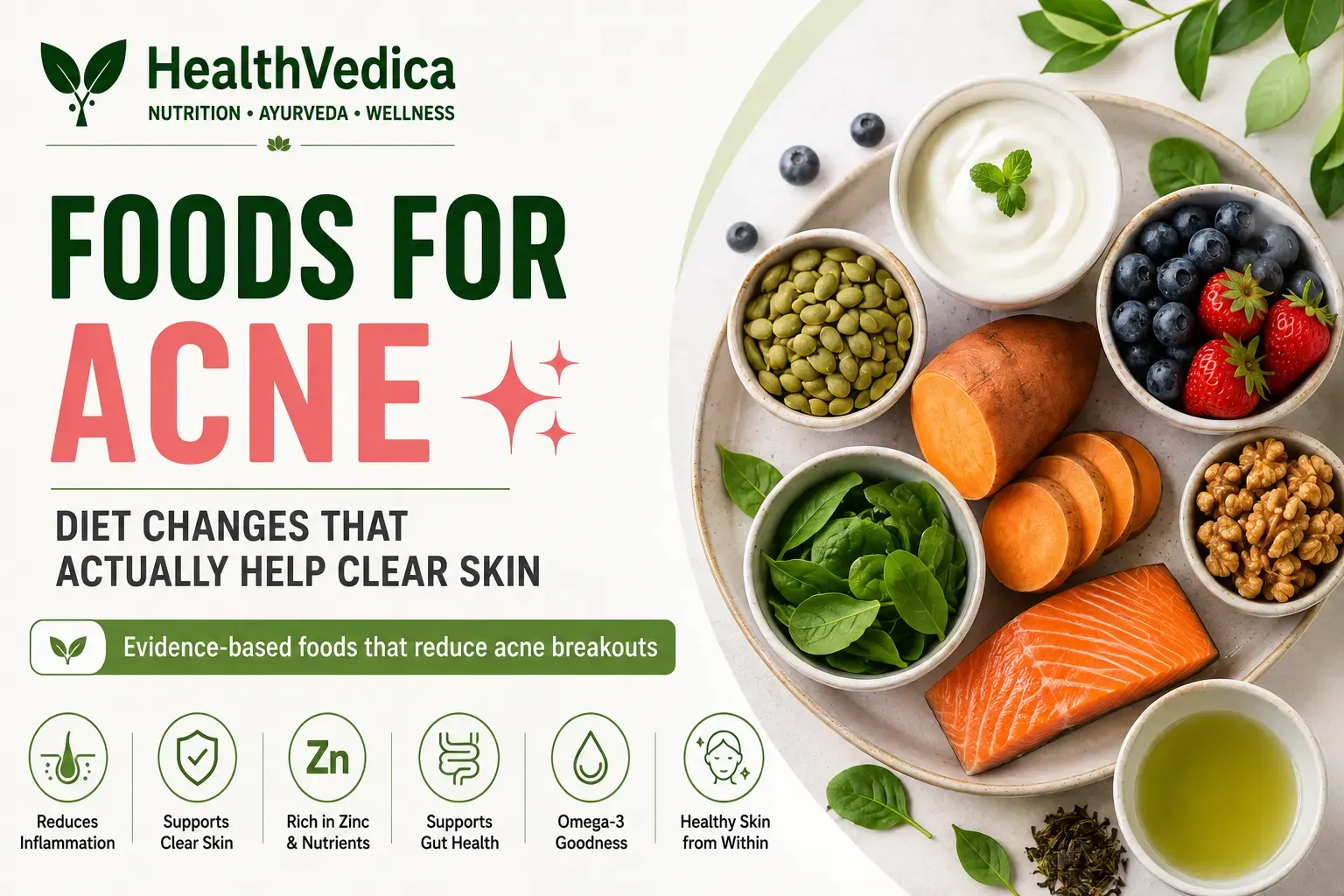
| Food | Why It May Help | Easy Indian Option |
|---|---|---|
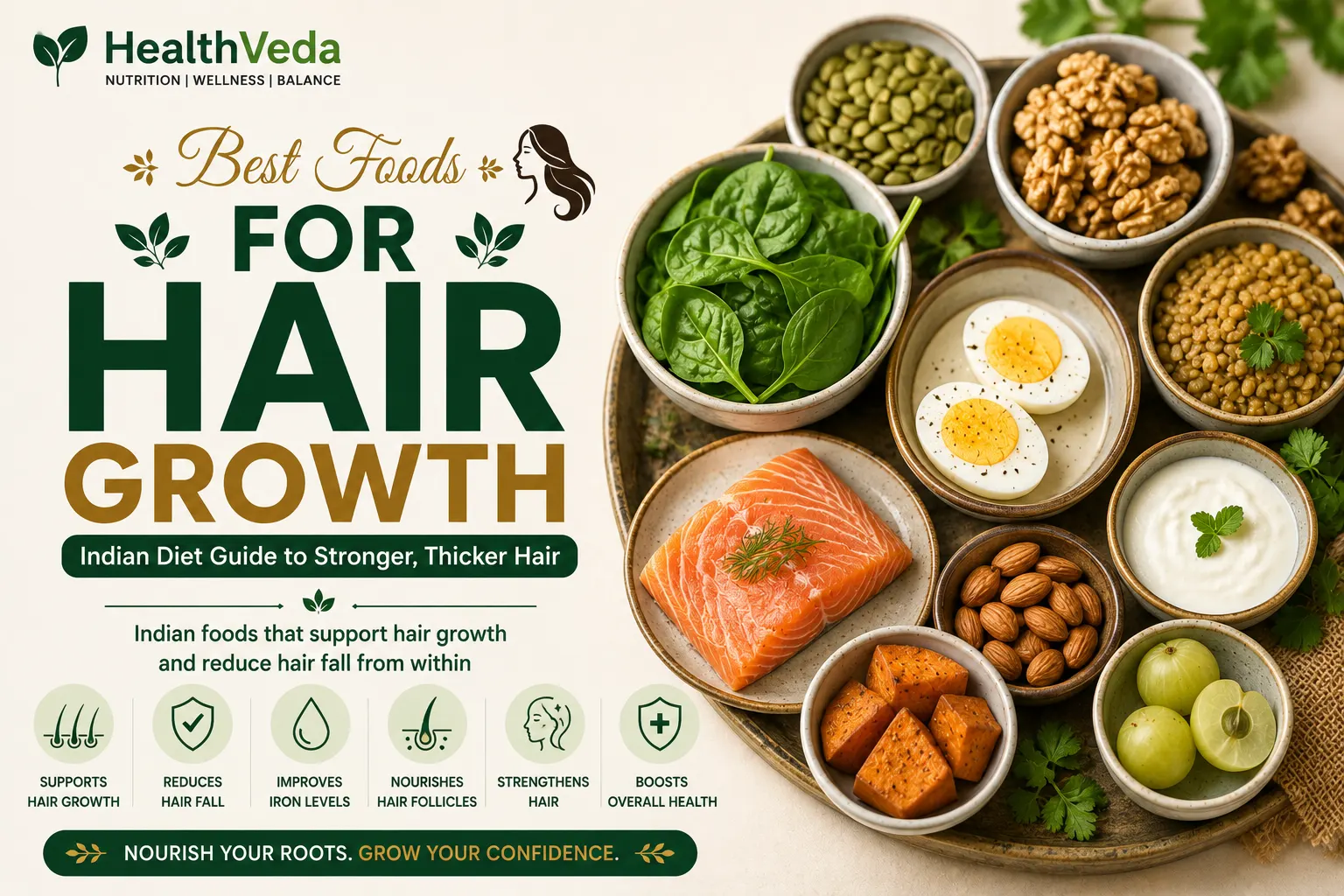
| Pumpkin seeds | Zinc and protein | Add to breakfast or snacks |
| Walnuts & flaxseeds | ALA omega-3 fats | Add to oats, curd or chutney |
| Sweet potato | Beta-carotene and fibre | Roasted or boiled |
| Dal, beans and chickpeas | Protein, fibre and minerals | Include with lunch or dinner |
| Leafy greens | Folate, carotenoids and other micronutrients | Palak, methi and other greens |
| Berries and other whole fruits | Fibre and antioxidant compounds | Choose seasonal fruit when available |
| Vegetables | Fibre and micronutrients | Build meals around several colours |
| Millets and whole grains | Generally slower-digesting carbohydrate sources | Use instead of some refined grains |
⭐ 3 Changes That Matter More Than a 'Miracle Food'
1. Reduce frequent high-glycemic foods. Limit sugary drinks, sweets and heavily refined snacks. Replace some refined carbohydrates with vegetables, pulses, whole grains and other minimally processed foods.
2. Get enough zinc and healthy fats. Pumpkin seeds, legumes, nuts and seeds can contribute useful nutrients without relying on supplements.
3. Test your own triggers. If you suspect milk or another food worsens your acne, keep a simple food-and-skin diary rather than eliminating multiple foods at once.
🚫 Foods That May Worsen Breakouts
The strongest dietary signal is around high-glycemic eating patterns. Sugary drinks, sweets, refined bakery foods and other rapidly digested carbohydrates are more useful targets than blaming individual foods such as chocolate.
Milk may be associated with acne in some people, but the relationship is not universal. There is not enough evidence to recommend that everyone eliminate all dairy.
🍫 Does Chocolate Cause Acne?
It is too simplistic to say that chocolate automatically causes pimples. Chocolate products often contain substantial sugar and, in milk chocolate, dairy. Those accompanying ingredients and the overall dietary pattern may matter more than cocoa itself. If you notice a repeatable relationship, track it rather than assuming all chocolate is an acne trigger.
💡 A Practical Acne-Friendly Plate
Try building meals around vegetables + a protein source + a high-fibre carbohydrate + a small amount of healthy fat. For example, dal with vegetables and millet, or grilled fish/tofu with vegetables and brown rice. The goal is a sustainable eating pattern, not a restrictive 'acne diet'.
Important: Moderate or severe acne may need proven topical or prescription treatment. Diet should complement—not replace—appropriate acne care.
📌 Bottom Line
There is no single food that clears acne. A lower-glycemic, nutrient-dense diet may help some people, while individual responses to dairy and other foods vary. Give dietary changes several weeks and judge them alongside an appropriate skincare and treatment plan.