🦠 What Are Fermented Foods?
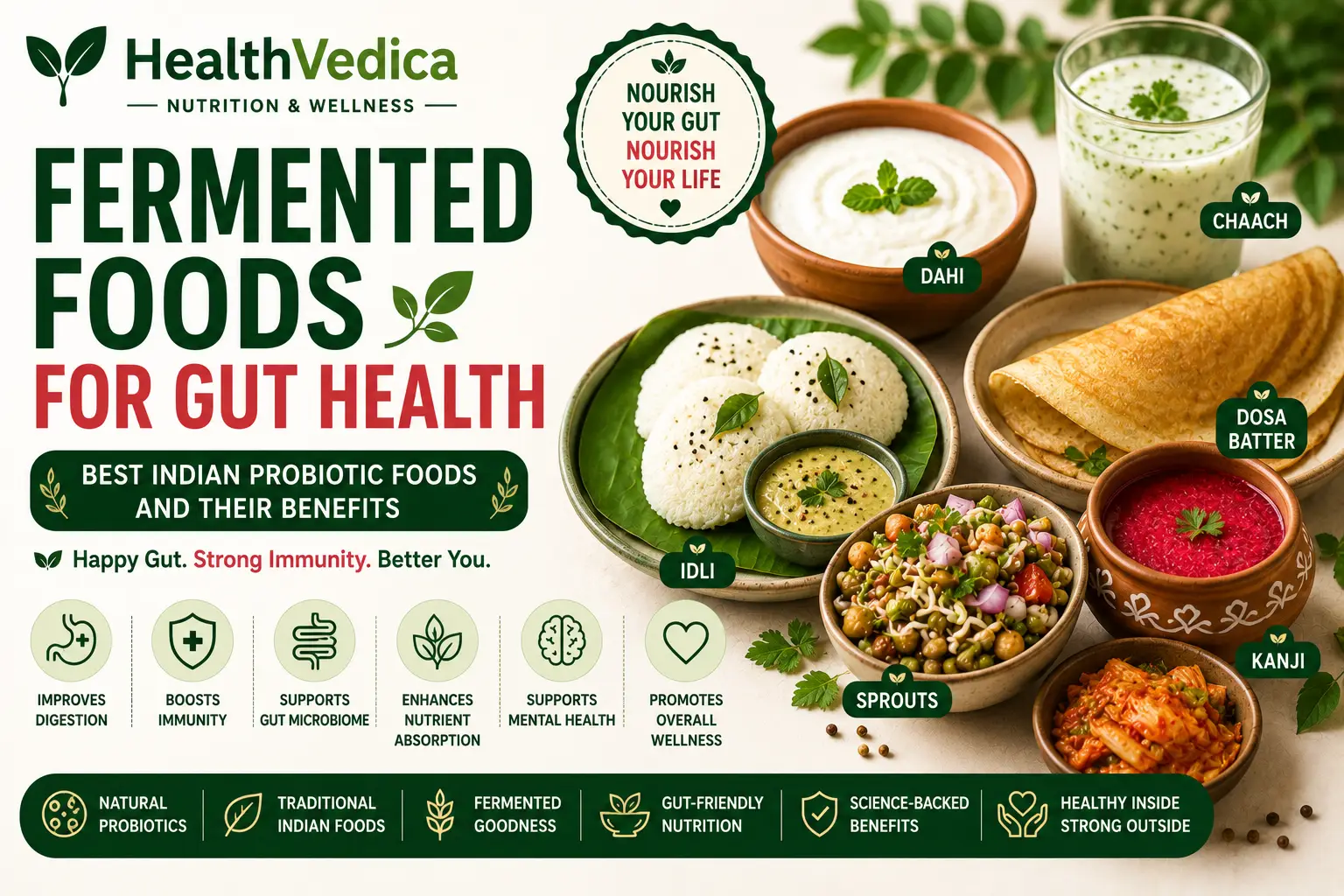
Fermentation is one of the oldest ways of preserving food. In India, it is also part of everyday cooking: dahi, idli and dosa batter, dhokla, kanji and several regional fermented foods are examples.
During fermentation, microorganisms such as lactic acid bacteria and yeasts change carbohydrates in food into acids, gases or alcohol. These changes can affect flavour, texture, digestibility and the availability of some nutrients.
But there is an important distinction: not every fermented food is automatically a probiotic food. According to the scientific definition, a probiotic must contain live microorganisms that provide a health benefit when consumed in adequate amounts. The number and type of microorganisms can vary considerably between foods, recipes, brands and storage conditions.
🌿 Why Fermented Foods Matter in an Indian Diet
Traditional Indian diets already contain many foods that support a diverse diet: whole grains, pulses, vegetables, fruits, nuts, seeds and fermented preparations. Fermented foods can complement this pattern rather than replace it.
ICMR-NIN's Dietary Guidelines for Indians emphasise dietary diversity, minimally processed foods and limiting foods high in added sugar, salt and unhealthy fats. Fermentation itself is considered a form of food processing and does not automatically make a food healthy; the overall food and preparation still matter.
🔬 Probiotics, Prebiotics and Postbiotics: What's the Difference?
Probiotics are specific live microorganisms that have demonstrated a health benefit when consumed in adequate amounts.
Prebiotics are substrates selectively used by beneficial microorganisms in ways that provide a health benefit. Many fibre-rich foods, including vegetables, fruits, legumes and whole grains, can contribute to a gut-friendly dietary pattern.
Postbiotics are preparations of inanimate microorganisms and/or their components that provide a health benefit. Fermentation can also create metabolites and other compounds that remain relevant even when the food is later cooked.
This is why a cooked fermented food such as idli can still be nutritionally useful even though high cooking temperatures reduce or eliminate many live microorganisms.
🥣 Best Indian Fermented Foods for Gut Health
| Food | What Happens During Fermentation | How to Include It |
|---|---|---|
| Dahi | Lactic acid fermentation of milk | 150–200 g with meals if tolerated |
| Idli | Fermentation of rice and urad dal batter | Breakfast with sambar and vegetables |
| Dosa | Fermentation changes the batter's acidity and texture | Pair with sambar and vegetable sides |
| Kanji | Lactic fermentation of ingredients such as carrot or mustard-based mixtures | Consume freshly prepared and safely fermented |
| Dhokla | Fermentation changes flavour, texture and digestibility | Choose freshly prepared versions |
| Chaach | Dairy fermentation and dilution | Unsweetened, with meals |
🥛 1. Dahi: The Everyday Indian Fermented Food
Dahi is one of the easiest fermented foods to include regularly. Its bacterial cultures ferment lactose into lactic acid, which gives dahi its characteristic tangy flavour and thicker texture.
For people who tolerate dairy, dahi can provide protein, calcium and other nutrients in addition to live cultures. Fermented dairy may also be easier to digest than milk for some people with lactose intolerance.
Important: do not assume every commercial dahi contains the same microorganisms or amount of live cultures. Check the label for information about live cultures when available.
🍚 2. Idli and Dosa: Fermented, but Usually Cooked
Traditional idli and dosa batter undergoes fermentation before cooking. The process changes the batter's acidity, flavour and texture and can improve the digestibility and nutritional characteristics of the ingredients.
However, idli and dosa are cooked at high temperatures. Therefore, they should not be described simply as a source of live probiotics after cooking. Their nutritional value comes from the fermented ingredients as well as the complete meal in which they are served.
For a more balanced meal, pair idli or dosa with sambar, vegetables and an appropriate protein source.
🥕 3. Kanji
Kanji is a traditional fermented drink made in several Indian regions using ingredients such as carrot, mustard and spices. Lactic acid bacteria can grow during fermentation, although the microbial profile depends on the recipe, ingredients, temperature and fermentation conditions.
Homemade fermented drinks require careful hygiene. Unusual odour, mould, contamination or uncontrolled fermentation are reasons to discard a batch.
🥣 4. Dhokla
Traditional dhokla can involve fermentation of a batter containing ingredients such as gram flour or rice and urad dal, depending on the recipe. Fermentation contributes to its characteristic sourness and airy texture.
Dhokla can fit well into a balanced diet, particularly when steamed rather than deep-fried and served with vegetables or another protein-rich food.
🥛 5. Chaach or Buttermilk
Unsweetened chaach can be a practical way to include fermented dairy while also contributing fluid and nutrients. It can be flavoured with cumin, coriander or other spices according to preference.
If you are sensitive to dairy, start with a small quantity and observe your tolerance rather than assuming fermented dairy will always be symptom-free.
⚠️ Important: Fermented Does Not Mean Unlimited
A fermented food can still be high in salt, sugar or calories depending on how it is prepared. For example, a heavily salted fermented pickle should not be treated as an unlimited probiotic food.
Likewise, adding large amounts of sugar to yoghurt or choosing a highly processed fermented product can change the nutritional value of the overall food.
🧼 Fermented Food Safety
- Use clean utensils and containers.
- Use safe drinking water.
- Follow a tested fermentation method rather than relying only on smell or appearance.
- Refrigerate foods that require refrigeration.
- Discard foods showing visible mould, unusual spoilage or an unpleasant putrid smell.
- People at higher risk from foodborne illness should be particularly cautious with homemade fermented foods.
🌿 Ayurveda and Fermented Foods
Ayurveda has its own framework for understanding food, digestion, daily routines and seasonal routines. Concepts such as Agni, Ahara, Dinacharya and Ritucharya belong to the Ayurvedic tradition and should be understood within that framework rather than treated as modern microbiome measurements.
The Ministry of AYUSH describes Ayurveda's preventive approach as including diet and lifestyle practices, daily routines and seasonal routines.
🍽️ A Simple Indian Gut-Friendly Plate
Breakfast: idli + sambar + vegetables
Lunch: dal + rice/roti + vegetables + dahi
Snack: fruit + nuts
Dinner: vegetables + whole grain + suitable protein
The goal is not to consume as many fermented foods as possible. The bigger opportunity is building a diverse, fibre-rich, minimally processed dietary pattern.
💡 Bottom Line
Indian cuisine offers many naturally fermented foods, but the healthiest approach is not to treat any single food as a miracle cure. Choose safe, minimally processed fermented foods, eat a variety of plant foods, include adequate protein and fibre, and pay attention to individual tolerance.