Quick answer
Best Gluten-Free Indian Foods can be part of a balanced Indian diet, but health claims need context. The most useful questions are how much you eat, how the food is prepared, what you eat with it, and whether you have a condition that changes your dietary needs. This guide focuses on practical, evidence-informed choices rather than miracle-food claims.
🔬 Understanding Gluten Intolerance: Three Conditions
Coeliac Disease: An autoimmune disorder where gluten (found in wheat, barley, rye, and some oats) triggers immune attack on the small intestine's villi (nutrient-absorbing projections). Over time, this causes villous atrophy — complete flattening of intestinal villi — leading to severe malabsorption of all nutrients. Symptoms: chronic diarrhoea, abdominal pain, bloating, weight loss, fatigue, anaemia, and in Indian women, infertility and osteoporosis. Diagnosis: blood tests (anti-tissue transglutaminase IgA, anti-endomysial antibodies) + intestinal biopsy. Treatment: strict lifelong gluten-free diet with zero tolerance. Even tiny amounts (10mg gluten — 1/8 of a crouton) cause intestinal damage.
Non-Coeliac Gluten Sensitivity (NCGS): Gluten causes similar symptoms (bloating, brain fog, fatigue, abdominal discomfort) without the autoimmune intestinal damage of coeliac disease. Blood tests and biopsy are normal. Diagnosis is by exclusion after ruling out coeliac and wheat allergy. Management is a low-gluten or gluten-free diet — some tolerance of trace gluten may be acceptable.
Wheat Allergy: IgE-mediated allergic response to wheat proteins (not specifically gluten). Causes immediate allergic symptoms — urticaria, rhinitis, sometimes anaphylaxis. Distinct from coeliac disease. Managed with wheat avoidance; barley and rye may be tolerated.
📊 Gluten Content of Common Indian Foods
| Food Category | Contains Gluten? | Notes |
|---|---|---|
| Wheat roti/chapati/paratha | YES (high) | Primary gluten source in Indian diet |
| Maida products (bread, biscuits, naan) | YES (high) | Refined wheat flour — high gluten |
| Semolina/Sooji/Rava (upma, halwa) | YES | Made from wheat |
| Rice and rice products | NO | Naturally gluten-free |
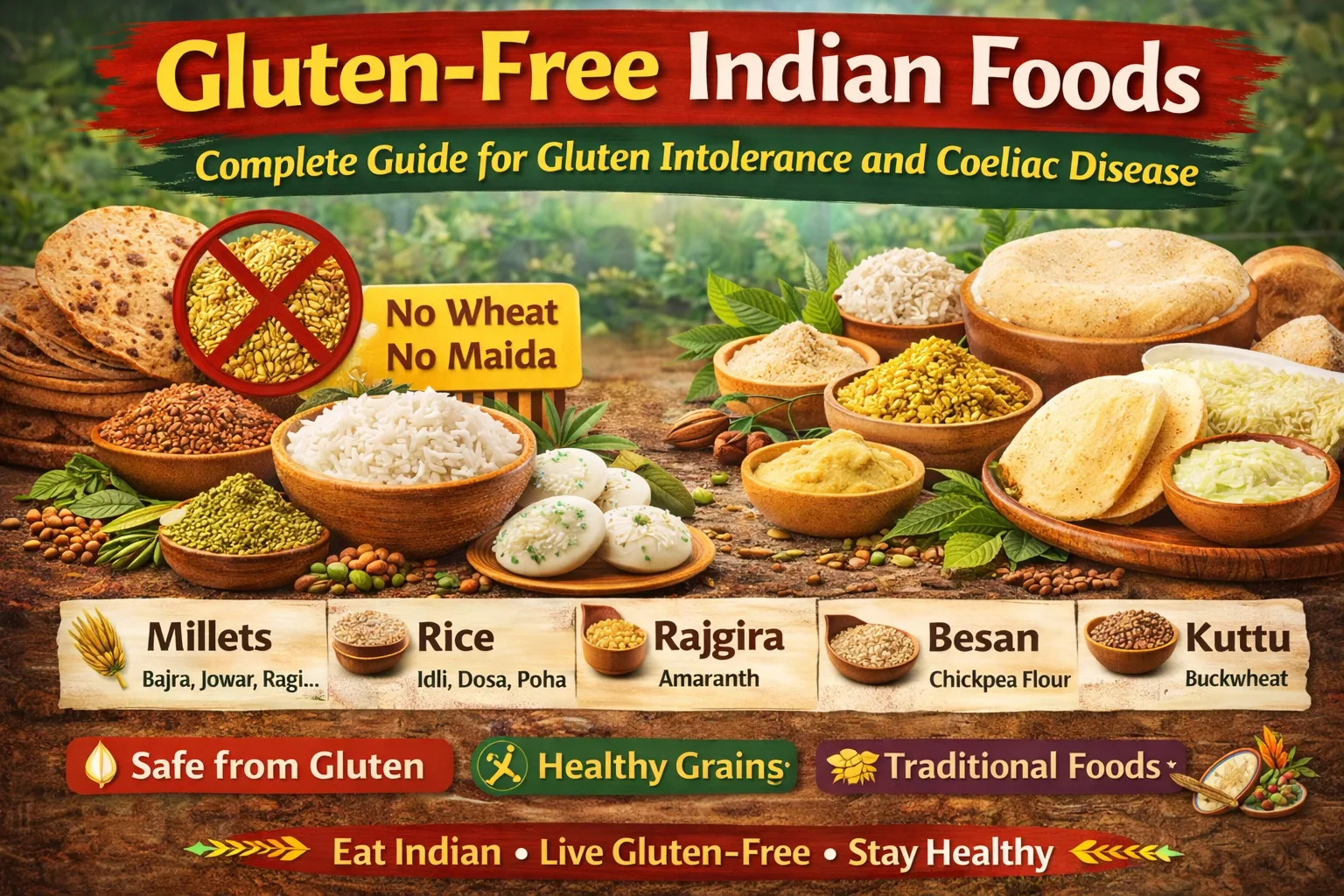
| All millets (bajra, jowar, ragi, foxtail) | NO | Excellent wheat alternatives |
| Dal and legumes | NO | Gluten-free — but check packaged dal for contamination |
| Besan (chickpea flour) | NO | Excellent gluten-free flour for chilla, pakoras |
| Rajgira (Amaranth) | NO | Popular fasting food — naturally GF |
| Buckwheat (Kuttu) | NO | Navratri food — naturally GF despite 'wheat' in name |
| Oats | DEPENDS | Naturally GF but often cross-contaminated — only certified GF oats safe for coeliac |
| Soy sauce (in Chinese Indian food) | YES | Contains wheat — use tamari instead |
| Commercial Indian sweets/halwa | Often YES | Many use maida or sooji — always check |
✅ India's Best Gluten-Free Grain Alternatives
1. Millets — India's Gluten-Free Grain Goldmine
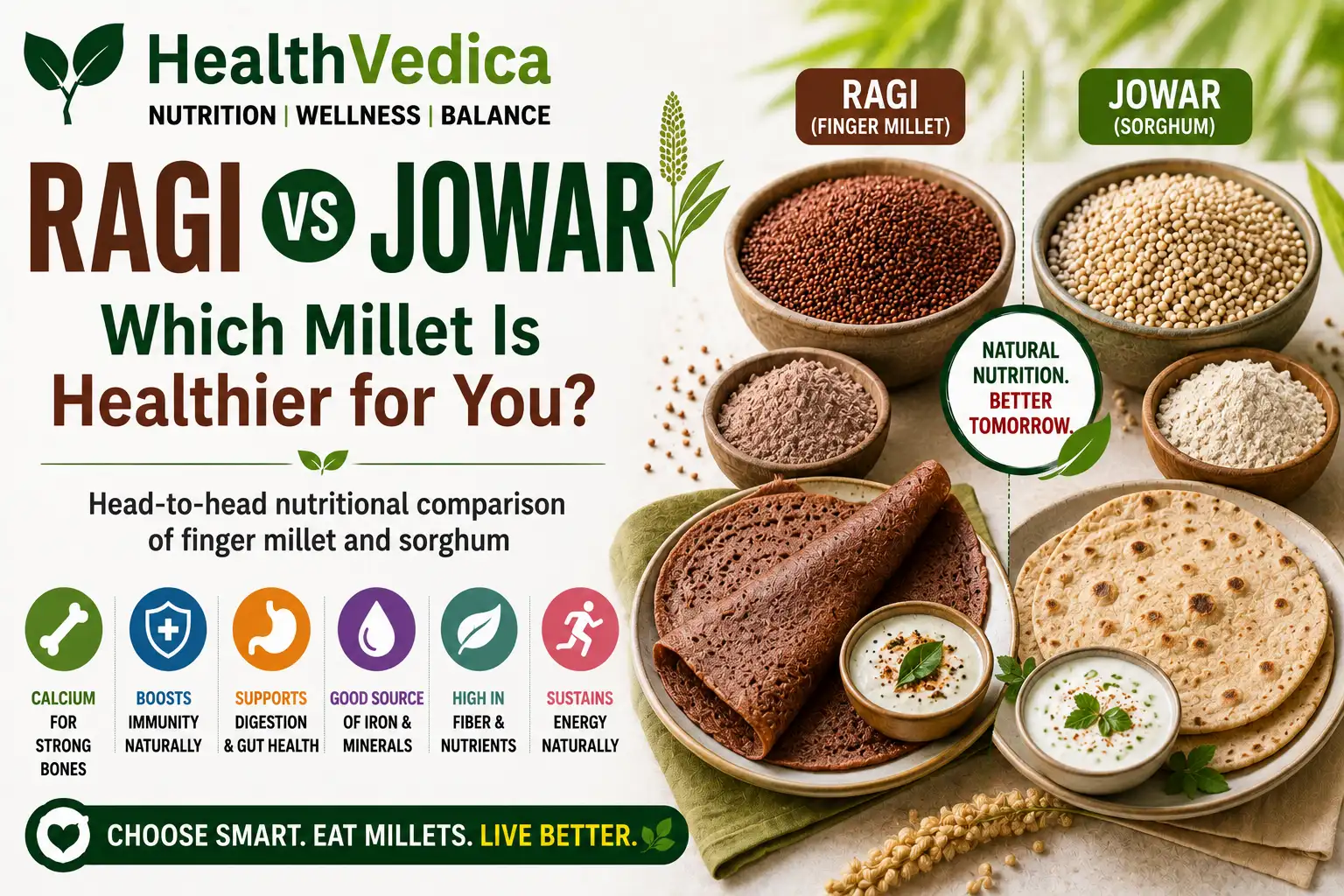
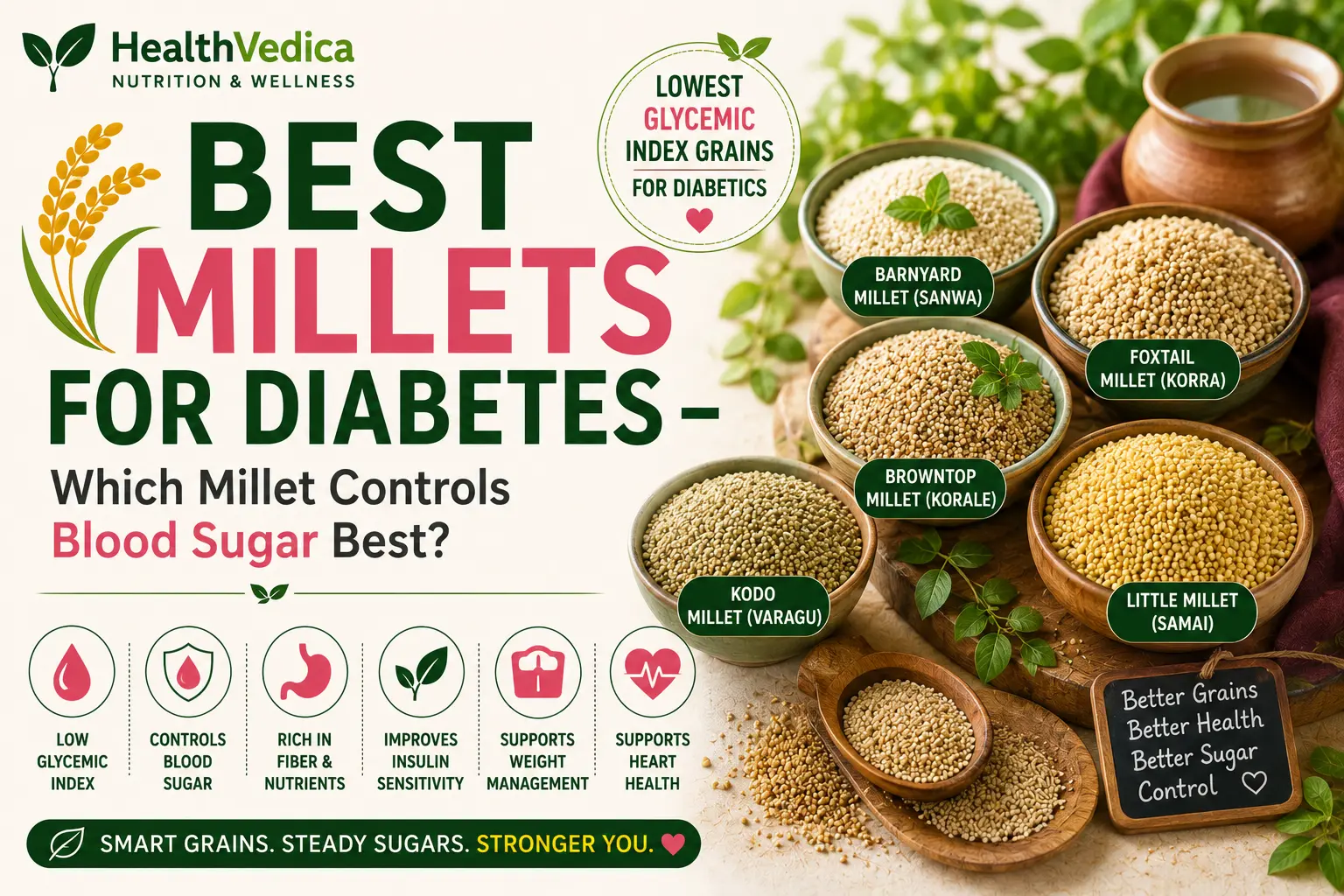
All millets are completely gluten-free and often nutritionally superior to wheat: Bajra (pearl millet) — high in iron, zinc, magnesium; excellent for roti, khichdi, ladoo. Jowar (sorghum) — high fibre, potassium; excellent roti flour. Ragi (finger millet) — highest calcium content of any grain, excellent for porridge, roti, dosa. Foxtail millet (Kangni) — high protein, low GI; rice substitute. Kodo millet — traditional grain, excellent for diabetes management. Little millet — rice substitute, very nutritious. Barnyard millet — popular in religious fasting; highly nutritious. These millets can replace wheat in virtually every Indian preparation — roti, dosa, idli, upma, khichdi, and desserts.
2. Besan (Chickpea Flour) — Versatile GF Workhorse
Besan is naturally gluten-free and protein-rich (22g/100g), making it far superior to wheat flour nutritionally. Traditional Indian uses of besan are extensive: missi roti (besan + spices), besan chilla (protein-rich pancake), pakoras, kadhi, besan ladoo, halwa, and dhokla (fermented besan). Besan can substitute wheat flour in many recipes with minor texture adjustments. It's also excellent for coating fried foods (instead of maida batter).
3. Kuttu (Buckwheat) — The Navratri Superfood
Despite its name, buckwheat is completely unrelated to wheat — it's a seed of a plant related to rhubarb. Naturally gluten-free, high in protein (13g/100g), rich in rutin (a powerful antioxidant flavonoid), and with a medium-low glycaemic index. Kuttu atta is used in Navratri fasting foods — kuttu ki roti and kuttu pakoras — demonstrating India's ancient understanding that buckwheat is a distinct food category. Now available year-round in health stores, kuttu is an excellent daily alternative to wheat flour.
4. Rajgira (Amaranth) — Complete Protein GF Grain
Amaranth is one of the few plant foods providing truly complete protein (all essential amino acids) at 14g protein per 100g. It's rich in lysine — the amino acid most deficient in typical Indian vegetarian diets. High in calcium (159mg/100g), iron, and magnesium. Used in traditional fasting foods (rajgira laddoo, rajgira roti, puffed rajgira with milk). As a regular grain alternative, it makes excellent porridge, flatbreads (mixed with other GF flours), and popped snacks.
5. Rice and Rice Flour
Plain rice is universally gluten-free and forms the staple of South Indian cuisine — which is consequently almost entirely naturally gluten-free (idli, dosa, uttapam, appam, sambar, rasam, curd rice). Rice flour can replace wheat flour in many recipes. Combination of rice flour + besan + millet flour creates a versatile gluten-free multi-purpose flour blend for Indian cooking.
🌿 Gluten-Free and Ayurveda
Ayurveda describes wheat (Godhuma) as heavy (Guru), sweet (Madhura), and building (Brimhana) — excellent for healthy, active Vata types but aggravating for Kapha-dominant individuals with sluggish digestion. The ancient texts actually recommend millets and rice over wheat for those with digestive weakness — a recommendation that, for those with gluten sensitivity, turns out to be medically sound.
The Ayurvedic principle of Satmya (individual dietary suitability) means some people simply don't thrive on wheat — this is not just modern sensitivity but ancient observation. Many Ayurvedic practitioners now recommend reduced wheat intake for digestive conditions, autoimmune disorders, and skin diseases — conditions that often have gluten as an aggravating factor.
🚫 Hidden Gluten in Indian Foods to Watch
Sooji/Rava (Semolina): Made from wheat — contains high gluten. Upma, semolina halwa, and rava dosa all contain gluten. Replace with millets or certified GF alternatives.
Commercial Spice Blends and Masalas: Some packaged spice blends use wheat flour as an anti-caking agent or filler. Read labels carefully — choose pure single spices or certified GF masala blends.
Soy Sauce in Indo-Chinese Food: Standard soy sauce contains wheat. Use tamari (wheat-free soy sauce) instead for Chinese-style Indian dishes.
Baked Goods and Snacks: Nearly all commercial Indian biscuits, khari, toast, namkeen, and chakli contain wheat/maida. Choose certified GF alternatives or make at home with millet or besan flours.
💡 Practical Gluten-Free Indian Meal Plan
Breakfast (GF Indian options): Ragi porridge or dosa | Besan chilla with green chutney | Rajgira puffed with milk | Idli (rice + urad dal — naturally GF) + sambar | Poha (rice flakes) with peanuts and vegetables
Lunch (naturally GF): Rice + dal + sabzi + dahi — the complete, naturally gluten-free Indian lunch | Bajra or jowar roti + any sabzi + dal | Millet khichdi + dahi
Dinner (GF): Kuttu ki roti + palak paneer | Ragi roti + dal fry + salad | Rice + sambhar + coconut chutney | Rajgira roti + chole
Snacks (GF): Roasted chana, peanuts, makhana (fox nuts), all fruits, nuts, rice cakes, besan chakli, and millet-based snacks
Gluten-free flour blend for roti (replicates wheat roti texture): 40% jowar flour + 30% bajra flour + 20% besan + 10% tapioca flour — add 1 tsp psyllium husk (isabgol) per cup for binding to replace gluten's elasticity.
Sources and context
Nutrition guidance in this article is framed around Indian dietary guidance from ICMR–National Institute of Nutrition (ICMR-NIN). Where Ayurveda is discussed, it is presented as a traditional framework and kept separate from modern clinical evidence. The Ministry of AYUSH's published guidance emphasises factors such as food quality, preparation, quantity, timing and individual suitability; these principles are useful context, but they should not be treated as a substitute for diagnosis or medical treatment.
Important: Nutrition needs vary with age, pregnancy, medications and medical conditions. If you have diabetes, kidney disease, coeliac disease, a food allergy or another diagnosed condition, use personalised advice from a qualified clinician or dietitian.