🌿 Tulsi: Sacred, Ubiquitous, Extraordinary
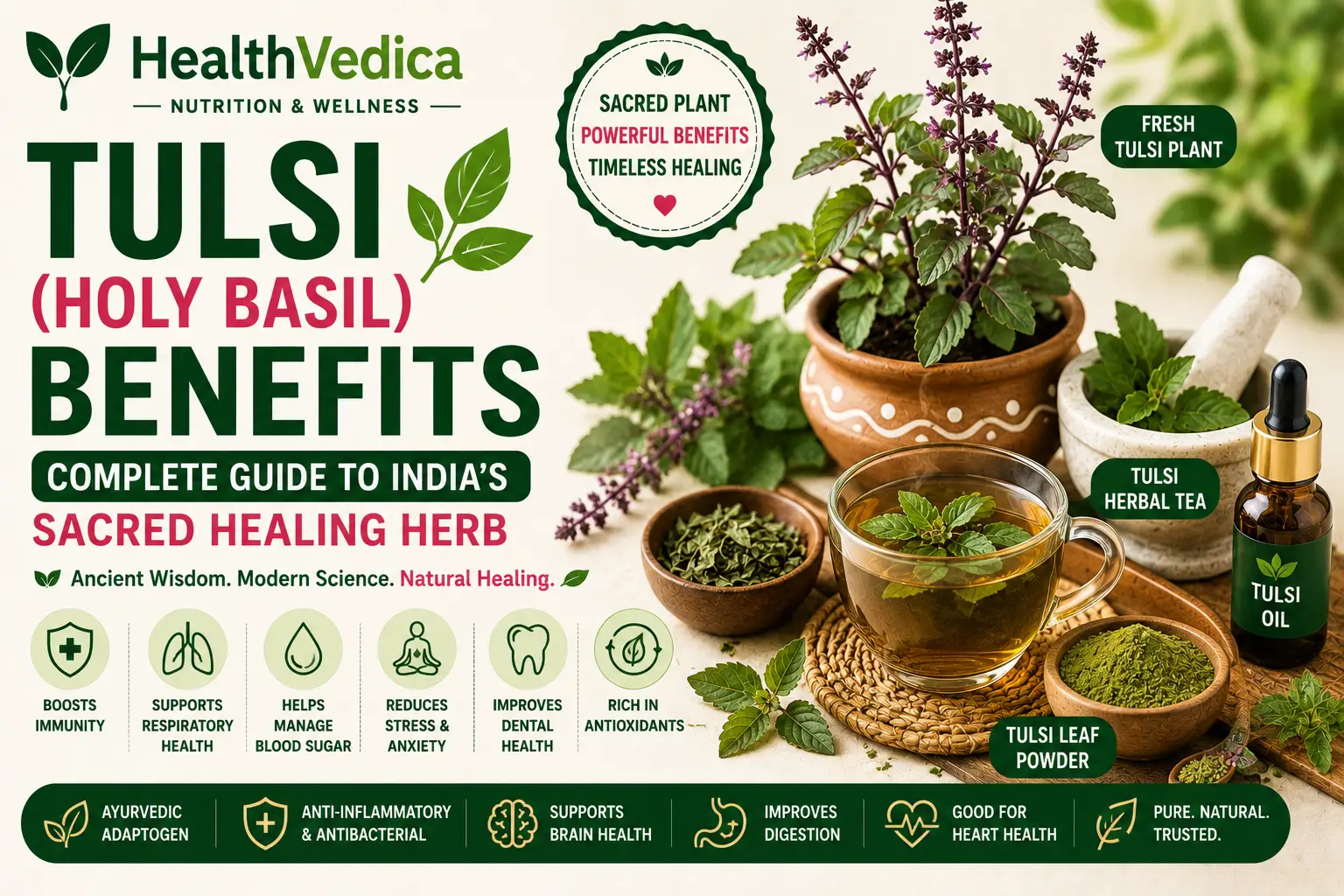
Tulsi, also called Holy Basil, is widely used in Indian homes and Ayurveda, often as a tea or culinary herb. Research on Tulsi is growing, but evidence for specific medical benefits is not equally strong for every claim. Think of Tulsi as a traditional food/herb that can be part of a healthy routine—not a replacement for treatment.
Quick takeaways: Tulsi is widely used in Indian traditions and as tea. Evidence for specific health effects varies, so use it as part of a balanced diet rather than as a cure.
Remarkably, modern pharmacological research on tulsi has validated an extraordinarily broad range of traditional claims. Over 1,900 published studies document tulsi's adaptogenic, anti-inflammatory, antimicrobial, antidiabetic, immunomodulatory, hepatoprotective, cardioprotective, neuroprotective, and anticancer properties. Among medicinal plants, few have so completely lived up to their traditional reputation under scientific scrutiny.
India grows three primary varieties of tulsi, each with distinct properties: Rama Tulsi (green leaves, mild — most common), Krishna/Shyama Tulsi (dark purple leaves, pungent — highest therapeutic potency), and Vana Tulsi (wild forest basil — most aromatic, excellent for teas). All three have significant medicinal properties; Krishna tulsi is generally considered the most potent therapeutic variety.
🔬 Tulsi's Pharmacological Profile
Tulsi's therapeutic breadth derives from an exceptional phytochemical diversity:
Eugenol: The primary active compound — analgesic, anti-inflammatory (COX inhibitor similar to aspirin), antimicrobial, antifungal, and antioxidant. Eugenol is what gives tulsi its distinctive clove-like aromatic character.
Rosmarinic acid: Powerful antioxidant and anti-inflammatory. Protects against UV damage, reduces neuroinflammation, and has antiviral properties against respiratory viruses.
Ursolic acid: Anticancer compound — induces apoptosis in cancer cells, inhibits angiogenesis, and reduces metastasis in multiple cancer models.
Ocimumosides A and B: Novel adaptogenic compounds unique to tulsi — reduce corticosterone (stress hormone), normalise HPA axis activity, and produce measurable anti-stress effects in clinical studies.
Orientin and Vitexin: Flavone glycosides with potent antioxidant, anti-inflammatory, and heart-protective properties. Reduce myocardial ischemia damage in animal models.
Methyl eugenol, β-caryophyllene, linalool: Volatile terpenoids providing antimicrobial activity and contributing to tulsi's stress-reducing aromatherapy effects when the plant is nearby.
📊 Tulsi Varieties and Their Properties
| Variety | Sanskrit Name | Appearance | Potency | Best For |
|---|---|---|---|---|
| Rama Tulsi | Rama Tulasi | Green leaves, white flowers | Moderate | Daily tea, general health, respiratory |
| Krishna Tulsi | Shyama Tulasi | Purple-green leaves, purple flowers | Highest | Blood sugar, infections, therapeutic use |
| Vana Tulsi | Aranya Tulasi | Large green leaves, aromatic | Good | Respiratory, stress, fever, tea |
| Kapoor Tulsi | — | Green, clove-like aroma | Moderate | Culinary, aromatic, tea |
✅ Top Proven Health Benefits of Tulsi
1. Adaptogenic Stress Management
Tulsi is classified as an adaptogen — it helps the body resist physical, chemical, and psychological stressors without causing the side effects of stimulants. Ocimumosides A and B may directly modulate cortisol and corticosterone secretion, normalising the HPA axis response to stress. Clinical studies show tulsi supplementation (300–600mg extract daily or equivalent fresh tulsi) significantly reduces perceived stress, cortisol levels, and anxiety scores. A 2012 double-blind study in the Journal of Ayurveda and Integrative Medicine found standardised tulsi extract significantly improved cognitive function, stress, and fatigue in chronically stressed adults. Daily tulsi tea provides meaningful adaptogenic benefit.
2. Respiratory Health — Tulsi's Most Famous Benefit
Tulsi is Ayurveda's preeminent respiratory herb, and the scientific evidence is extensive. Mechanisms: eugenol acts as a bronchodilator (relaxes airway smooth muscle); rosmarinic acid reduces airway inflammation; antimicrobial compounds reduce pathogen load in respiratory tract; expectorant action clears mucus. Clinical studies show tulsi preparations significantly reduce symptoms of asthma (wheezing, dyspnoea, coughing) over 4–8 weeks. Multiple studies confirm effectiveness against respiratory infections — reducing severity and duration of colds, bronchitis, and respiratory tract infections. During COVID-19, tulsi-based preparations were recommended by Ministry of AYUSH as supportive immune therapy.
3. Immunity and Infection Protection
Tulsi is a proven immunostimulant — it increases production of helper T cells, cytotoxic T cells, and natural killer cells. It also increases IFN-gamma (interferon — antiviral protein) production and reduces pathogenic bacteria load through direct antimicrobial action. Studies show tulsi supplementation reduces incidence, severity, and duration of upper respiratory tract infections. Antiviral activity against herpes simplex, dengue virus, and Epstein-Barr virus has been demonstrated. The traditional practice of drinking tulsi tea at the onset of a cold, and planting tulsi near the home for its ambient antimicrobial volatile release, both have scientific justification.
4. Blood Sugar Management
Multiple clinical trials confirm tulsi's antidiabetic efficacy. Mechanisms: eugenol and methyl eugenol increase insulin secretion; ursolic acid improves peripheral glucose uptake; tulsi reduces intestinal alpha-glucosidase activity (slowing carbohydrate digestion). A landmark 12-week study found tulsi leaves significantly reduced fasting blood glucose, post-meal glucose, and HbA1c in Type 2 diabetics. For prediabetes, tulsi consumption is one of the simplest, safest, and most evidence-based dietary interventions. Daily dose: 8–10 fresh leaves chewed on empty stomach in the morning, or 2–3 cups of tulsi tea.
5. Heart Health
Tulsi's cardiovascular benefits operate through several pathways: eugenol inhibits platelet aggregation (anti-clotting) — reducing blood clot formation; orientin and vitexin protect the heart muscle from ischemic damage; rosmarinic acid reduces LDL oxidation (the critical step in atherosclerotic plaque formation); and tulsi reduces total cholesterol and triglycerides in clinical studies. Traditional daily tulsi consumption may be a contributing factor to India's lower historic cardiovascular disease rates before the dietary westernisation of recent decades.
6. Oral Health
Tulsi's antimicrobial action against oral pathogens (S. mutans, S. aureus, oral Candida) makes it an effective natural oral health agent. Studies confirm tulsi mouthwash (tulsi decoction) reduces plaque, gingivitis, and halitosis (bad breath) comparably to commercial chlorhexidine mouthwash without causing teeth staining. Chewing 2–3 fresh tulsi leaves provides direct antibacterial action on teeth and gums. The volatile oils released provide ongoing antimicrobial activity even after the leaves are swallowed.
7. Neuroprotective and Cognitive Benefits
Tulsi contains compounds that cross the blood-brain barrier and support neurological function. Luteolin and apigenin in tulsi reduce neuroinflammation — a major driver of cognitive decline. Studies show tulsi improves short-term memory, working memory, attention, and cognitive flexibility in stressed adults. Rosmarinic acid reduces beta-amyloid aggregation in Alzheimer's models. The traditional Ayurvedic recommendation for students and knowledge workers to consume brahmi + tulsi together for cognitive enhancement has a sound pharmacological basis — brahmi for neuronal growth, tulsi for neuroprotection.
🌿 Tulsi in Classical Ayurveda
Tulsi occupies a unique position in Ayurveda — simultaneously a Divya Aushadhi (divine medicine) and a Mahakaphahara (great Kapha eliminator). Its classical properties: Rasa: Tikta (bitter), Katu (pungent); Guna: Laghu (light), Ruksha (dry), Tikshna (sharp); Vipaka: Katu; Virya: Ushna (hot). This profile makes tulsi primarily Vata and Kapha pacifying, with moderate Pitta-increasing tendency in excess.
Classical Ayurvedic preparations: Tulsi Swarasa (fresh leaf juice — most potent, for acute conditions); Tulsi Kwatha (decoction — for respiratory and fever); Tulsi Taila (leaf oil — for skin and ear conditions); Tulsi Churna (dried leaf powder — for regular supplementation). The classical Sahasrayogam and Ashtanga Hridayam describe over 30 specific conditions for which tulsi is the primary or adjunct treatment.
🚫 Tulsi Cautions
Blood thinning interaction: Tulsi's antiplatelet properties can enhance the effect of blood-thinning medications (warfarin, clopidogrel, aspirin). Patients on anticoagulants should moderate tulsi intake and inform their physician.
Pregnancy — moderation: High-dose tulsi (therapeutic amounts) should be avoided during pregnancy. Normal culinary amounts and occasional tulsi tea are generally considered safe.
Hypothyroidism: Some animal studies suggest very high doses of tulsi may affect thyroid function. Patients with thyroid disorders should moderate intake and monitor thyroid levels with regular tulsi supplementation.
Fertility (male): Very high doses of tulsi extract showed antifertility effects in male animals (reduced sperm motility). Culinary and tea amounts are safe; high-dose supplements should be used with caution by men trying to conceive.
💡 Practical Tulsi Usage Guide
Daily tulsi tea (most accessible): Boil 8–10 fresh leaves (or 1 tsp dried tulsi) in 2 cups water for 5 minutes. Strain. Add ginger (2–3 slices), honey (1 tsp, after cooling to under 40°C), and black pepper. Drink 2 cups daily — morning and evening. This is India's most accessible, affordable health ritual.
Fresh leaf consumption: Chew 4–5 fresh tulsi leaves on empty stomach each morning. Rinse mouth with water after — tulsi can temporarily erode tooth enamel due to its natural acid content. Or swallow leaves whole without chewing.
Tulsi juice: Extract juice from fresh leaves (blend with minimal water, strain). 10–20ml daily provides concentrated phytochemicals. Mix with ginger juice and honey for respiratory conditions.
Tulsi in cooking: Add fresh leaves to dal, soups, and curries (add at end of cooking to preserve volatile compounds). Use in chutneys, raita, and salad dressings. South Indian rasam with tulsi is a traditional immune-supportive recipe.
Growing tulsi at home: Plant both Rama and Krishna tulsi varieties. Use clay or earthen pots if possible. Place near the entrance or in the kitchen garden — proximity to the plant itself provides aromatherapy benefits from volatile oils released by the plant throughout the day. Water with love and harvest regularly to promote bushy growth.
Evidence note: This article is an educational nutrition guide. General diet guidance is aligned where applicable with ICMR-NIN Dietary Guidelines for Indians, WHO healthy-diet guidance, and relevant Ministry of Ayush materials. Ayurvedic concepts are presented as traditional perspectives and are not a substitute for medical diagnosis or treatment.