🏃 Introduction
Protein is important for maintaining and repairing muscle, but a vegetarian diet does not automatically mean low protein. Dal, beans, soy, dairy, nuts and seeds can work together across the day to provide enough protein and essential amino acids. ICMR-NIN guidance also indicates that a balanced vegetarian diet can meet essential amino-acid needs.
Quick takeaways: Vegetarians can meet protein needs with pulses, soy, dairy, nuts and seeds. ICMR-NIN notes that a balanced vegetarian diet can provide essential amino acids; very high protein or supplement use is not automatically better.
🔬 How Much Protein Do Indians Actually Need?
The Indian Council of Medical Research (ICMR) recommends 0.8–1.0 grams of protein per kilogram of body weight for sedentary adults. For active individuals, people trying to build muscle, pregnant women, the elderly, and those recovering from illness, the requirement rises to 1.2–2.0 grams per kilogram of body weight. For a 60kg Indian adult this means a minimum of 48–60g of protein per day for a sedentary lifestyle, rising to 72–120g per day for an active or muscle-building goal. Most Indians eating a standard dal-rice-roti diet get only 30–45g of protein per day — significantly below even the minimum requirement. This chronic protein inadequacy contributes to muscle wasting known as sarcopenia especially in the elderly, poor immunity, significant hair loss, slow wound supporting recovery, hormonal imbalance, and difficulty managing body weight.
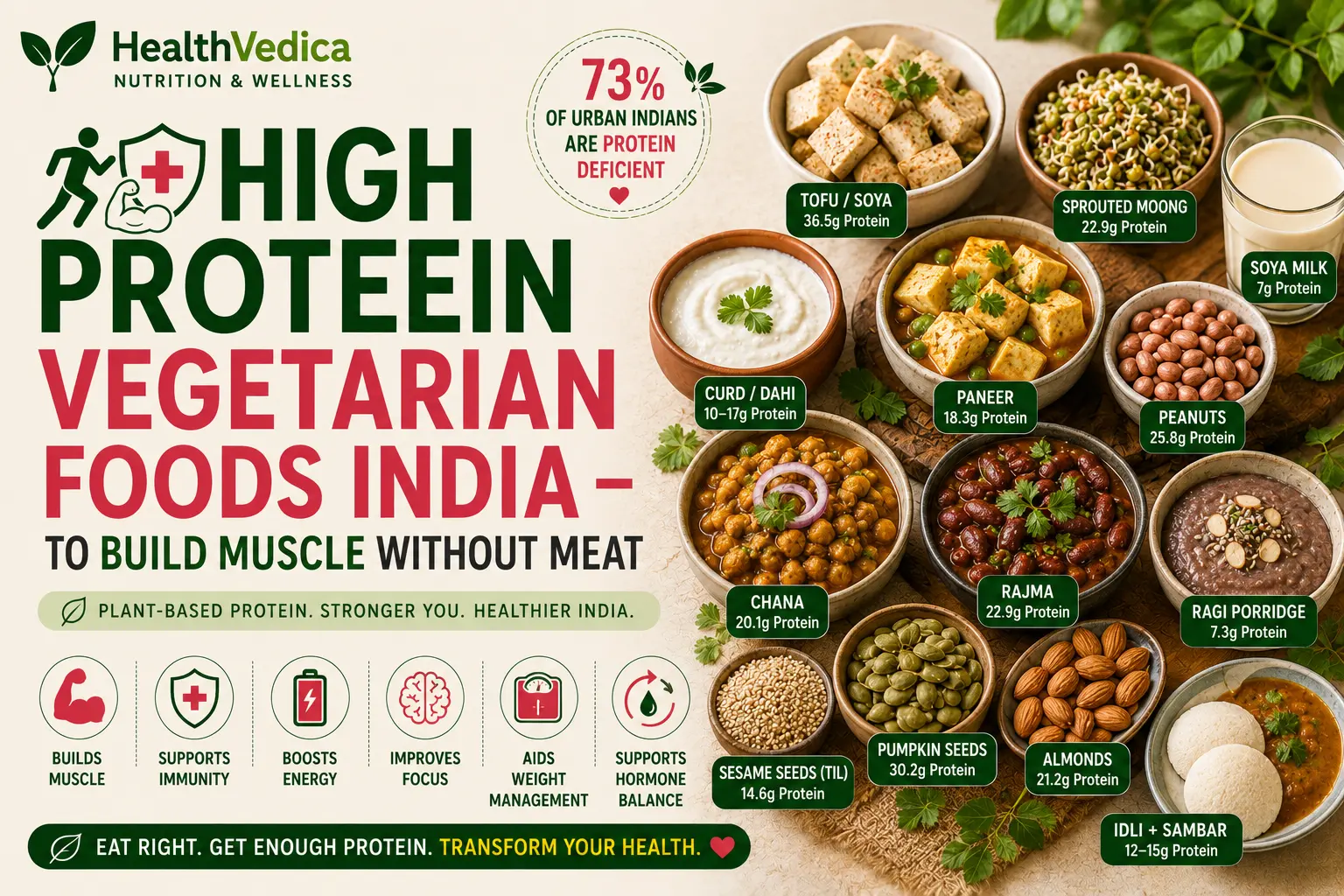
📊 Complete High-Protein Vegetarian Foods Available in India
| Food | Protein per 100g raw | Complete Protein? | Best Indian Use |
|---|---|---|---|
| Soybean and Soya Products | 36.5g | Yes — all essential amino acids | Tofu sabzi, soya chunks curry, soya milk |
| Peanuts (Moongphali) | 25.8g | Partial — low in methionine | Peanut chutney, peanut butter on roti, groundnut sabzi |
| Urad Dal (Black Lentil) | 22.3g | Partial | Dal makhani, idli batter, dosa batter |
| Moong Dal (Split Green Gram) | 22.9g | Partial — low in methionine | Moong dal soup, dal khichdi, sprouted moong salad |
| Rajma (Kidney Beans) | 22.9g | Partial — low in methionine | Rajma chawal, rajma curry |
| Chana Dal (Split Chickpeas) | 20.1g | Partial | Chana dal, besan roti, dhokla |
| Paneer (Full-fat Cottage Cheese) | 18.3g | Yes — complete from dairy | All paneer dishes, added to smoothies |
| Hemp Seeds | 31.6g | Yes — complete protein | Add to smoothies and curd (health stores) |
| Pumpkin Seeds | 30.2g | Partial | Daily snack, add to dal and roti dough |
| Spirulina | 57.5g | Yes — complete protein | 1–3 teaspoons in smoothies or water |
| Thick Curd / Greek-style Dahi | 10–17g | Yes — complete from dairy | Morning protein bowl, raita |
| Quinoa | 14.1g | Yes — complete protein | Quinoa khichdi, quinoa salad (available in health stores) |
✅ The Complete Protein Problem and the Traditional Indian Solution
A complete protein contains all 9 essential amino acids in adequate proportions that the body cannot manufacture on its own. Most plant proteins are incomplete — they lack or are low in one or more essential amino acids. This is why many vegetarians, despite eating adequate total protein grams, can still be effectively amino acid deficient. The traditional Indian solution — developed over thousands of years of dietary wisdom — is food combining: eating grains with legumes creates a complete amino acid profile. Rice is low in lysine but adequate in methionine. Dal is low in methionine but adequate in lysine. Together they create a complete protein. This is the nutritional science behind why dal-rice and dal-roti are the dietary foundation of a billion healthy people. The classic combinations that work perfectly: dal and rice or roti; curd with millet or grain; peanuts with grains. India's traditional diet was nutritionally sophisticated in this regard — the destruction of the balanced dal-rice-roti pattern in favor of single-food processed meals is a serious nutritional regression.
🥛 High-Protein Indian Vegetarian Meal Plan
Breakfast targeting 20–25g protein: 2 scrambled eggs if ovo-vegetarian providing 13g protein, with 100g paneer bhurji providing 18g, or a moong sprout bowl with thick curd providing 15g total protein. Mid-morning targeting 10g: A handful of roasted pumpkin seeds (8g) with 1 cup of thick curd (10g). Lunch targeting 25–30g protein: 1 cup of rajma or chana curry (15g) with 2 rotis with besan added to the dough for extra protein (4g additional), and 1 cup of moong dal (8g). Evening snack targeting 10g: Peanut butter on ragi roti (10g) or soya chunks salad (15g). Dinner targeting 20–25g protein: Paneer curry or tofu sabzi (18g) with dal and 2 rotis. This plan achieves 85–100g protein — sufficient for a 70–80kg active individual. For serious muscle building, supplement with a plant-based protein powder — pea and rice protein combination forms a complete amino acid profile and is the most effective plant protein supplement available in India.
🌿 Ayurvedic Perspective on Protein – Building Dhatu
Ayurveda addresses protein's role through the concept of Dhatu (body tissue) building. Mamsa Dhatu (muscle tissue) and Shukra Dhatu (reproductive tissue — the most refined and vital body tissue) both depend on adequate protein and fat for their formation. Ayurveda's top protein-building foods are: milk and dairy (highly bioavailable complete protein), urad dal (specifically recommended for Shukra Dhatu building and strength), sesame seeds, almonds, and all legumes. The Ayurvedic approach recommends eating protein foods with digestive spices like cumin, ginger, and black pepper to maximize absorption — since even the highest quality protein is useless if digestion (Agni) is weak and cannot properly break down and assimilate the amino acids.
Evidence note: This article is an educational nutrition guide. General diet guidance is aligned where applicable with ICMR-NIN Dietary Guidelines for Indians, WHO healthy-diet guidance, and relevant Ministry of Ayush materials. Ayurvedic concepts are presented as traditional perspectives and are not a substitute for medical diagnosis or treatment.