Quick answer: how can you lose pregnancy weight safely?
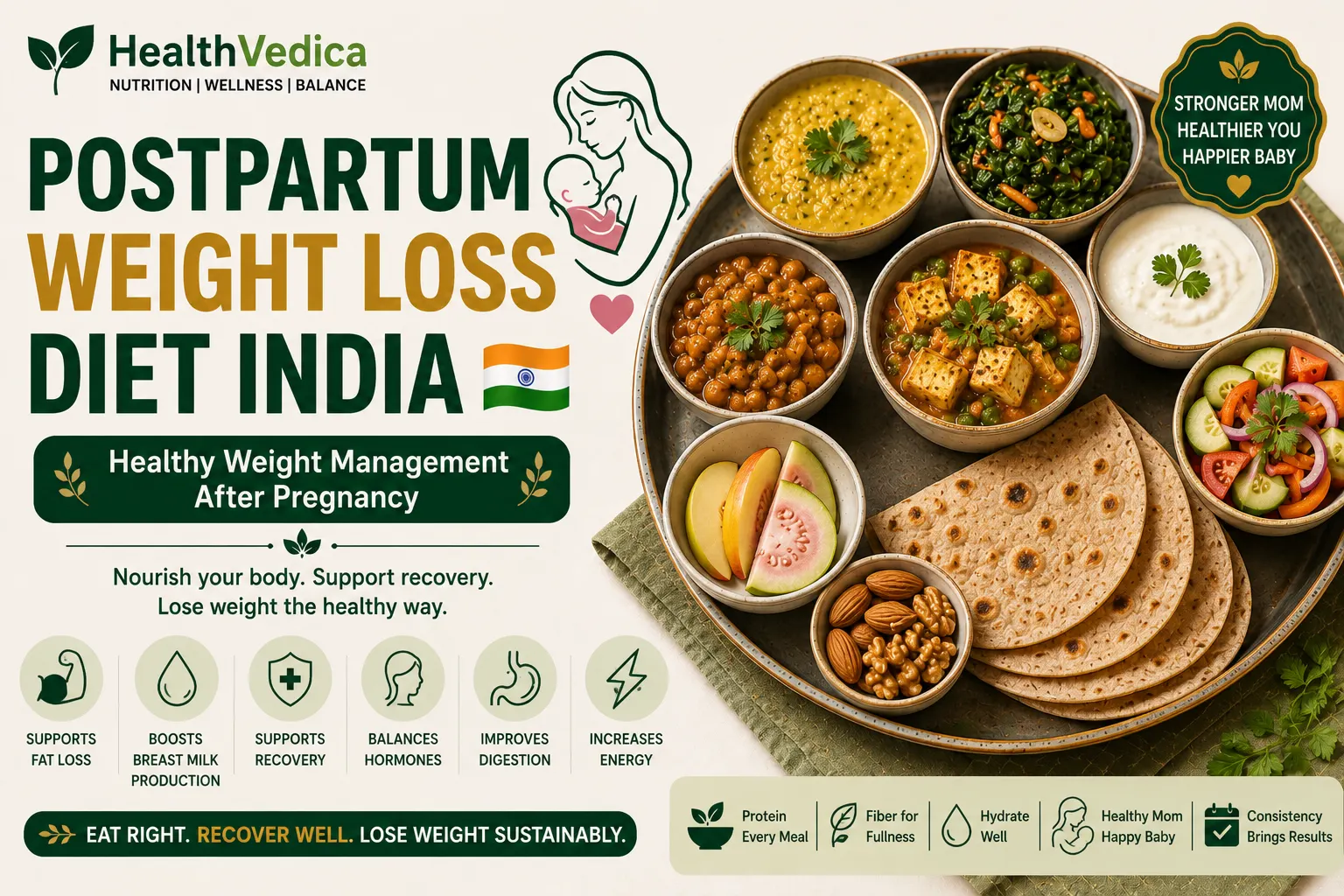
Postpartum weight loss should be gradual and should not come at the expense of recovery, mental well-being or breastfeeding nutrition. Instead of a crash diet, build regular meals around protein, vegetables, fruit, whole grains or millets, and healthy fats. Your timeline will depend on pre-pregnancy weight, pregnancy weight gain, delivery, activity, sleep, breastfeeding and medical conditions.
When should you start focusing on weight loss?
The early postpartum period is primarily a recovery phase. Your clinician can advise when it is appropriate to focus on intentional weight loss, particularly after a C-section, complicated delivery or significant anaemia. During breastfeeding, avoid aggressive calorie restriction unless supervised by a qualified professional.
Build a balanced Indian plate
| Part of the meal | Examples |
|---|---|
| Protein | Dal, beans, paneer, curd, eggs, fish, chicken, soy |
| Vegetables | Leafy greens, gourds, carrots, beans, mixed vegetables |
| Carbohydrate | Roti, rice, oats, dalia, millets, potatoes in sensible portions |
| Fruit | Guava, orange, papaya, apple, banana and other seasonal fruit |
| Healthy fats | Nuts, seeds and moderate amounts of cooking oils |
Sample Indian day
- Breakfast: vegetable oats/upma + eggs or curd + fruit.
- Lunch: 2 rotis or a moderate rice portion + dal + vegetables + curd.
- Snack: fruit with roasted chana or a small portion of nuts.
- Dinner: roti/millet + paneer/beans/fish/chicken + vegetables.
- Drinks: water, buttermilk or unsweetened beverages rather than frequent sugary drinks.
What usually matters more than a “fat-burning” food
No Indian food, spice, detox drink or herbal preparation can replace the basics: appropriate portions, enough protein and fibre, regular movement, sleep and time. Be cautious with postpartum slimming teas, laxatives, unverified herbal products and very-low-calorie diets—especially while breastfeeding.
Breastfeeding and weight loss
Breastfeeding can increase energy needs, but it is not a guarantee of rapid weight loss. If you are breastfeeding, focus first on adequate nutrition and hydration. A dietitian can help create a modest calorie deficit later if weight loss is medically appropriate.
Movement after delivery
Once your obstetric clinician clears activity, gradually rebuild walking, pelvic-floor work and strength training according to your recovery. After a C-section or other complication, progression should be individualised.
Source note
ICMR-NIN’s 2024 Dietary Guidelines emphasise balanced eating, healthy lifestyle practices and additional nutritional attention during pregnancy and lactation. Weight-management goals should be adapted to the postpartum stage rather than based on crash-diet targets.
Evidence & source context: This guide uses ICMR-NIN Dietary Guidelines for Indians 2024 as the primary Indian nutrition framework. Ayurveda is presented as a traditional perspective, not as proof of clinical effectiveness. Food-safety advice is aligned with FSSAI guidance.