🍺 Understanding a Hangover
A hangover is not something food can instantly cure. Alcohol can contribute to dehydration, sleep disruption and stomach irritation, so the most useful approach is usually fluids, electrolytes when appropriate, rest and a simple meal you can tolerate. Avoid more alcohol as a supposed remedy, and seek urgent care for severe or unusual symptoms.
Quick takeaways: There is no instant hangover cure. Fluids, electrolytes, rest and a simple meal may help you feel better while your body metabolises alcohol.
Many products claim to 'treat' hangovers instantly, but there is no magic treat. Recovery primarily depends on hydration, rest, proper nutrition, and time.
Alcohol affects the body in multiple ways. It increases urine production, leading to dehydration and electrolyte loss. It may irritate the stomach lining, disrupt sleep quality, lower blood sugar levels, and increase inflammation.
The right foods cannot instantly eliminate a hangover, but they can help replenish lost fluids, restore nutrients, support energy production, and reduce discomfort.
🔬 Why Hangovers Happen
Several factors contribute to hangover symptoms:
- Dehydration
- Electrolyte imbalance
- Low blood sugar
- Poor sleep quality
- Inflammation
- Stomach irritation
- Alcohol breakdown byproducts
Recovery foods work by addressing these underlying problems rather than may directly 'support normal body functionsing' alcohol from the body.
📊 Best Foods for Hangover Recovery
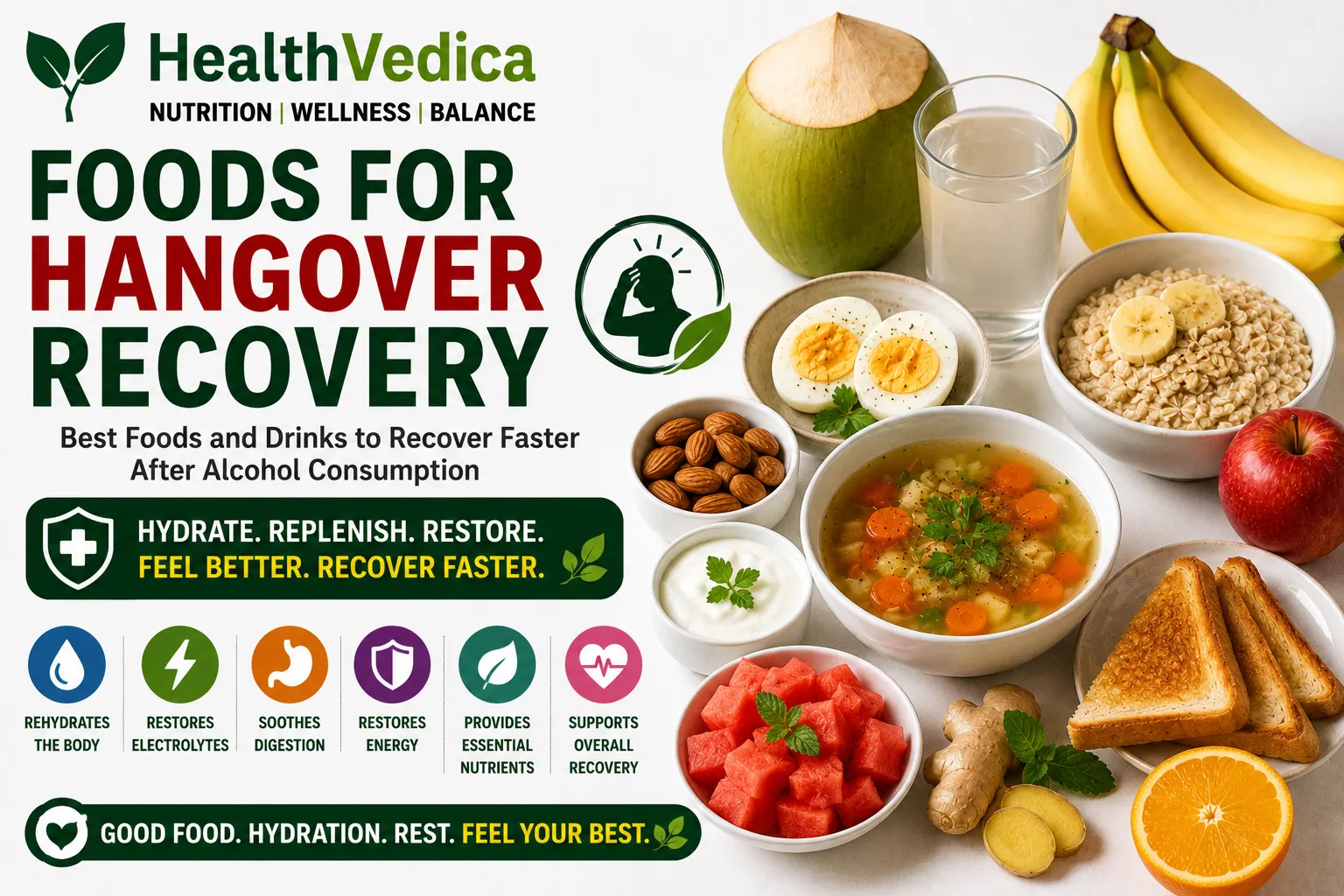
| Food | Main Nutrient | Recovery Benefit |
|---|---|---|
| Coconut Water | Electrolytes | Hydration support |
| Banana | Potassium | Replaces lost minerals |
| Eggs | Protein | Supports recovery |
| Oats | Complex carbs | Restores energy |
| Watermelon | Water & antioxidants | Hydration |
| Soup | Fluids & minerals | Easy nourishment |
| Curd | Probiotics | Supports digestion |
| Toast | Carbohydrates | Gentle on stomach |
| Ginger | Gingerols | May reduce nausea |
| Orange | Vitamin C | Hydration & nutrients |
🥥 Coconut Water – Nature's Recovery Drink
Alcohol increases fluid and electrolyte losses through increased urination. Coconut water provides potassium, magnesium, and natural hydration that may help restore fluid balance.
It is often easier to tolerate than heavy meals when experiencing nausea or stomach discomfort.
🍌 Bananas
Potassium is one of the electrolytes commonly lost during excessive alcohol consumption. Bananas provide potassium, carbohydrates, and easy-to-digest energy.
They are often well tolerated even when appetite is reduced.
🥚 Eggs
Eggs provide high-quality protein, B vitamins, and amino acids.
They help support recovery by providing nutrients needed for normal metabolic processes and energy production.
A simple boiled or lightly cooked egg meal is usually easier on the stomach than greasy breakfast foods.
🥣 Oats
Oats provide complex carbohydrates that help stabilize blood sugar levels after alcohol consumption.
They also supply magnesium, B vitamins, and fiber.
A warm bowl of oatmeal is often a gentle and nutritious recovery meal.
🍉 Watermelon
Watermelon contains more than 90% water and provides hydration along with vitamin C and antioxidants.
It can help replenish fluids while being easy to digest.
🍲 Soups and Broths
Vegetable soups, chicken soups, and light broths provide fluids, sodium, minerals, and nourishment.
Warm soups are especially useful when solid foods feel difficult to eat.
They help address both dehydration and electrolyte loss simultaneously.
🥛 Curd and Probiotic Foods
Alcohol may temporarily irritate the digestive system. Curd provides probiotics that support gut health and digestion.
A simple curd rice meal is often soothing after a night of drinking.
🍞 Toast and Simple Carbohydrates
Alcohol can contribute to low blood sugar levels in some people. Simple carbohydrate foods such as toast, crackers, rice, or plain bread provide easily digestible energy.
These foods are often recommended when nausea limits food choices.
🫚 Ginger – Natural Nausea Relief
Ginger has been studied for its ability to reduce nausea and digestive discomfort.
Ginger tea or fresh ginger added to warm water may help settle the stomach.
🍊 Citrus Fruits
Oranges, sweet lime, and other citrus fruits provide fluids, vitamin C, and natural sugars that can support recovery.
However, individuals with significant stomach irritation may prefer less acidic fruits initially.
💧 The Most Important Recovery Tool: Hydration
No food is more important than proper hydration after excessive alcohol intake.
Recovery fluids include:
- Water
- Coconut water
- Oral rehydration solutions (ORS)
- Soups and broths
- Lemon water
- Herbal teas
Small frequent sips are often easier than drinking large amounts at once.
🚫 Foods to Avoid During a Hangover
| Food | Why Avoid It |
|---|---|
| More Alcohol | Delays recovery |
| Deep-Fried Foods | May worsen nausea |
| Highly Spicy Foods | Can irritate the stomach |
| Excess Coffee | May worsen dehydration |
| Sugary Energy Drinks | Blood sugar fluctuations |
⚠️ Common Hangover Myths
Myth: Drinking more alcohol treats a hangover.
Reality: It may temporarily mask symptoms but usually delays recovery.
Myth: Coffee treats hangovers.
Reality: Coffee may improve alertness but does not reverse dehydration or alcohol's effects.
Myth: Detox drinks remove alcohol quickly.
Reality: The liver processes alcohol at its own pace. No drink can meaningfully speed this process.
🍽️ Sample Hangover Recovery Meal Plan
Upon Waking: Water + coconut water
Breakfast: Oatmeal + banana
Mid-Morning: Watermelon or orange
Lunch: Vegetable soup + rice
Evening: Ginger tea + toast
Dinner: Khichdi or curd rice
Throughout the Day: Plenty of water and fluids
😴 Sleep: The Most Overlooked Recovery Tool
Alcohol disrupts sleep quality even if it initially causes drowsiness. Rest and adequate sleep help the body recover from inflammation, dehydration, and metabolic stress.
Combining hydration, nutrition, and sleep often produces the fastest recovery.
💡 Final Thoughts
There is no instant treat for a hangover, but proper hydration and nutrition can significantly reduce symptoms. Coconut water, bananas, eggs, oats, soups, curd, watermelon, toast, ginger, and citrus fruits help replenish fluids, restore electrolytes, provide energy, and support recovery.
The most effective strategy remains prevention: moderate alcohol intake, eating before drinking, staying hydrated throughout the evening, and avoiding excessive consumption. Recovery foods help the body bounce back, but they cannot completely undo the effects of heavy drinking.
Evidence note: This article is an educational nutrition guide. General diet guidance is aligned where applicable with ICMR-NIN Dietary Guidelines for Indians, WHO healthy-diet guidance, and relevant Ministry of Ayush materials. Ayurvedic concepts are presented as traditional perspectives and are not a substitute for medical diagnosis or treatment.