Quick answer
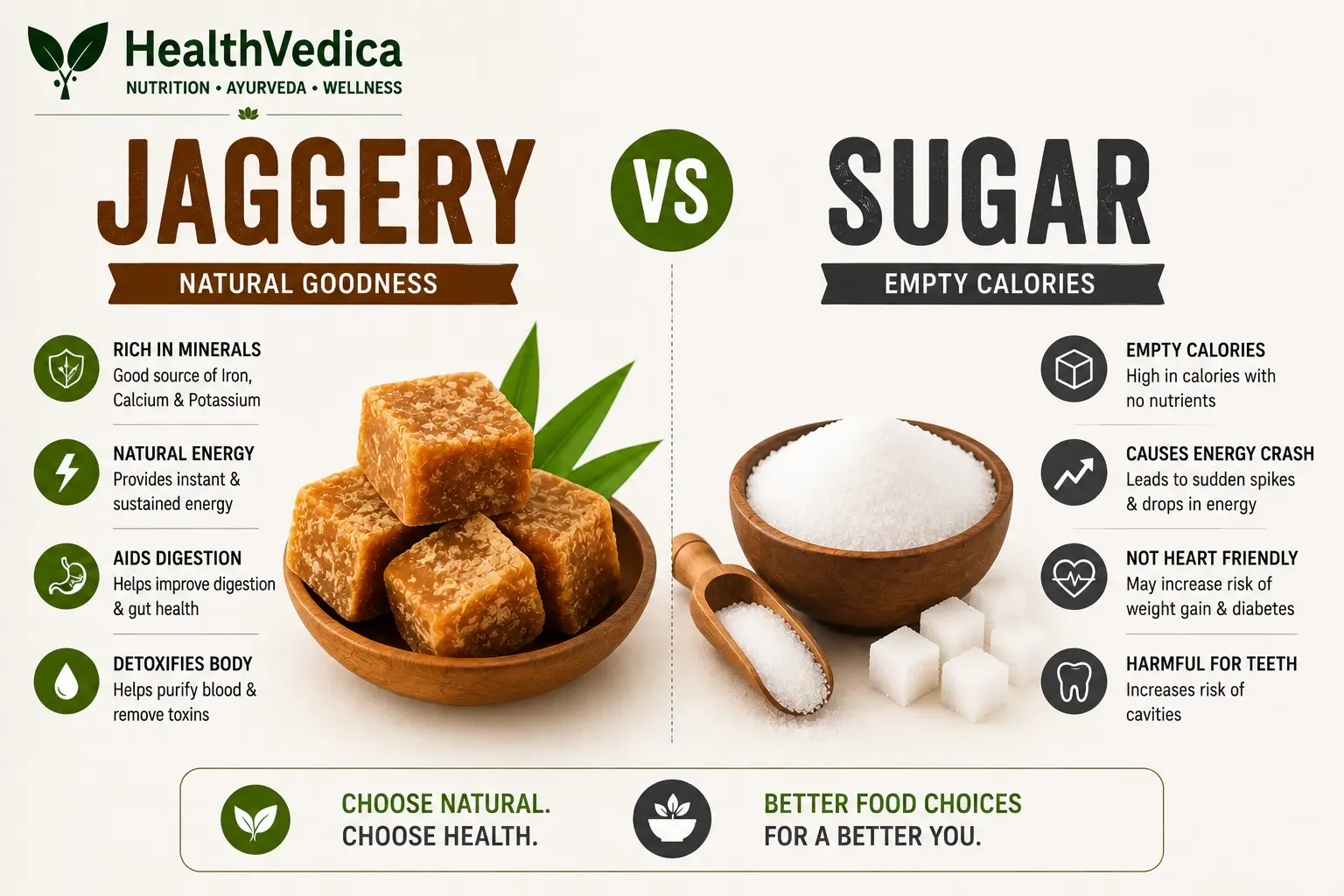
There is no single food that is automatically healthier for everyone. Jaggery vs Sugar Comparison are useful choices in different situations, and the better option depends on your overall diet, portion size, cooking method and personal needs. This guide compares the two foods in plain language so you can make an informed choice.
📊 Jaggery vs Sugar: Nutritional Comparison (per 100g)
| Nutrient | Jaggery (Gur) | White Sugar | Advantage |
|---|---|---|---|
| Glycaemic Index | 84 | 65 | Sugar (lower, surprisingly) |
| Iron | 11mg | ~0mg | Jaggery (significant) |
| Calcium | 40–80mg | ~0mg | Jaggery |
| Calories | 383 kcal | 387 kcal | Roughly equal |
| Processing level | Minimally processed | Heavily refined | Jaggery |
| Antioxidants | Present (small amounts) | None | Jaggery |
| Suitability for diabetics | Not recommended (high GI) | Also not recommended, but similarly limited | Neither is diabetic-safe |
✅ Where Jaggery Wins
Retained minerals: Jaggery retains meaningful amounts of iron and calcium from the sugarcane juice it is made from, nutrients almost entirely stripped away during the refining process used to produce white sugar.
Minimal processing: Jaggery undergoes far less industrial processing than white sugar, retaining more of its natural compounds including small amounts of antioxidants and trace minerals like magnesium and potassium.
Traditional therapeutic use: In Ayurveda and traditional Indian nutrition, jaggery has long been valued for its mineral content and is often paired with foods like peanuts or sesame for added nutritional benefit.
✅ Where Sugar Wins
Lower glycaemic index: Counterintuitively, white sugar has a lower glycaemic index (around 65) than jaggery (around 84), meaning it causes a comparatively gentler blood sugar spike, though this difference is a relative comparison between two high-GI sweeteners rather than sugar being a health food.
Consistency in cooking: White sugar dissolves and behaves predictably in recipes, particularly in baking and confectionery, where jaggery's variable moisture content and mineral impurities can affect texture and consistency.
Neutral flavour: Sugar's neutral sweetness works universally across recipes, while jaggery's earthy, caramel-like flavour, though pleasant in traditional dishes, is not always suited to every preparation.
🍽️ Which Should You Choose?
For non-diabetics seeking a nutritional upgrade with genuine mineral content, jaggery used in moderation is the better choice, particularly in traditional preparations like chikki, tea, or pongal. For diabetics, neither jaggery nor sugar is an ideal choice — both should be limited or replaced with lower glycaemic index alternatives like stevia. The mineral benefits of jaggery do not offset its higher glycaemic impact for those managing blood sugar.
Sources and context
Nutrition guidance in this article is framed around Indian dietary guidance from ICMR–National Institute of Nutrition (ICMR-NIN). Where Ayurveda is discussed, it is presented as a traditional framework and kept separate from modern clinical evidence. The Ministry of AYUSH's published guidance emphasises factors such as food quality, preparation, quantity, timing and individual suitability; these principles are useful context, but they should not be treated as a substitute for diagnosis or medical treatment.
Important: Nutrition needs vary with age, pregnancy, medications and medical conditions. If you have diabetes, kidney disease, coeliac disease, a food allergy or another diagnosed condition, use personalised advice from a qualified clinician or dietitian.