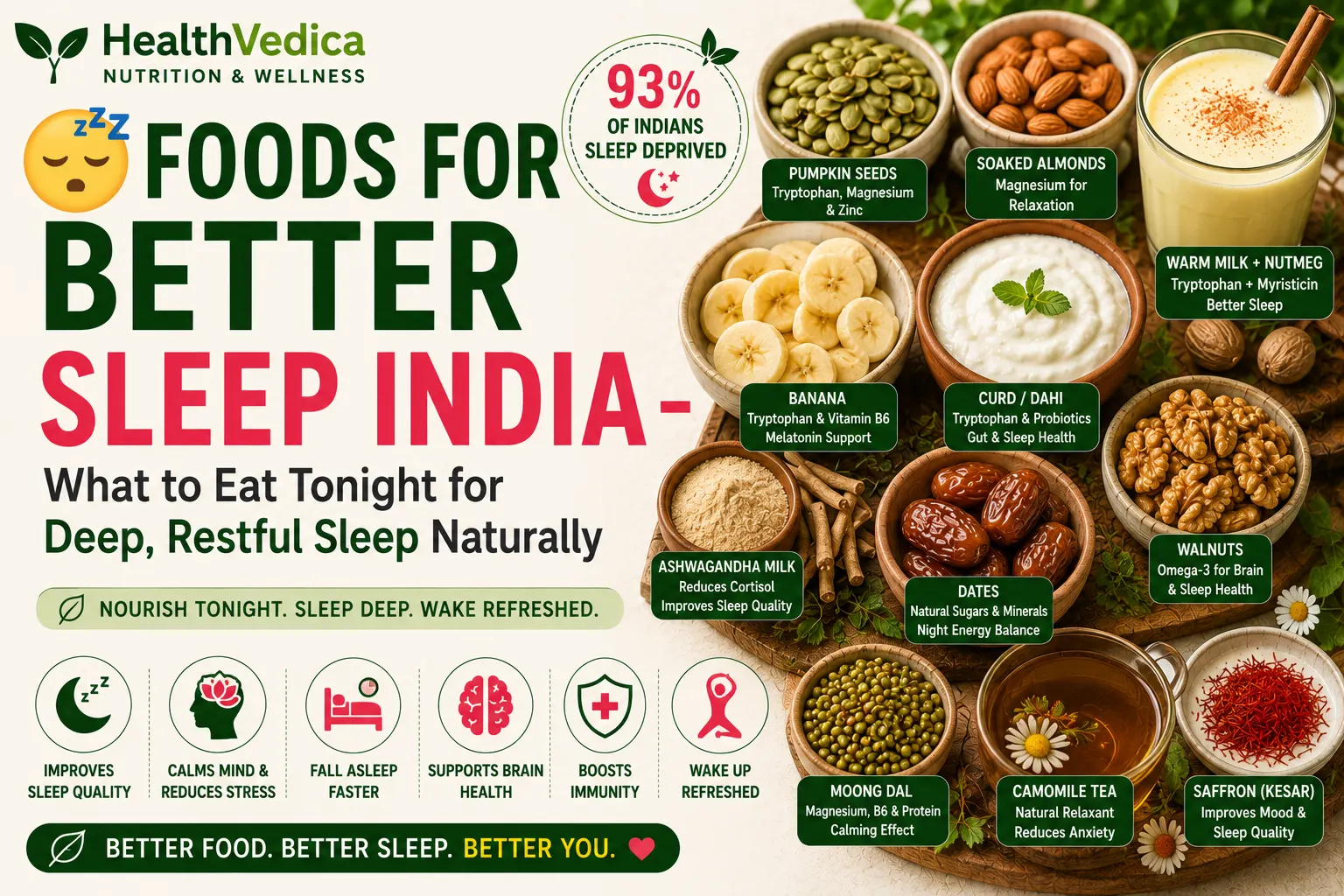
😴 Introduction
Food is only one part of healthy sleep. A consistent sleep schedule, morning light, physical activity and sensible caffeine use usually matter more than any single bedtime food. Balanced evening meals and foods containing protein, magnesium and other nutrients can complement good sleep habits, but persistent insomnia or loud snoring should be assessed medically.
Quick takeaways: Food can support sleep habits, but it is not a substitute for evaluation of persistent insomnia, sleep apnea or other sleep disorders. A lighter evening meal and sensible caffeine timing can help.
🔬 The Science of Sleep Nutrition – How Food Controls Sleep
Sleep is controlled by two key neurotransmitters and one crucial hormone. Serotonin is the calming neurotransmitter that initiates the relaxation cascade before sleep. GABA (gamma-aminobutyric acid) is the brain's primary inhibitory neurotransmitter — it reduces neural excitability and is essential for deep sleep. Melatonin is the darkness-triggered sleep hormone produced by the pineal gland from serotonin. All three are synthesized from dietary precursors that can come from food. Serotonin and melatonin are made from the amino acid tryptophan found in food. GABA activity is enhanced by magnesium, Vitamin B6, and fermented foods containing GABA-producing lactobacillus bacteria. This means your dinner and evening snack choices may directly influence how quickly you fall asleep, how deeply you sleep, and how completely rested you feel upon waking. The most common nutritional causes of poor sleep in India are magnesium deficiency, tryptophan deficiency, Vitamin D deficiency , and blood sugar instability during the night.
📊 Best Indian Foods for Sleep – Evidence Table
| Sleep Food | Sleep Nutrient | How It Promotes Sleep | Best Time |
|---|---|---|---|
| Warm Milk with Nutmeg (Jaiphal) | Tryptophan from milk + Myristicin from nutmeg | Tryptophan converts to serotonin then melatonin. Nutmeg has mild GABA-ergic sedative effect at low doses | 30 minutes before bed |
| Pumpkin Seeds (Kaddu ke Beej) | Tryptophan (highest plant source) + Magnesium + Zinc | The complete sleep trinity — tryptophan for melatonin synthesis, magnesium for GABA activation, zinc for sleep duration | Evening snack or with dinner |
| Banana | Tryptophan + Potassium + Magnesium + Vitamin B6 | B6 is the cofactor that converts tryptophan to serotonin; potassium and magnesium relax muscles preventing night cramps | Evening snack 1 hour before bed |
| Ashwagandha Milk | Triethylene Glycol + Adaptogenic Withanolides + Milk Tryptophan | Ashwagandha reduces cortisol and promotes GABA activity; clinical trials specifically confirm improved sleep onset and quality | 30–45 minutes before bed |
| Shatavari Milk | Steroidal Saponins and Adaptogenic Compounds | Calming adaptogen — reduces stress and anxiety that prevents sleep onset, particularly beneficial for women | 30 minutes before bed |
| Soaked Almonds (Badam) | Magnesium + Tryptophan + Vitamin E | Magnesium deficiency is one of the most common and overlooked causes of insomnia in India — almonds correct it | Evening snack |
| Curd or Thick Dahi | Tryptophan + Calcium + Probiotic Bacteria | Calcium helps the brain use tryptophan for melatonin synthesis; gut bacteria influence melatonin production through the gut-brain axis | With dinner — not ice cold |
| Nutmeg (Jaiphal) alone | Myristicin and Elemicin | Traditional Indian sedative — mild GABA-ergic effects at very low doses | Just a pinch in warm milk at bedtime — more is toxic |
🌿 Ayurvedic Approach to Sleep – Nidra as a Pillar of Life
Ayurveda considers Nidra (sleep) as one of the three pillars of life (Trayopastambha), alongside food and sexual energy — treating it with the same importance as nutrition. The Ayurvedic approach to insomnia depends on which dosha is disturbed. Vata insomnia which is the most common type is characterized by racing thoughts, anxiety, inability to switch off the mind, and light or interrupted sleep — treated with grounding, warming, and nourishing foods; warm sesame oil head massage (Shiroabhyanga); warm milk with ashwagandha and nutmeg; and the herb Jatamansi (Spikenard). Pitta insomnia is characterized by waking between 2–3 AM with racing analytical thoughts, excess heat, and intensity — treated with cooling foods, Brahmi, Shatavari, and coconut oil head massage. Kapha insomnia paradoxically presents as excessive sleep with persistent morning grogginess — treated with lighter evening meals, ginger tea, and stimulating morning routines including vigorous exercise. The universal Ayurvedic bedtime protocol that works for all types includes: Ashwagandha or Brahmi milk with nutmeg, foot massage with warm sesame or coconut oil (Pada Abhyanga — just 2 minutes), no screens 1 hour before bed, and eating dinner by 7 PM allowing at least 2–3 hours before sleep.
🚫 Foods That Destroy Sleep Quality – Stop These Tonight
Caffeine after 2 PM: Caffeine has a half-life of 6–8 hours — a cup of chai at 6 PM means half the caffeine is still fully active in your bloodstream at midnight. This is where most Indian sleep problems begin. Alcohol: Alcohol appears to help with sleep onset but devastates sleep quality — it suppresses REM sleep and causes multiple wakings in the second half of the night, leaving you completely unrefreshed regardless of total hours slept. Large, heavy, late dinners: Eating a heavy meal after 8 PM forces your body to spend its first few sleep hours digesting instead of repairing and regenerating. This may directly disrupts slow-wave deep sleep and growth hormone release. High-sugar evening snacks: Cause blood sugar spikes followed by crashes at 2–3 AM — waking you with cortisol release and hunger. Very spicy food at dinner: Significantly increases body temperature and can cause acid reflux — both disrupt sleep architecture. Excess fluids after 7 PM: Causes nocturia (night-time urination) — one of the most common causes of sleep disruption in Indians over 40 years of age.
✅ The Complete Indian Bedtime Routine for Deep Sleep
6:30–7 PM — Light dinner: Eat a light, easily digestible meal such as dal khichdi, steamed vegetables with roti, or simple dal and sabzi. Avoid fried foods, very spicy dishes, or heavy protein meals at this time. Include pumpkin seeds in your dinner for tryptophan and magnesium. 8 PM — Optional evening snack: One banana or 5–6 soaked almonds. These provide tryptophan, magnesium, and Vitamin B6 for the melatonin synthesis that begins 2–3 hours later. 8:30 PM — No more screens: Blue light from phones, TV, and laptops suppresses melatonin production for 2–3 hours after exposure — this single habit change is the most impactful sleep intervention available for free. 9 PM — Ashwagandha milk: Warm full-fat milk with half a teaspoon of ashwagandha churna, a pinch of nutmeg (jaiphal), quarter teaspoon of cardamom, and 1 teaspoon of honey. This is Ayurveda's classic sleep tonic and multiple clinical studies now confirm it works. 9:30 PM — Foot massage: Just 2 minutes of warm sesame or coconut oil foot massage (Pada Abhyanga) activates the parasympathetic nervous system and meaningfully reduces the time needed to fall asleep. 10 PM — Consistent sleep time: Going to sleep at the same time every night is critical for maintaining the circadian rhythm that regulates melatonin production and sleep quality.
Evidence note: This article is an educational nutrition guide. General diet guidance is aligned where applicable with ICMR-NIN Dietary Guidelines for Indians, WHO healthy-diet guidance, and relevant Ministry of Ayush materials. Ayurvedic concepts are presented as traditional perspectives and are not a substitute for medical diagnosis or treatment.