🌸 Introduction
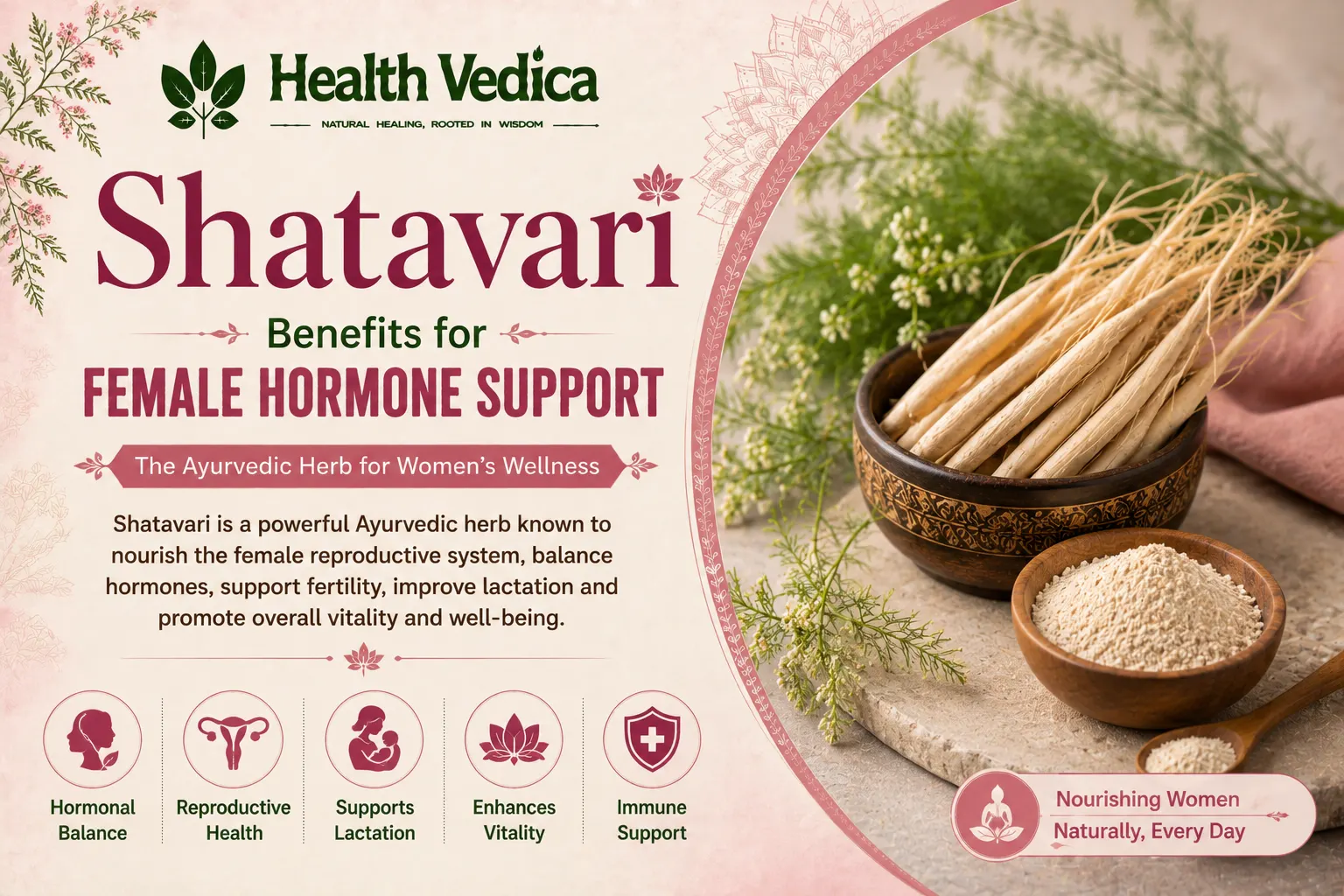
Shatavari (Asparagus racemosus), the Ayurvedic 'Queen of Herbs', is the foremost tonic for women's health in the entire Ayurvedic tradition. The name means 'she who possesses a hundred husbands' — referring to the herb's legendary ability to revitalize female vitality, fertility, and hormonal balance. It is a climbing shrub with needle-like leaves, native to tropical India and the Himalayas, and its roots are the primary medicinal part. As a Rasayana, it nourishes Rasa and Rakta Dhatu (plasma and blood) and specifically targets the female reproductive system, making it indispensable in Ayurvedic gynecology.
🔬 Key Active Compounds
| Compound | Primary Benefit |
|---|---|
| Steroidal Saponins (Shatavarin I–IV) | Phytoestrogen activity, galactagogue |
| Racemosol | Anti-ulcer, anti-inflammatory |
| Isoflavones | Hormonal balance, menopause support |
| Asparagamine | Antifungal, antiviral |
| Folic Acid | Neural development, fertility |
| Immunoside | Immunomodulatory |
💊 Nutritional Profile (Per 100g Root Powder)
| Nutrient | Amount | DV% |
|---|---|---|
| Protein | 3.7 g | 7% |
| Iron | 4.2 mg | 23% |
| Calcium | 50 mg | 5% |
| Fiber | 2.1 g | 8% |
| Folic Acid | 34 mcg | 9% |
| Vitamin C | 3.5 mg | 4% |
🌡️ Ayurvedic Properties & Dosha Effect
Shatavari is Madhura (sweet) and Tikta (bitter) in taste, with Guru (heavy) and Snigdha (oily) qualities. It has a Sheeta Virya (cooling potency) and Madhura Vipaka (sweet post-digestive). It strongly pacifies Vata and Pitta doshas and may mildly increase Kapha in excess. It is the ultimate Pitta-pacifying Rasayana for women, nourishing reproductive tissues and cooling excess heat that causes inflammation, dryness, and hormonal disorders.
💪 Health & Healing Benefits
Hormonal Balance & Menstrual Health: Shatavari's phytoestrogenic saponins regulate estrogen, FSH, and LH, supporting regular menstrual cycles, reducing PMS symptoms, managing PCOS, and easing menstrual pain and excessive bleeding.
Fertility Enhancement: It improves egg quality, supports endometrial health, enhances ovarian function, and increases chances of conception. It is the most prescribed Ayurvedic herb for female infertility in India.
Pregnancy & Postpartum: Shatavari is safe throughout pregnancy (in recommended doses) and significantly increases breast milk production postpartum — its galactagogue properties are well-documented in nursing mothers.
Menopause Support: Its phytoestrogens reduce hot flashes, night sweats, vaginal dryness, and mood fluctuations during perimenopause and menopause without the risks of synthetic HRT.
Immunity & Adaptogen: Shatavari modulates both innate and adaptive immunity, reduces stress hormones, and provides adaptogenic support — making it excellent for stress-related infertility and immune deficiency.
Gastric Ulcers: Racemosol in Shatavari protects gastric mucosa, reduces ulcer formation, and is one of the few Ayurvedic herbs studied specifically for peptic ulcer disease.
Male Health: While primarily a women's herb, Shatavari improves sperm count and motility, reduces oxidative damage to sperm, and is an excellent tonic for men's reproductive health as well.
🍵 Traditional Preparations
Shatavari Kalpa/Powder with Milk: The classic female tonic — 1–2 tsp Shatavari powder boiled in milk with ghee, cardamom, and jaggery. Taken daily for hormonal balance and vitality.
Shatavari + Ashwagandha Milk: Power combination for both male and female reproductive health, energy, and stress relief.
Phalaghrita: Ghee preparation with Shatavari and other herbs — classical Ayurvedic fertility formula for women.
Shatavari Juice / Liquid Extract: Widely available from brands like Himalaya, Dabur, and Zandu for daily hormonal support.
Shatavari Churna with Honey: For post-menopausal women, nursing mothers, and those with gastric ulcers.
✅ Key Advantages
Best Ayurvedic herb for women's hormonal health. Enhances fertility and egg quality. Boosts breast milk production. Eases menopause symptoms naturally. Adaptogen for stress-related health issues. Gastric ulcer protection. Also benefits male reproductive health. Safe during pregnancy and breastfeeding (recommended doses).
⚠️ Tips & Precautions
Avoid in estrogen-sensitive conditions (estrogen receptor-positive cancers) — consult an oncologist. May cause fluid retention in some Kapha-dominant individuals. Those with asparagus allergy should avoid. Ensure authentic Asparagus racemosus — adulteration is common. Standard dose: 3–6 g powder or 500 mg extract twice daily with warm milk.