🌿 Introduction
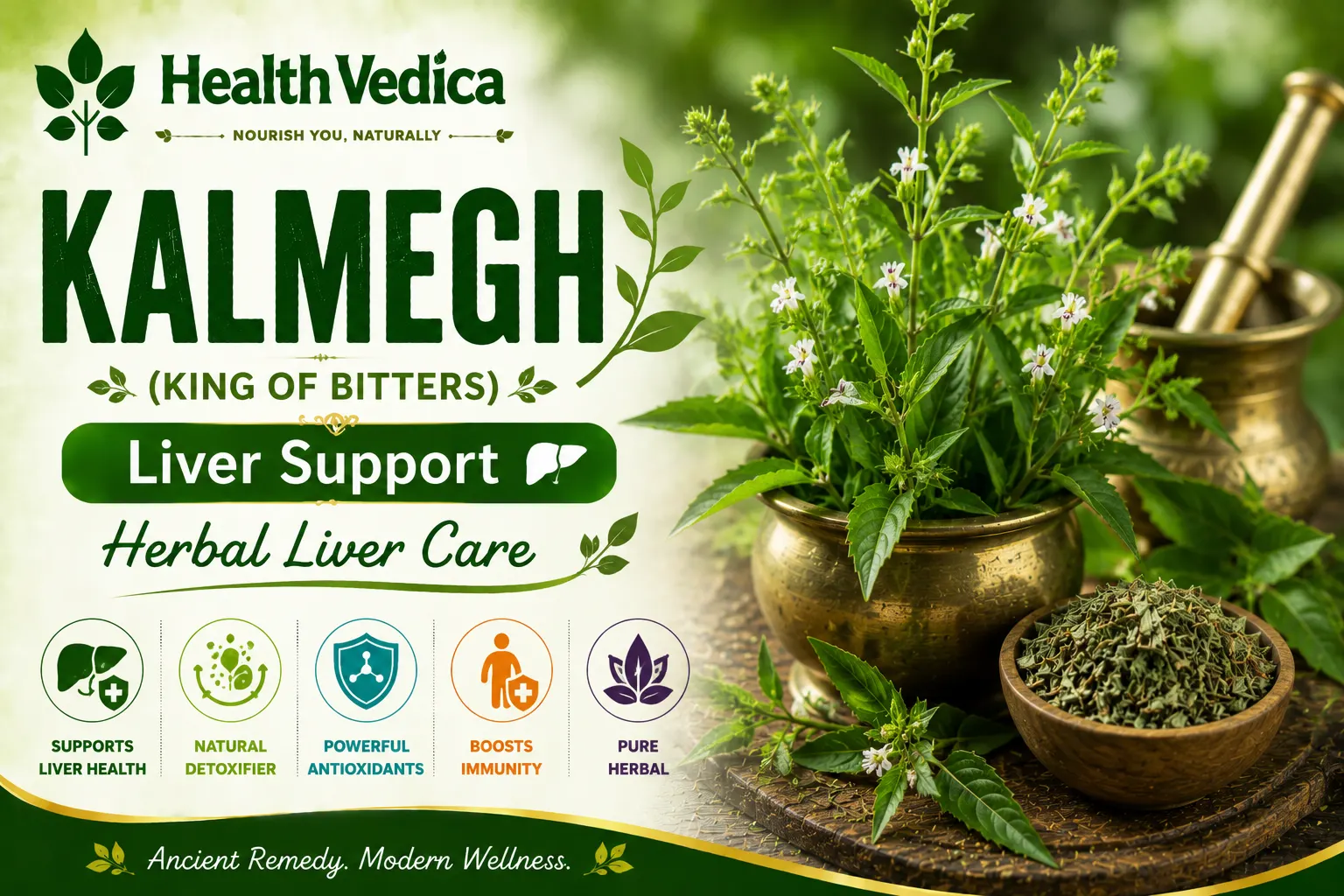
Kalmegh (Andrographis paniculata) is one of Ayurveda's most valued medicinal herbs and is widely known as the 'King of Bitters' because of its intensely bitter taste. Used for centuries in Ayurveda, Siddha and Traditional Chinese Medicine, Kalmegh is traditionally recommended for supporting immunity, liver function, digestion and recovery from seasonal illnesses. Modern scientific research has identified andrographolide, its major bioactive compound, which possesses antioxidant, anti-inflammatory and immunomodulatory properties. Today Kalmegh is commonly consumed as herbal tea, powder, capsules and standardized extracts.
📊 Nutritional Value Per 100g of Dried Kalmegh Powder
| Nutrient | Amount | % Daily Value (DV) |
|---|---|---|
| Calories | 284 kcal | 14% |
| Protein | 15 g | 30% |
| Total Fat | 3.2 g | 4% |
| Carbohydrates | 52 g | 19% |
| Dietary Fiber | 30 g | 107% |
| Calcium | 890 mg | 89% |
| Iron | 18 mg | 100% |
| Magnesium | 175 mg | 42% |
| Potassium | 760 mg | 16% |
📉 Glycemic Index
Kalmegh has a very low glycemic index because it contains very little digestible carbohydrate and is consumed only in small medicinal quantities.
🧬 Bioactive Compounds
Kalmegh is exceptionally rich in andrographolide, the compound responsible for most of its medicinal properties. It also contains neoandrographolide, deoxyandrographolide, flavonoids, diterpenoid lactones, polyphenols and various antioxidant phytochemicals that contribute to its immune-supporting and hepatoprotective effects.
💊 Vitamins & Minerals Explained
Although Kalmegh contains calcium, iron, magnesium and potassium, its health benefits primarily come from its diterpenoid compounds rather than its nutritional value because medicinal doses are relatively small.
🕉️ Ayurvedic Properties & Dosha Effect
According to Ayurveda, Kalmegh has an intensely Tikta (bitter) taste with a cooling potency (Sheeta Veerya). It helps balance Pitta and Kapha Doshas, supports healthy liver function, improves digestion, removes excess heat from the body and promotes natural detoxification. Ayurveda also considers Kalmegh beneficial for maintaining healthy skin and supporting recovery during seasonal illnesses.
💚 Evidence-Based Health Benefits
Supports Immune Function: Human clinical studies suggest standardized Andrographis extracts may reduce the severity and duration of uncomplicated upper respiratory tract infections when taken early.
Liver Health: Experimental studies demonstrate hepatoprotective activity by helping protect liver cells against oxidative stress.
Rich in Antioxidants: Kalmegh neutralizes free radicals and supports healthy cellular function.
Supports Healthy Digestion: Bitter herbs stimulate digestive secretions and may improve appetite and digestive efficiency.
May Help Maintain Healthy Blood Sugar: Preliminary research suggests potential metabolic benefits, but larger human studies are needed.
Supports Healthy Skin: Traditional Ayurvedic medicine uses Kalmegh for maintaining healthy skin and supporting the body's natural cleansing processes.
Anti-inflammatory Activity: Laboratory and clinical studies suggest andrographolide helps regulate inflammatory pathways.
👨👩👧 Who Should Consider Kalmegh?
Kalmegh is commonly used by individuals seeking immune support, liver wellness, antioxidant protection and seasonal respiratory support as part of a healthy lifestyle.
🚫 Who Should Avoid Kalmegh?
Pregnant and breastfeeding women should avoid medicinal use unless specifically advised by a healthcare professional. Individuals taking blood thinners, blood pressure medications, diabetes medicines or immunosuppressants should consult their healthcare provider before supplementation.
🌿 Ayurvedic Remedies
Kalmegh Tea: Simmer 1 teaspoon of Kalmegh powder or dried herb in water for 8–10 minutes and drink warm.
Kalmegh Decoction: Traditionally prepared with Guduchi and Tulsi under Ayurvedic guidance during seasonal illnesses.
Herbal Combination: Kalmegh is often combined with Guduchi, Tulsi, Neem and Amla in Ayurvedic formulations supporting immunity and liver health.
🥗 Best Ways to Consume
Kalmegh is available as powder, capsules, tablets, herbal tea, tinctures and standardized extracts. Because of its intense bitterness, many people prefer capsules.
🍽️ Best Combinations
Kalmegh combines well with Guduchi, Tulsi, Amla, Neem, Turmeric and Licorice depending on the Ayurvedic formulation and health objective.
🧊 Storage Tips
Store Kalmegh powder in an airtight container in a cool, dry place away from sunlight and humidity.
📅 Daily Recommended Intake
2–6 grams of powder daily or standardized extracts providing 30–60 mg of andrographolide as directed by a healthcare professional or product label.
⚠️ Precautions & Drug Interactions
Kalmegh is generally well tolerated for short-term use. Some individuals may experience mild digestive discomfort, reduced appetite or nausea because of its bitterness. It may interact with blood-thinning medications, diabetes medicines, blood pressure medicines and immunosuppressive drugs. Long-term supplementation should be supervised by a qualified healthcare professional.
🔬 Scientific Highlights
Kalmegh is among the best-studied medicinal herbs in Ayurveda. Clinical research supports its use for uncomplicated upper respiratory tract infections, while laboratory studies demonstrate antioxidant, hepatoprotective, antimicrobial and anti-inflammatory activities. More high-quality clinical trials are needed for many traditional uses.
❌ Common Myths & Facts
❌ Myth: Kalmegh cures viral infections.
✅ Fact: Kalmegh may support immune function and reduce symptom severity in certain uncomplicated respiratory infections, but it is not a cure for viral diseases.
❌ Myth: The more bitter the herb, the better it works.
✅ Fact: Effectiveness depends on the appropriate dosage and standardized active compounds, not simply bitterness.
❌ Myth: Kalmegh can replace antibiotics.
✅ Fact: No. Kalmegh should never replace prescribed antibiotics or other medical treatments when they are indicated.
🌍 Fun Facts
- Kalmegh is commonly called the King of Bitters because it is one of the bitterest medicinal herbs.
- The herb is widely used in Ayurveda, Siddha and Traditional Chinese Medicine.
- Its primary bioactive compound, andrographolide, has been extensively studied in modern pharmacological research.
- In South India, Kalmegh is known as Nilavembu and is traditionally used in herbal decoctions.