🫐 Introduction
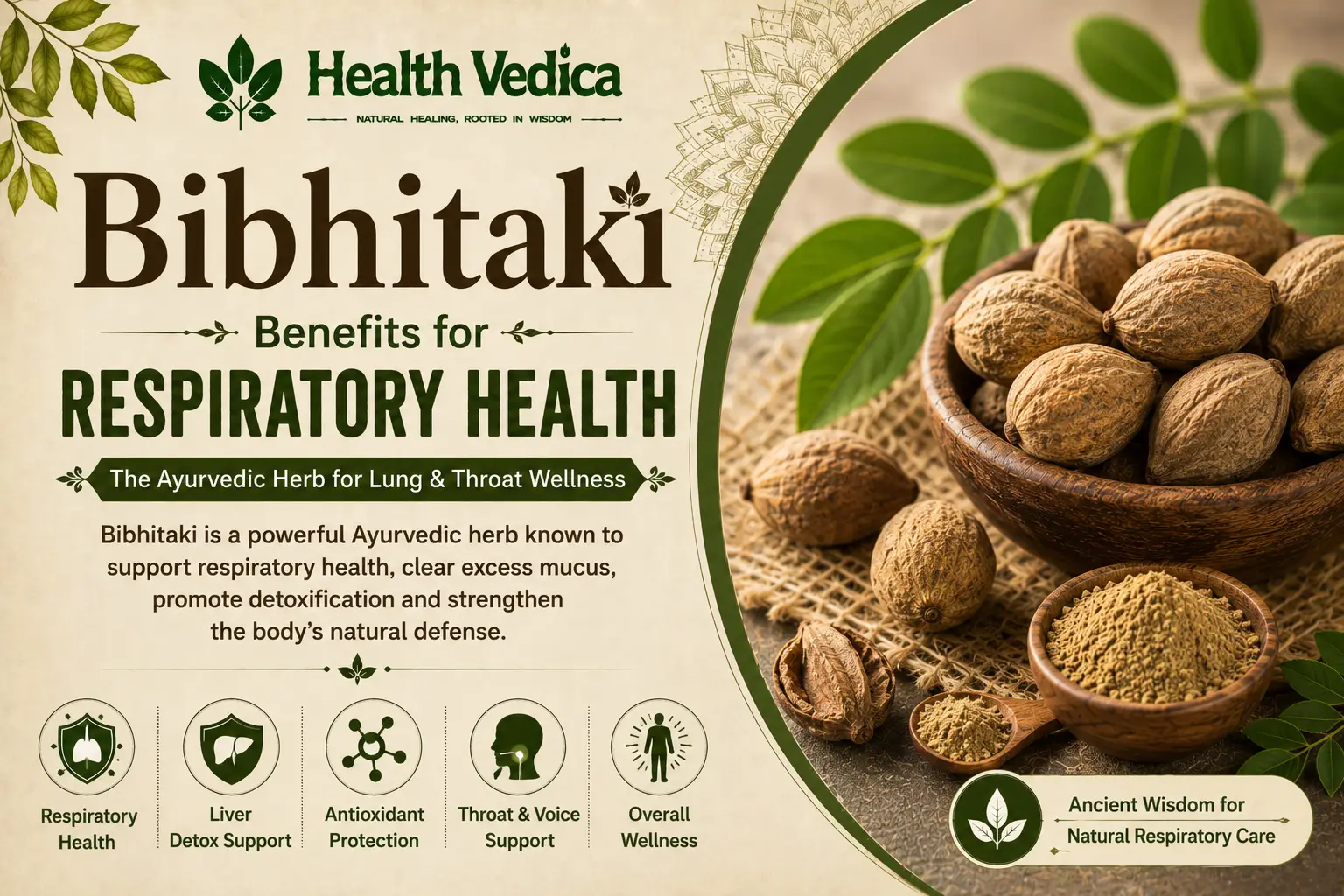
Bibhitaki (Terminalia bellirica), also known as Baheda or Beleric Myrobalan, is one of the three sacred fruits in the Ayurvedic formula Triphala. The name 'Bibhitaki' means 'fearless' — as it protects against disease. It is a large deciduous tree native to South and Southeast Asia, and its dried fruit is a cornerstone of Ayurvedic medicine for over 5,000 years. It is revered for its exceptional ability to cleanse the respiratory tract, support digestion, and promote detoxification of the entire body.
🔬 Key Active Compounds
| Compound | Primary Benefit |
|---|---|
| Gallic Acid | Antioxidant, anti-inflammatory |
| Ellagic Acid | Anti-cancer, DNA protection |
| Tannins (Chebulagic acid) | Antimicrobial, astringent |
| Galloyl Glucose | Liver protective |
| Beta-sitosterol | Cholesterol reduction |
| Mucilage | Soothes respiratory lining |
💊 Nutritional Highlights (Per 100g Fruit Powder)
| Nutrient | Amount |
|---|---|
| Protein | 2.4 g |
| Fiber | 35 g |
| Tannins | 17–20% |
| Vitamin C | Moderate |
| Calcium | 1.6 mg |
🌡️ Ayurvedic Properties & Dosha Effect
Bibhitaki has a Kashaya (astringent) taste, Ruksha (dry) and Laghu (light) qualities, and Ushna Virya (hot potency). It strongly pacifies Kapha dosha, moderately reduces Pitta, and may increase Vata in excess. It is particularly indicated in Kapha-related disorders like mucus accumulation, cough, and obesity. Its Rasayana properties make it anti-aging and rejuvenating.
💪 Health & Healing Benefits
Respiratory Health: Bibhitaki is among the top Ayurvedic herbs for lung health. It dissolves and expels excess mucus, relieves chronic cough, bronchitis, and asthma. It is a key ingredient in Sitopaladi Churna and other classical respiratory formulas.
Digestive Detox: Its strong astringent tannins regulate gut motility, manage diarrhea and loose stools, and cleanse the intestinal lining. It removes Ama (toxins) from the digestive tract.
Liver Protection: Bibhitaki has significant hepatoprotective properties, protecting liver cells from oxidative damage and supporting bile production for fat digestion.
Eye Health: Traditional Ayurvedic texts recommend Bibhitaki for improving vision. Its gallic acid content reduces oxidative stress on ocular tissues.
Hair & Scalp: Bibhitaki oil and powder are used to strengthen hair roots, prevent premature greying, reduce dandruff, and promote hair growth.
Anti-diabetic: Studies show it lowers blood sugar by inhibiting alpha-glucosidase enzymes and improving insulin sensitivity.
Antimicrobial: Active tannins exhibit strong activity against H. pylori, E. coli, and several fungal strains.
🍵 Traditional Preparations
Bibhitaki Churna: Powder mixed with honey for respiratory complaints and voice clarity (popular among singers in India).
Triphala Churna/Juice: Combined with Amalaki and Haritaki for complete GI detox and Rasayana benefits.
Bibhitaki Hair Oil: Infused in sesame or coconut oil for scalp nourishment.
Baheda Decoction (Kwath): Boiled in water for cough syrup and throat soothing.
✅ Key Advantages
Clears mucus and relieves chronic cough. Protects the liver from toxins. Regulates blood sugar levels. Promotes eye health and vision. Strengthens hair and prevents greying. Powerful digestive cleanser. Anti-aging Rasayana properties.
⚠️ Tips & Precautions
Excessive use can cause constipation due to strong astringency. Avoid during pregnancy. Not suitable for extreme Vata conditions (dry constitutions) without ghee or oil adjuncts. Standard dose is 3–6 grams of powder per day. Best used as part of Triphala formula for balanced results.