🌿 Ayurveda's Timeless Approach to Weight
Ayurveda has its own framework for food, digestion, routine and individual constitution. That perspective can be useful for understanding traditional Indian food practices, but it should not be presented as a guaranteed weight-loss treatment. Sustainable weight management still depends on food intake, activity, sleep, behaviour and—when needed—clinical care.
Quick takeaways: Ayurveda offers a traditional framework for food, routine and individual constitution. Use it as a complementary perspective, not as a replacement for evidence-based weight-management care.
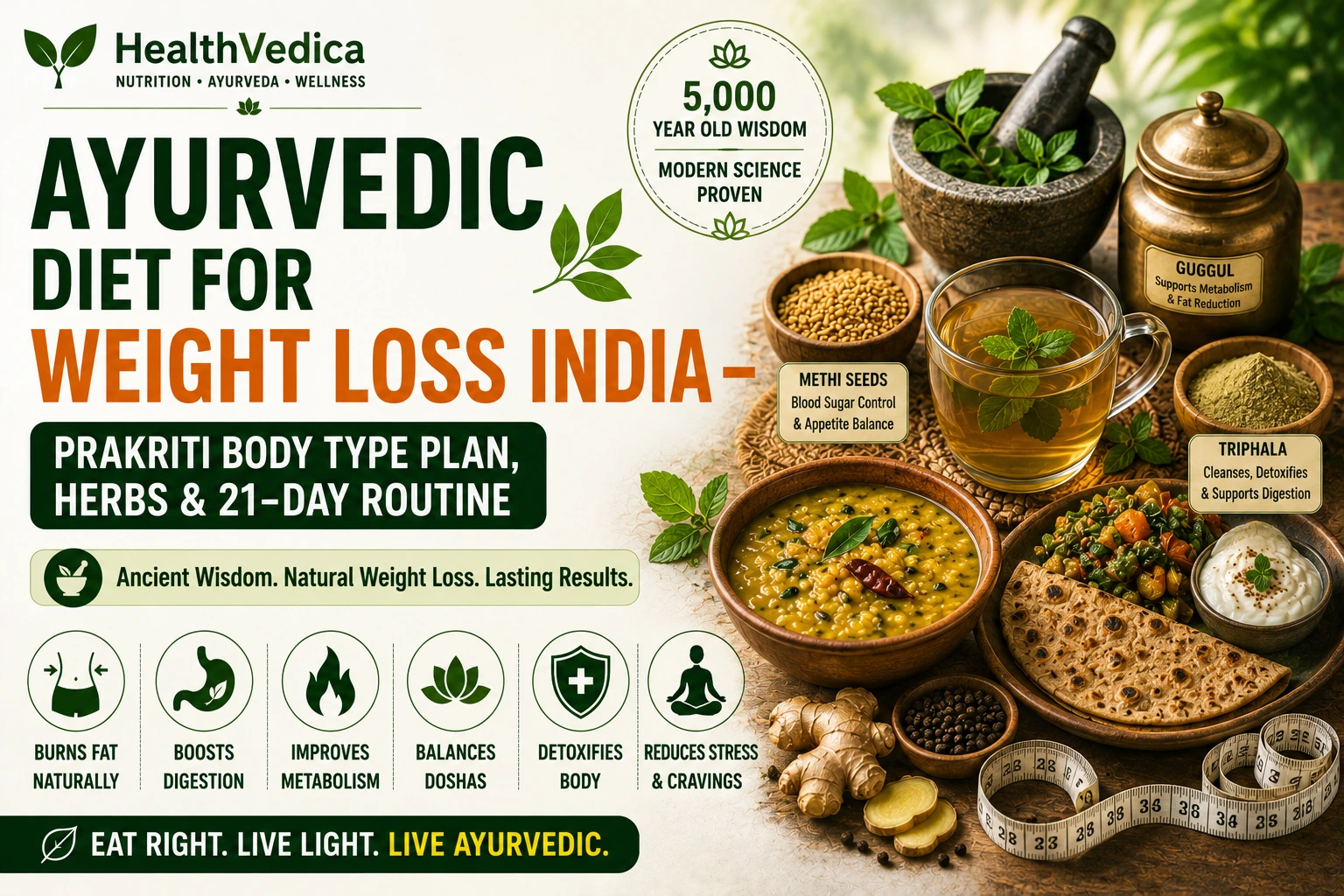
The Ayurvedic approach is fundamentally different from calorie-restriction diets. Rather than external food rules, Ayurveda teaches internal intelligence — understanding your Prakriti (constitution), recognising your digestive capacity (Agni), eating with awareness (Sattva), and using specific herbs and foods to correct metabolic imbalances. This approach produces sustainable results precisely because it's personalised and addresses root causes rather than symptoms.
Modern research is validating many Ayurvedic prescriptions: fenugreek seeds for blood sugar, triphala for microbiome health, ashwagandha for cortisol-driven weight gain, trikatu for thermogenesis, and dincharya (daily routine) practices aligning with circadian biology. The convergence of ancient wisdom and modern science creates a traditional synthesis.
🔬 Ayurvedic Understanding of Obesity (Sthoulya)
Ayurveda describes obesity as Medoroga (disease of excessive fat tissue) or Sthoulya, classified as one of the Ashtaninditiya (eight reprehensible conditions). The primary cause is Medodhatvagnimandya — weakness of the metabolic fire specific to fat tissue.
The pathogenesis: Ama (incompletely digested food waste products) accumulates when Agni (digestive fire) is weak. Ama blocks channels (Srotas), particularly Medovaha Srotas (fat channels), leading to abnormal fat accumulation. Additionally, Kapha (the heavy, cold, stable dosha) dominates in obese individuals, further slowing metabolism.
Ayurvedic weight management therefore targets three things simultaneously: strengthening Agni, reducing Ama, and pacifying Kapha. This is why Ayurvedic weight loss is not just about eating less — it's about improving the quality of metabolism itself.
📊 Prakriti (Body Type) and Weight Loss Approach
| Prakriti | Weight Tendency | Metabolism | Best Strategy | Foods to Favour |
|---|---|---|---|---|
| Vata | Naturally thin, variable | Irregular (sometimes fast) | Nourish + stabilise | Warm, oily, grounding |
| Pitta | Medium build, muscular | Strong, sharp | Cool + moderate | Cooling, moderate protein |
| Kapha | Heavier, gains easily | Slow, efficient | Stimulate + lighten | Light, warm, dry, spicy |
| Vata-Pitta | Lean, sharp | Variable-strong | Stabilise, moderate | Warm, moderate |
| Pitta-Kapha | Medium-heavy | Moderate-slow | Lighten, cool | Light, cooling spices |
| Vata-Kapha | Variable | Irregular-slow | Warm, light meals | Warm, light, spicy |
✅ Core Ayurvedic Weight Loss Principles
1. Strengthen Agni (Digestive Fire)
The foundation of Ayurvedic weight management. Strong Agni means complete digestion — no Ama accumulation, no fat channel blockage. Agni-kindling practices: morning warm water with ginger + lemon; small piece of fresh ginger + pinch of rock salt + few drops of lemon before meals; trikatu churna (ginger + black pepper + long pepper) with warm water after meals; eating the main meal at noon when Agni is naturally strongest (Pitta time).
2. Triphala — The Ayurvedic Metabolic Master
Triphala (Amalaki + Bibhitaki + Haritaki) is the most prescribed Ayurvedic formula for weight management. It gently cleanses the digestive tract, improves fat metabolism, reduces Ama, and supports microbiome diversity. A 2012 study in the Journal of Ayurveda and Integrative Medicine found Triphala significantly reduced BMI, waist circumference, and hip circumference over 12 weeks. Dose: 1 tsp Triphala powder in warm water at bedtime.
3. Guggul — The Fat Metaboliser
Guggul (Commiphora mukul) has been prescribed for Medoroga in Ayurvedic texts for millennia. Modern research confirms: guggulsterones increase thyroid hormone activity, improving metabolic rate. They also suppress NF-kB (reducing inflammation that drives obesity) and improve lipid profiles. Use Medohar Guggul or Triphala Guggul formulations under practitioner guidance.
4. Methi (Fenugreek) — Blood Sugar Stabiliser
One of Ayurveda's most traditional Kapha-reducing foods. Soak 1 tsp methi seeds overnight, eat soaked seeds in the morning on empty stomach. This reduces appetite through 4-hydroxyisoleucine (increases insulin sensitivity), slows gastric emptying (prolongs satiety), and reduces Kapha's tendency to convert excess glucose to fat.
5. Dincharya (Daily Routine) for Weight Management
Ayurveda emphasises that when you eat matters as much as what you eat — a principle now validated by circadian biology research. Dincharya for weight: Wake before sunrise (6 AM) | Drink warm water + ginger | Evacuate bowels | 30–45 min exercise (morning Kapha time — ideal for burning fat) | Breakfast after 7:30 AM (not before hunger arises) | Large lunch 12–1 PM (Pitta time, strongest digestion) | Light dinner before sunset (6–7 PM) | Sleep by 10 PM | Avoid eating after 8 PM completely.
6. Udwarthana (Ayurvedic Dry Powder Massage)
A classical Ayurvedic treatment for Medoroga. Dry massage with herbal powders (typically triphala, trikatu, and other herbs) in the direction opposite to hair growth. This stimulates lymphatic flow, breaks down subcutaneous fat, reduces cellulite, and improves peripheral circulation. Weekly self-massage with dry chickpea flour + turmeric + canard powder is a DIY version.
🌿 Kapha-Pacifying Diet: The Core of Ayurvedic Weight Loss
For most people seeking weight loss, a Kapha-pacifying diet is most relevant. Key principles:
Favour: Light, dry, warm, rough, and spicy foods. Millet rotis (bajra, jowar) over rice. Lentils over dairy. Green vegetables over root vegetables. Bitter and astringent tastes (methi, karela, amla) over sweet tastes. Warm, light soups over heavy stews. Ginger, black pepper, turmeric, cumin, coriander in every meal.
Reduce: Heavy, cold, sweet, oily, or sour foods. White rice, wheat (especially maida), sugar, dairy (especially cheese, cream), cold drinks, ice cream, and large portions. Sweet fruits like banana, mango, chikoo. Processed and packaged foods.
Meal timing: Kapha is highest in the morning (6–10 AM) — eat lightly. Heaviest meal at noon. Light dinner. No eating between meals — allows Agni to complete digestion before adding new food.
🚫 Ayurvedic Foods to Strictly Avoid for Weight Loss
Viruddha Ahara (Incompatible Food Combinations): Ayurveda identifies specific combinations that generate Ama: milk + banana (common Indian habit); fish + dairy; honey + ghee in equal quantities (toxic); milk + citrus or sour foods; eating curd at night; heating honey. These combinations may not cause acute problems but generate metabolic waste products with regular consumption.
Cold water during meals: Dampens Agni (digestive fire) just when you need it most. Sip warm water instead. This Ayurvedic principle is supported by research showing cold water slows gastric emptying and digestion.
Leftover food (Purna Pakva Ahara): Ayurveda advises freshly prepared food for every meal. Refrigerated leftovers from the previous day have reduced nutritional value and can increase Ama. Where possible, cook fresh — especially for main meals.
💡 21-Day Ayurvedic Weight Loss Protocol
Morning Routine (6–7 AM): Wake at sunrise. 2 glasses warm water with ½ tsp ginger juice + 1 tsp lemon. Oil pulling for 10 minutes (sesame oil). Self-abhyanga (oil massage) with sesame oil for 5 minutes before shower. 30 minutes Surya Namaskar or brisk walk.
Breakfast (8–9 AM): Light and warm. Ragi porridge with cinnamon + methi, or moong dal chilla, or bajra dosa with coconut chutney. Ginger tea (no sugar or very little jaggery).
Lunch (12–1 PM): Main meal. Jowar/bajra roti + karela sabzi + moong dal + bitter gourd raita + small salad with lemon. 1 piece fresh ginger before meal.
Afternoon (3–4 PM): Trikatu churna with warm water if feeling heavy. Roasted chana or seasonal fruit if hungry.
Dinner (6–7 PM, before sunset ideally): Very light. Moong dal khichdi (the Ayurvedic ideal dinner) or vegetable soup. No rice, minimal wheat. 1 tsp Triphala in warm water at 9 PM.
Evidence note: This article is an educational nutrition guide. General diet guidance is aligned where applicable with ICMR-NIN Dietary Guidelines for Indians, WHO healthy-diet guidance, and relevant Ministry of Ayush materials. Ayurvedic concepts are presented as traditional perspectives and are not a substitute for medical diagnosis or treatment.