Quick answer
There is no single food that is automatically healthier for everyone. Almonds vs Walnuts Comparison are useful choices in different situations, and the better option depends on your overall diet, portion size, cooking method and personal needs. This guide compares the two foods in plain language so you can make an informed choice.
📊 Almonds vs Walnuts: Nutritional Comparison (per 100g)
| Nutrient | Almonds | Walnuts | Advantage |
|---|---|---|---|
| Protein | 21g | 15g | Almonds |
| Omega-3 (ALA) | 0g (negligible) | 9g | Walnuts (significant) |
| Calcium | 270mg | 98mg | Almonds (3x higher) |
| Vitamin E | 25.6mg | 0.7mg | Almonds (significant) |
| Magnesium | 270mg | 158mg | Almonds |
| Polyphenols (antioxidants) | Moderate | High | Walnuts |
| Fibre | 12.5g | 6.7g | Almonds |
| Calories | 579 kcal | 654 kcal | Almonds (lower) |
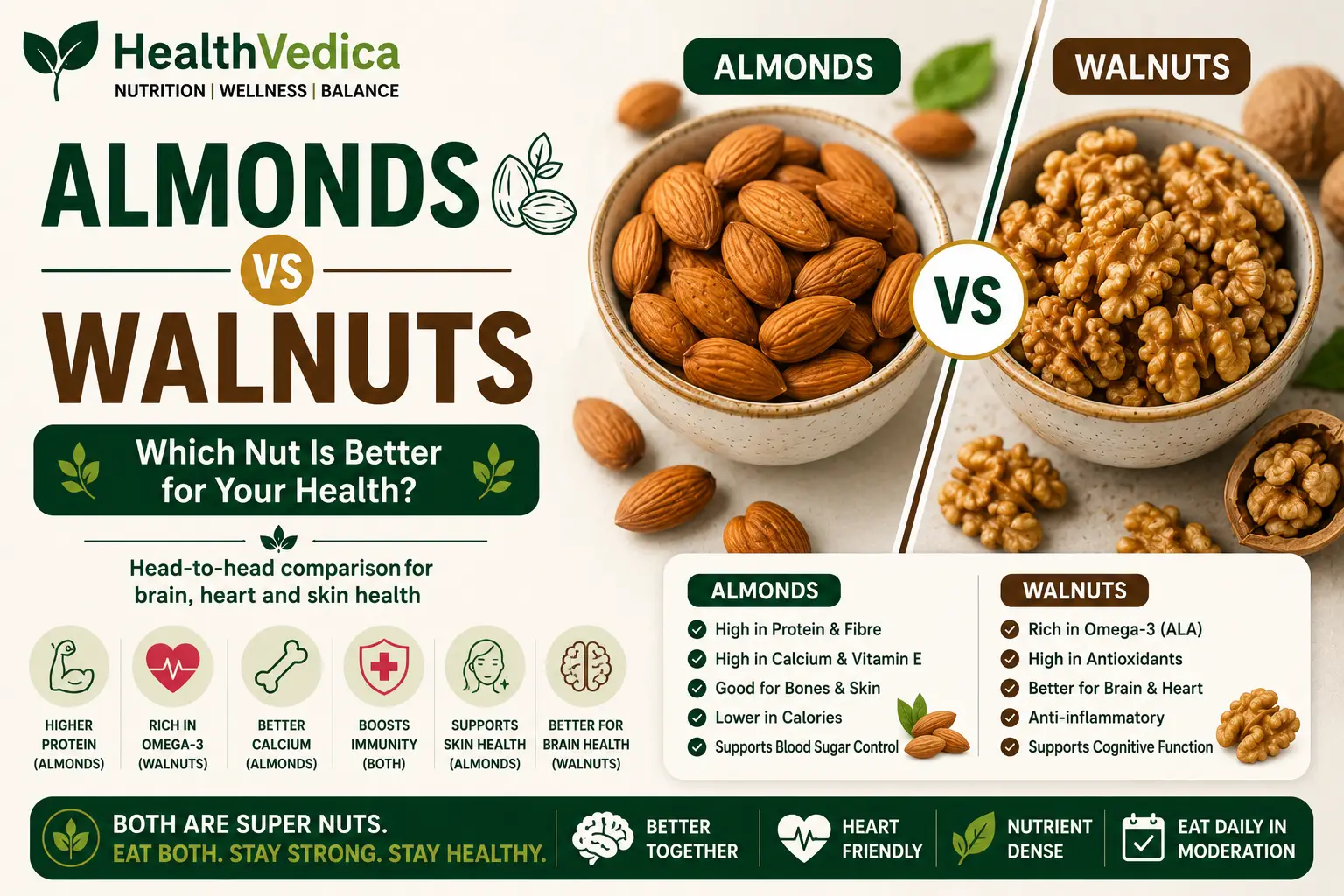
✅ Where Almonds Win
Bone and muscle support: Almonds' high calcium and protein combination makes them particularly valuable for bone density and muscle maintenance, especially relevant for vegetarians seeking plant-based protein and calcium together.
Skin health: Almonds' exceptional vitamin E content (among the highest of any commonly eaten food) supports skin health by protecting cell membranes from oxidative damage — a benefit walnuts do not match.
Blood sugar management: Almonds have demonstrated favourable effects on post-meal blood sugar response in several studies, partly due to their fibre and protein combination slowing carbohydrate digestion in mixed meals.
✅ Where Walnuts Win
Omega-3 fatty acids: Walnuts are exceptional among tree nuts for ALA (alpha-linolenic acid), a plant-based omega-3 fat that supports heart and brain health. This is walnuts' single most distinguishing advantage — no other commonly eaten Indian nut comes close to matching this.
Brain health association: Walnuts' shape resembling a brain is a popular mnemonic, but there's genuine science behind the association — the combination of omega-3s and polyphenols in walnuts has been linked to cognitive benefits in several studies, more so than almonds.
Antioxidant density: Walnuts contain higher levels of certain polyphenol antioxidants compared to almonds, contributing to anti-inflammatory effects.
🍽️ Which Should You Choose?
The honest answer is both, eaten together, since they offer complementary rather than overlapping benefits — almonds provide protein, calcium, and vitamin E, while walnuts uniquely deliver omega-3s that almonds simply do not contain. A traditional Indian practice of soaking a small handful of both overnight and eating them together in the morning is well-supported nutritionally, not just by tradition. For those who must choose one due to cost or preference, walnuts are slightly favoured for heart and brain-focused goals, while almonds are favoured for bone, muscle, and skin-focused goals.
Sources and context
Nutrition guidance in this article is framed around Indian dietary guidance from ICMR–National Institute of Nutrition (ICMR-NIN). Where Ayurveda is discussed, it is presented as a traditional framework and kept separate from modern clinical evidence. The Ministry of AYUSH's published guidance emphasises factors such as food quality, preparation, quantity, timing and individual suitability; these principles are useful context, but they should not be treated as a substitute for diagnosis or medical treatment.
Important: Nutrition needs vary with age, pregnancy, medications and medical conditions. If you have diabetes, kidney disease, coeliac disease, a food allergy or another diagnosed condition, use personalised advice from a qualified clinician or dietitian.