Quick answer: what should older adults eat?
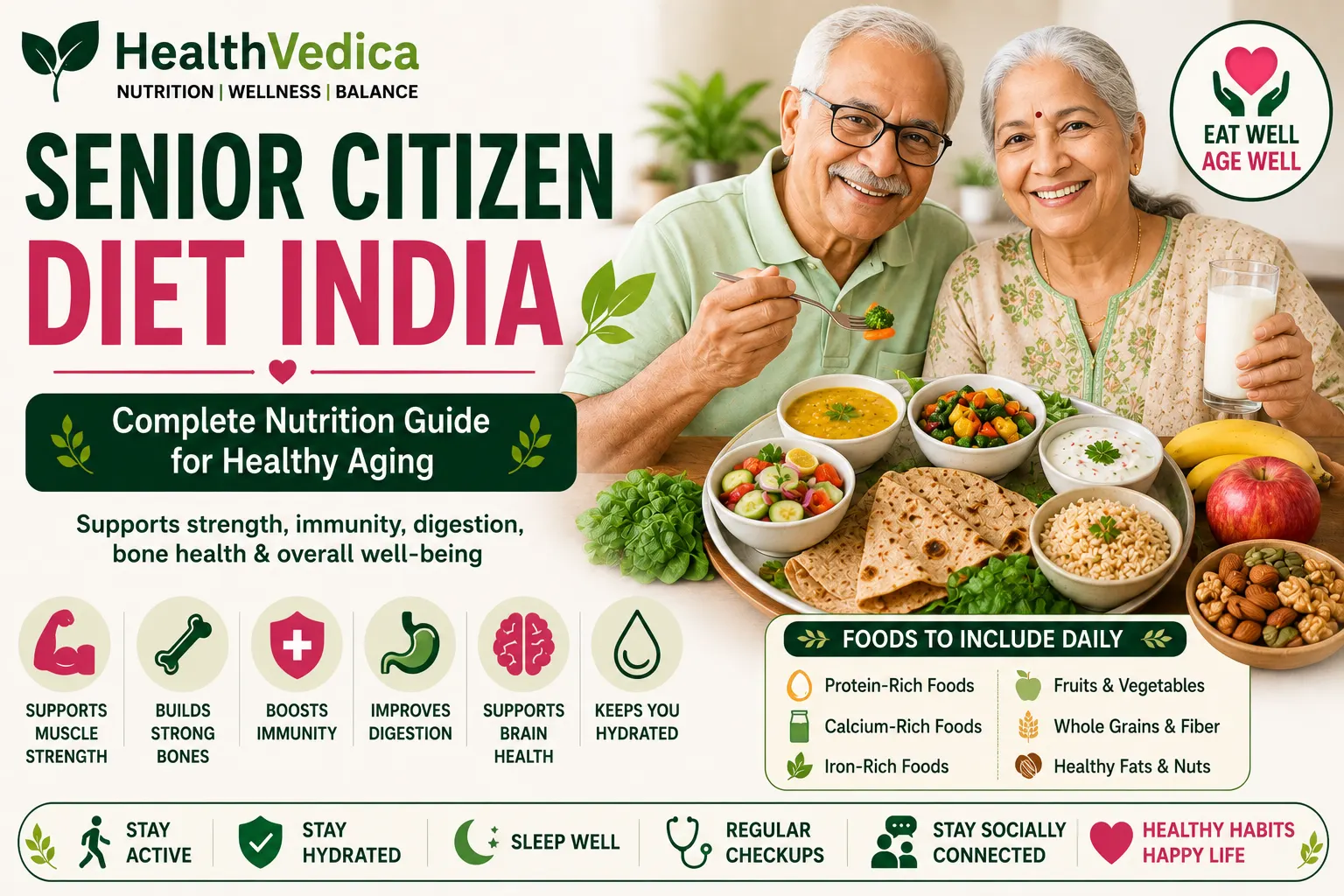
A senior-friendly diet is less about “special foods” and more about getting enough protein, vegetables, fruit, whole or minimally processed grains, healthy fats and fluids in forms that are easy to chew and digest. Medical conditions and medicines can change what is appropriate, so a general diet should be personalised when needed.
Key nutrition priorities
| Priority | Why it matters | Indian food options |
|---|---|---|
| Protein | Helps maintain muscle and supports recovery. | Dal, beans, soy, curd, paneer, eggs, fish, chicken |
| Calcium + vitamin D | Support bone health. | Milk, curd, paneer, ragi, fortified foods; vitamin D may require supplementation |
| Vitamin B12 | Important for blood and nervous-system function. | Dairy, eggs, fish/meat, fortified foods; supplements may be needed in some people |
| Fibre | Supports bowel regularity and overall diet quality. | Vegetables, fruit, oats, whole grains, pulses, seeds |
| Fluids | Helps prevent dehydration. | Water, buttermilk, soups and other suitable fluids |
If appetite or chewing is a problem
Choose nutrient-dense foods in smaller portions: soft dal, khichdi, curd, paneer, egg, cooked vegetables, soups, porridge and soft fruit. If chewing or swallowing is difficult, ask a clinician or speech-and-swallowing professional for texture guidance.
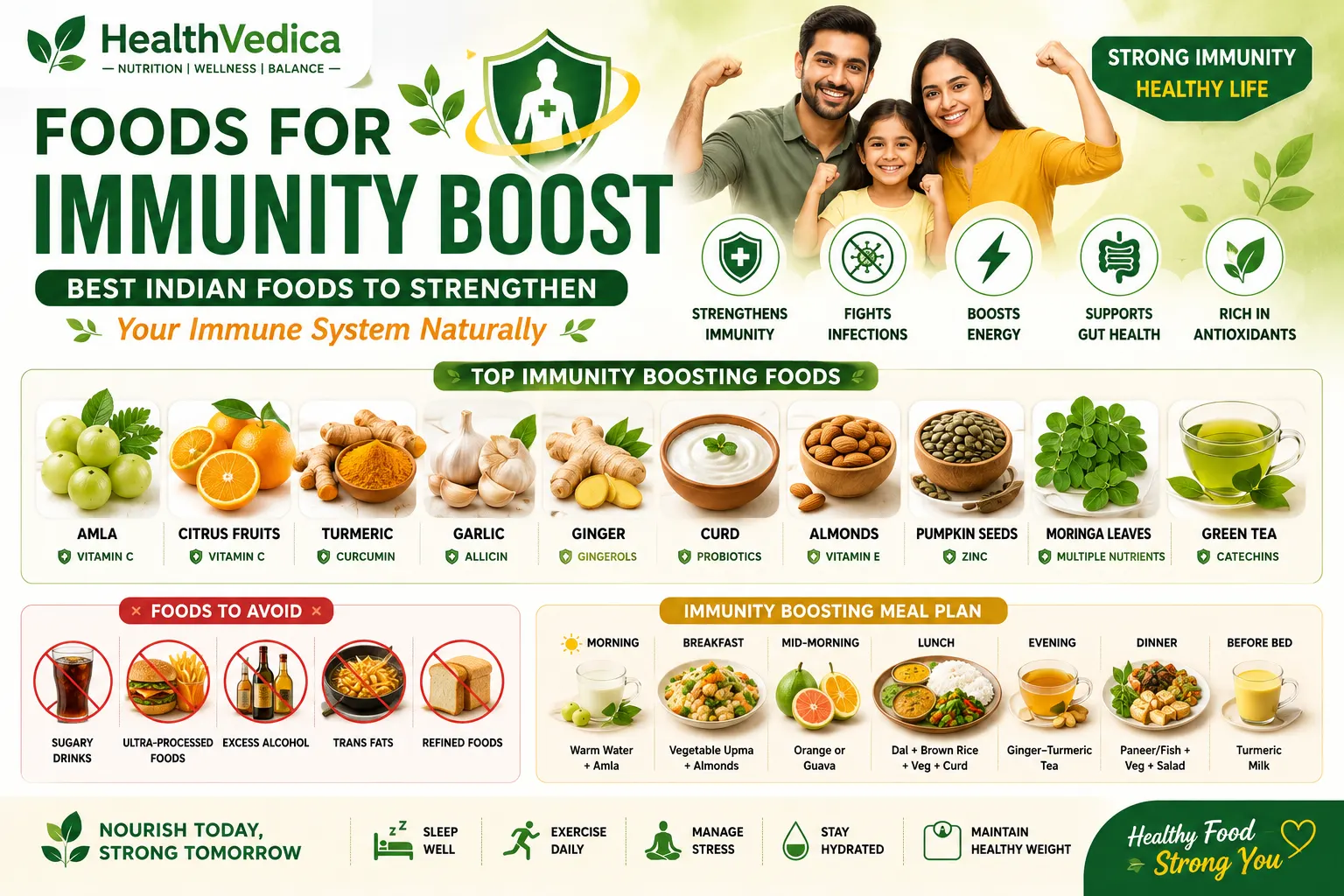
A simple Indian meal plan
- Breakfast: vegetable oats/upma with curd, or soft idli with sambar.
- Mid-morning: seasonal fruit.
- Lunch: rice/roti + dal + cooked vegetables + curd.
- Evening: buttermilk or milk with a suitable snack.
- Dinner: soft roti/khichdi + paneer/egg/fish + vegetables.
Foods to limit
Frequent intake of highly processed foods, excess added sugar, excess salt and alcohol can make it harder to maintain a balanced diet. The exact limits should reflect medical conditions such as hypertension, diabetes, kidney disease or heart disease.
Ayurvedic perspective
Ayurveda has traditional approaches to food quantity, digestion, meal timing and individual suitability. These can be discussed as complementary cultural practices, but they should not replace treatment or dietary restrictions prescribed for a medical condition.
When personalised advice matters
Seek professional nutrition advice if there is unintentional weight loss, repeated falls or weakness, difficulty swallowing, persistent constipation or diarrhoea, anaemia, kidney disease, diabetes, or multiple medicines that affect appetite or nutrient status.
Source note
ICMR-NIN’s 2024 Dietary Guidelines identify older adults as a nutritionally vulnerable group and place balanced diet, physical activity, healthcare and food safety within the broader healthy-ageing approach.
Evidence & source context: This guide uses ICMR-NIN Dietary Guidelines for Indians 2024 as the primary Indian nutrition framework. Ayurveda is presented as a traditional perspective, not as proof of clinical effectiveness. Food-safety advice is aligned with FSSAI guidance.