Quick answer
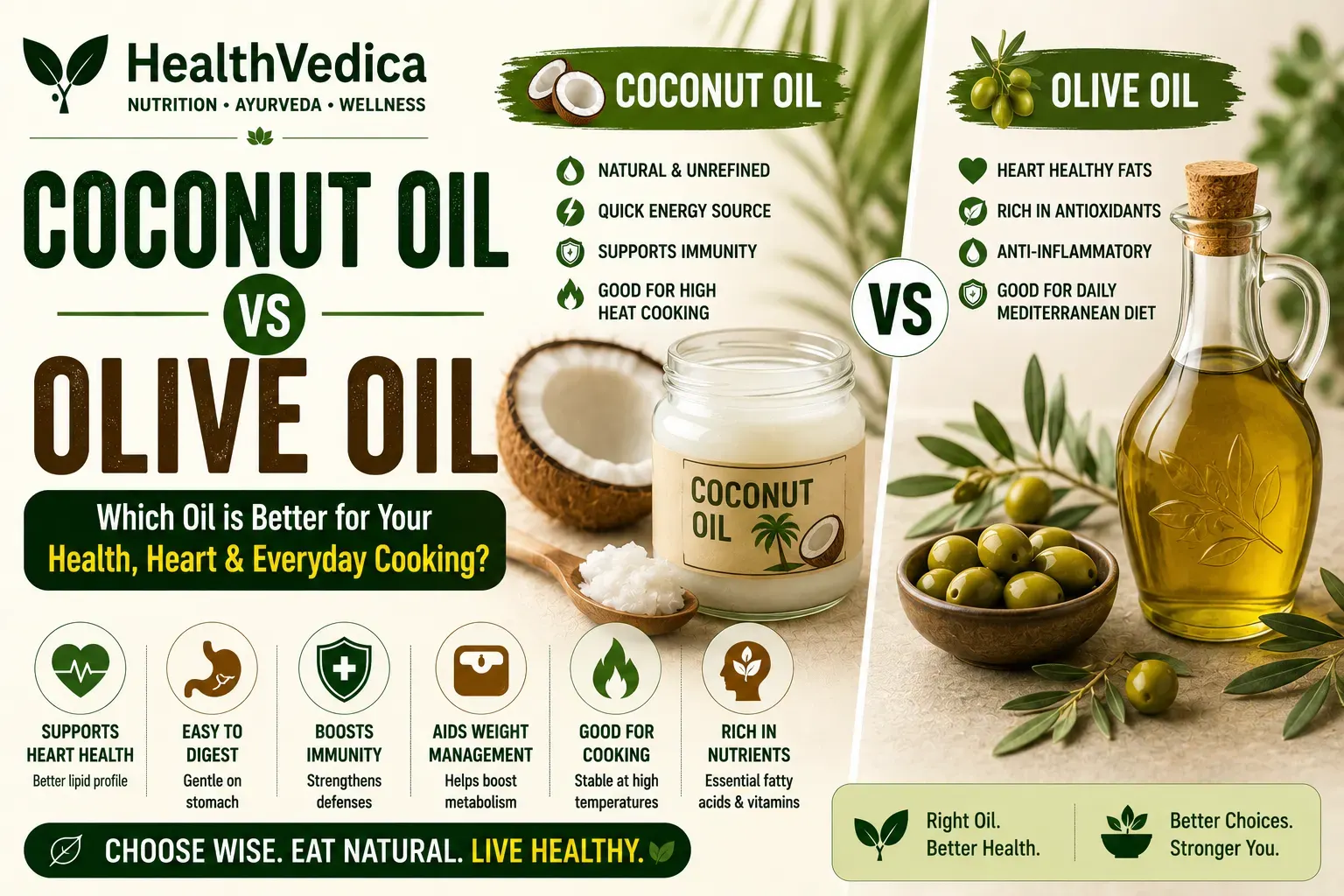
There is no single food that is automatically healthier for everyone. Coconut Oil vs Olive Oil Comparison are useful choices in different situations, and the better option depends on your overall diet, portion size, cooking method and personal needs. This guide compares the two foods in plain language so you can make an informed choice.
📊 Coconut Oil vs Olive Oil: Comparison Chart
| Property | Coconut Oil | Olive Oil (Extra Virgin) | Advantage |
|---|---|---|---|
| Smoke point | 177°C | 190–207°C | Olive oil (higher heat tolerance) |
| Saturated fat | ~87g/100g | ~14g/100g | Olive oil (lower saturated fat) |
| Monounsaturated fat | ~6g/100g | ~73g/100g | Olive oil |
| Polyphenol antioxidants | Low | High | Olive oil |
| MCTs (medium-chain triglycerides) | High (lauric acid) | Minimal | Coconut oil |
| Heat stability at high heat | Good (due to saturation) | Moderate (best below smoke point) | Coconut oil (for very high heat) |
| Flavour | Distinct coconut aroma | Fruity, peppery notes | Context-dependent |
✅ Where Coconut Oil Wins
Heat stability: Coconut oil's high saturated fat content makes it chemically stable at cooking temperatures, resisting oxidation even with repeated or prolonged heating better than many unsaturated oils.
Medium-chain triglycerides: Coconut oil is one of the richest natural sources of MCTs, particularly lauric acid, which are metabolised differently than long-chain fats and have antimicrobial properties.
Suited to specific cuisines: For South Indian and Southeast Asian dishes where coconut flavour is traditional and desired, coconut oil is both culturally and culinarily the better fit.
✅ Where Olive Oil Wins
Lower saturated fat: Olive oil's predominantly monounsaturated fat profile is associated with favourable cardiovascular outcomes in extensive Mediterranean diet research, unlike coconut oil's high saturated fat content.
Polyphenol antioxidants: Extra virgin olive oil retains natural antioxidant compounds from the olive fruit that provide anti-inflammatory benefits coconut oil does not offer in comparable amounts.
Versatility for salads and finishing: Olive oil's flavour profile makes it excellent both for moderate-heat cooking and as an unheated finishing oil on salads, hummus, or bread — uses where coconut oil's distinct flavour is often less suitable.
🍽️ Which Should You Choose?
For general heart health and Mediterranean-style cooking, extra virgin olive oil has stronger research backing due to its monounsaturated fat and polyphenol content. For very high-heat frying or dishes where coconut flavour is desired, coconut oil is a reasonable and stable choice used in moderation. Neither oil should dominate the diet exclusively — rotating oils based on the dish and cooking method, as is traditional across different Indian regions, remains the most practical approach.
Sources and context
Nutrition guidance in this article is framed around Indian dietary guidance from ICMR–National Institute of Nutrition (ICMR-NIN). Where Ayurveda is discussed, it is presented as a traditional framework and kept separate from modern clinical evidence. The Ministry of AYUSH's published guidance emphasises factors such as food quality, preparation, quantity, timing and individual suitability; these principles are useful context, but they should not be treated as a substitute for diagnosis or medical treatment.
Important: Nutrition needs vary with age, pregnancy, medications and medical conditions. If you have diabetes, kidney disease, coeliac disease, a food allergy or another diagnosed condition, use personalised advice from a qualified clinician or dietitian.