Quick answer: what should you eat after a C-section?
After a C-section, food supports normal wound healing, recovery from blood loss, bowel regularity and—if you are breastfeeding—maternal nutrition. Prioritise protein, iron-rich foods, vegetables, fruit, whole grains, calcium-rich foods and fluids rather than relying on traditional “healing” foods alone.
Nutrients that support recovery
| Nutrient | Role in recovery | Indian food examples |
|---|---|---|
| Protein | Provides amino acids needed for tissue repair. | Dal, beans, soy, eggs, dairy, fish, chicken |
| Iron | Helps restore iron stores when blood loss or anaemia is present. | Pulses, beans, leafy greens, eggs/meat, fortified foods |
| Vitamin C | Required for collagen formation and supports iron absorption from plant foods. | Amla, guava, citrus, tomatoes, vegetables |
| Fibre | Helps bowel regularity, especially when activity is reduced. | Fruit, vegetables, oats, whole grains, pulses |
| Calcium | Supports maternal bone health, particularly during lactation. | Milk, curd, paneer, ragi, fortified foods |
A simple post-C-section Indian plate
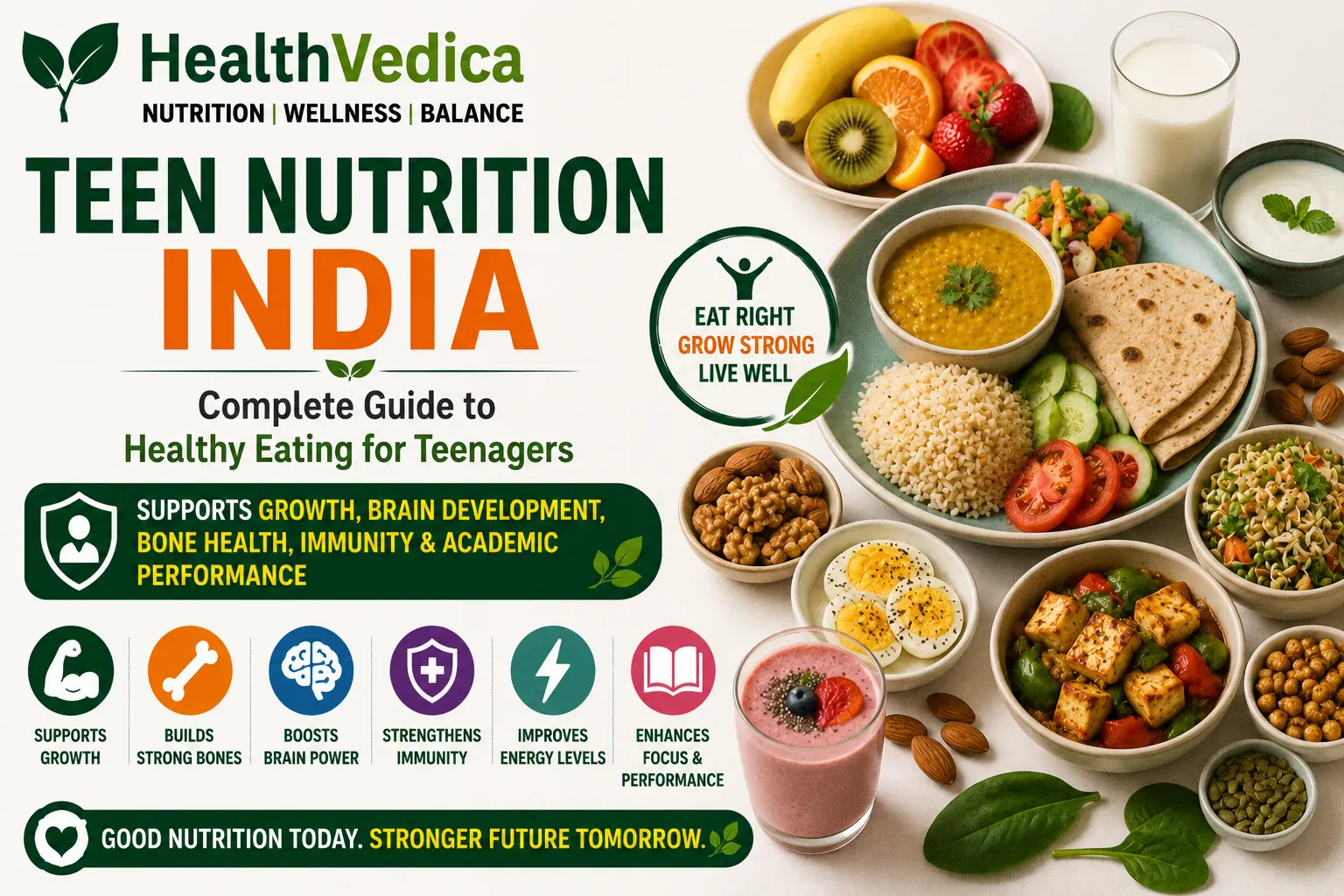
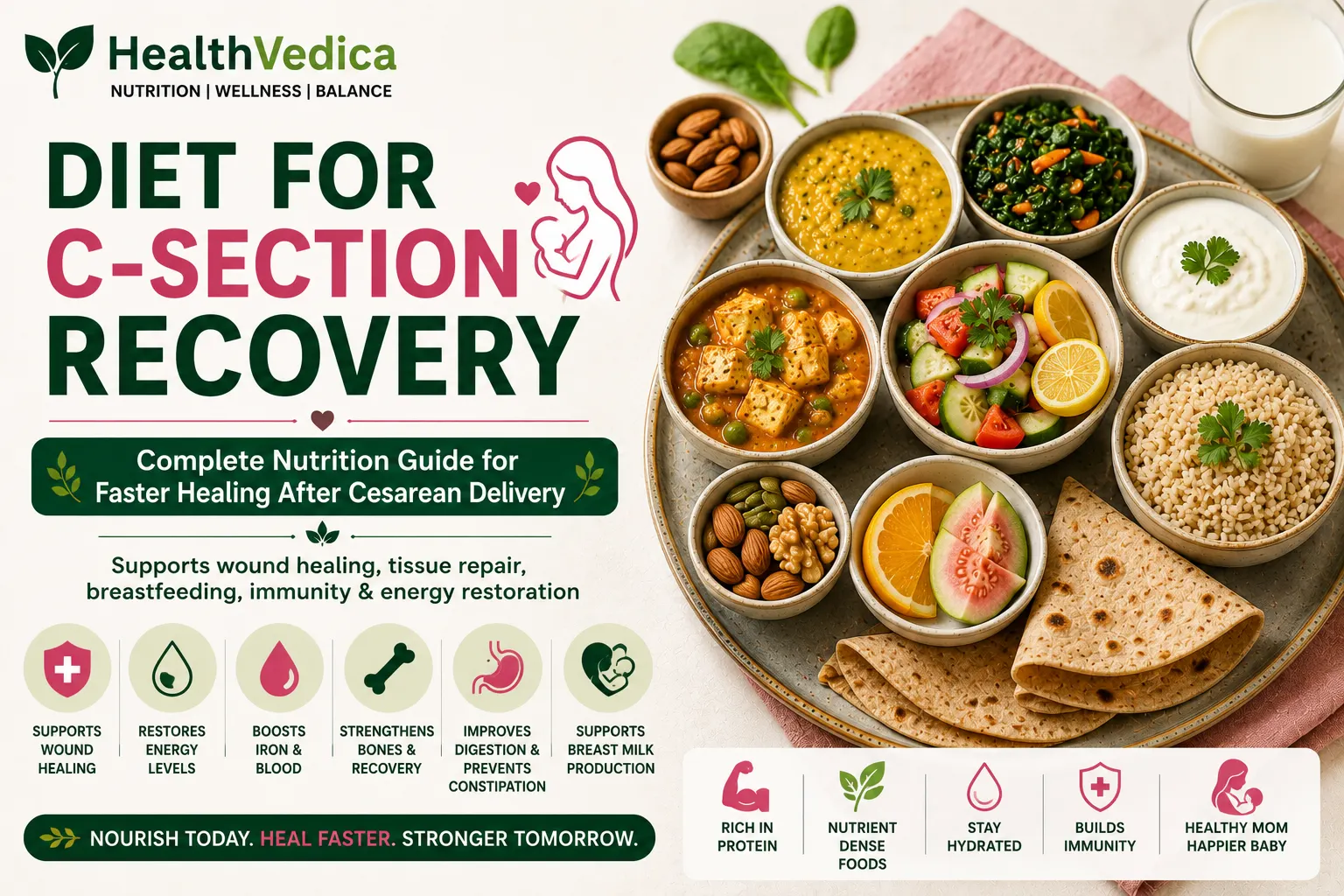
At most main meals, combine a staple such as rice/roti with a protein source, cooked vegetables and a suitable side such as curd. Add fruit and nuts/seeds across the day. If appetite is low, smaller meals can be easier than large portions.
Constipation after delivery
Pain medicines, reduced movement, dehydration and changes after delivery can contribute to constipation. Gradually increase fibre as tolerated, drink enough fluids and follow your clinician’s advice about walking and medicines. Severe abdominal pain, vomiting or inability to pass stool or gas needs medical attention.
Traditional foods and Ayurveda
Postpartum Indian diets often include foods such as dal, ghee, ajwain, methi and gond-based preparations. These can be part of cultural food traditions, but they are not a substitute for wound care or medical treatment. Very high-calorie sweets and large amounts of ghee are not necessary for healing.
Foods and habits to handle carefully
Avoid alcohol while breastfeeding. Follow food-safety precautions, especially for undercooked meat/eggs and unpasteurised foods. If you have diabetes, hypertension, kidney disease or another condition, your diet may need additional limits.
When to call your clinician
Seek medical care for fever, increasing wound redness or discharge, worsening pain, heavy bleeding, shortness of breath, severe headache, leg swelling/pain, persistent vomiting or other symptoms that concern you.
Source note
The general nutrition approach aligns with ICMR-NIN’s emphasis on balanced diets, adequate protein, vegetables and legumes, and extra nutritional attention during pregnancy and lactation.
Evidence & source context: This guide uses ICMR-NIN Dietary Guidelines for Indians 2024 as the primary Indian nutrition framework. Ayurveda is presented as a traditional perspective, not as proof of clinical effectiveness. Food-safety advice is aligned with FSSAI guidance.