🩺 What Should You Eat for Fatty Liver?
For metabolic fatty liver disease (MASLD), the biggest dietary win is an overall calorie-appropriate, minimally processed pattern built around vegetables, legumes, whole grains, nuts, fish or other protein sources, and much less added sugar and refined carbohydrate.
Fatty liver is not simply a problem of eating too much fat. The metabolic drivers include excess energy intake, insulin resistance, obesity, diabetes and other cardiometabolic factors. The right diet therefore improves the whole metabolic picture rather than focusing on one 'liver-cleansing' food.
🧬 NAFLD Is Now Often Called MASLD
You may see both terms online. MASLD describes steatotic liver disease associated with metabolic risk factors and is increasingly used in current clinical practice. Older articles may still use NAFLD.
⚖️ The Number That Matters Most: Sustainable Weight Loss When Appropriate
Current liver guidance emphasizes weight management. AASLD material notes that roughly 3–5% weight loss can improve liver steatosis, while around 7% or more is associated with improvement in inflammation and about 10% can improve more advanced liver features in appropriate patients. These are population-level observations, not guarantees for one individual.
🥗 Foods That Fit a Liver-Friendly Indian Diet
| Food Group | Indian Choices | What to Remember |
|---|---|---|
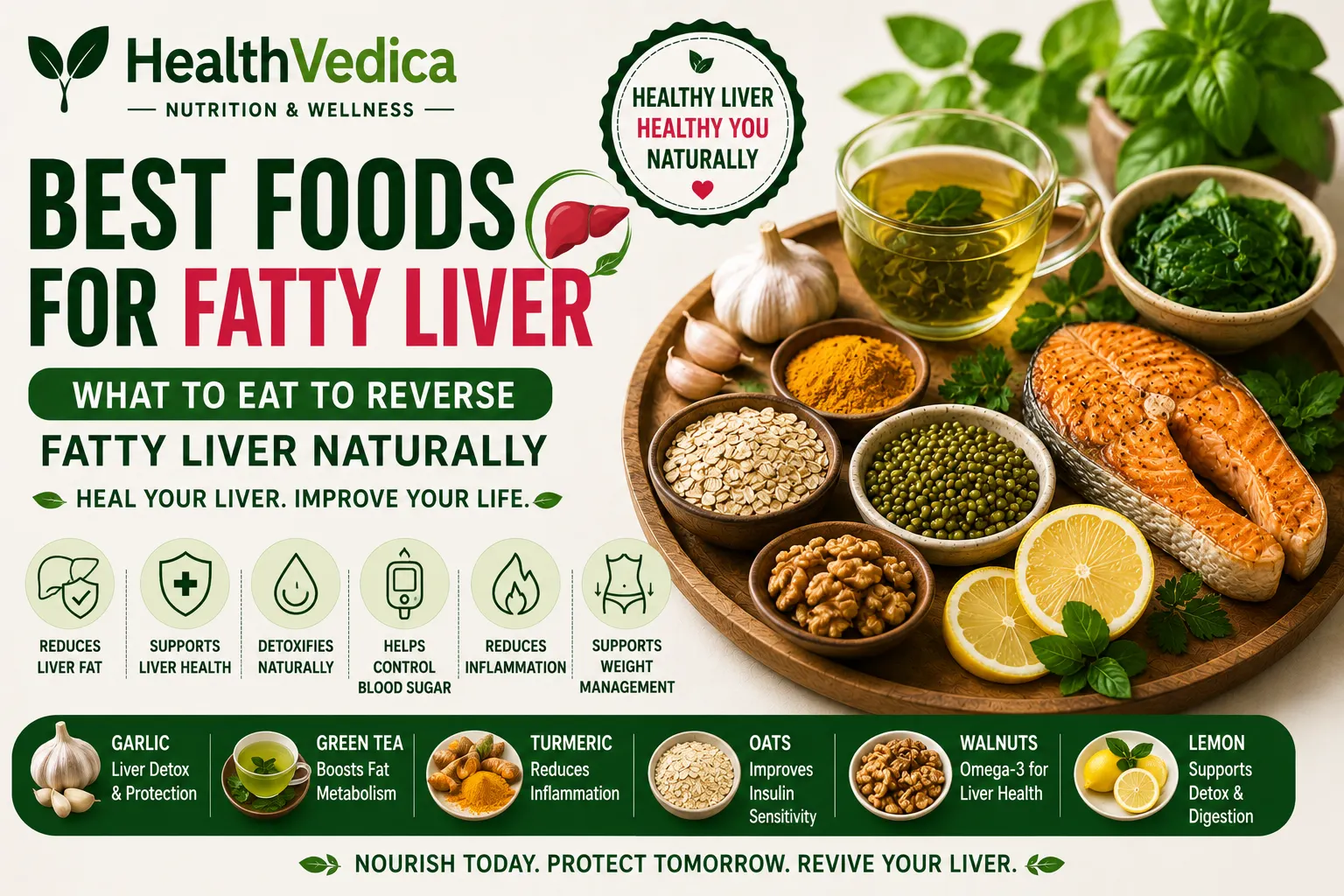
| Vegetables | Palak, lauki, bhindi, beans, cabbage, cauliflower, carrot | Use vegetables to increase meal volume |
| Pulses | Dal, chana, rajma, moong, lobia | Regular plant protein + fibre |
| Whole grains | Jowar, bajra, oats, whole wheat, brown rice | Swap for some refined-grain portions |
| Healthy fats | Walnuts, flaxseed, nuts, unsaturated cooking oils | Healthy does not mean unlimited |
| Fish | Sardines, mackerel and other locally available fish | Useful source of protein and omega-3 |
| Fruit | Guava, apple, orange, papaya, berries where available | Prefer whole fruit to juice |
🚫 The Foods to Reduce First
Sugary drinks: Soft drinks, sweetened tea/coffee and packaged juices are easy ways to consume a large sugar load without feeling full.
Refined grain foods: Biscuits, bakery products, maida snacks and oversized portions of white rice can make calorie control harder.
Ultra-processed foods: Frequent fried and packaged foods can add large amounts of energy, sodium and saturated fat.
Alcohol: Alcohol can complicate liver disease management. People with more advanced fibrosis may be advised to avoid it completely; individualized medical advice matters.
☕ Can Coffee Help?
Regular coffee consumption is associated in observational research with lower risk of advanced liver disease, and current liver education materials discuss coffee as potentially beneficial for some people. This does not mean everyone should drink coffee or that coffee reverses fatty liver by itself. Unsweetened coffee is the sensible form if you already tolerate it.
🌿 What About Turmeric, Amla and 'Liver Detox' Drinks?
Turmeric, amla and other plant foods can contribute antioxidants and flavour to a healthy diet. But avoid turning them into a promise of 'detoxing' or cleansing a fatty liver. The liver already performs its own metabolic detoxification; the evidence-based intervention is to improve the metabolic environment around it.
🏃 Exercise Counts Even Without Major Weight Loss
A combination of aerobic and resistance activity supports liver health and metabolic fitness. If weight loss is appropriate for you, pair nutrition changes with regular activity rather than relying on diet alone.
🍽️ One-Day Fatty-Liver-Friendly Indian Plate
Breakfast: Vegetable oats or moong chilla + plain curd.
Lunch: Half plate vegetables + dal/beans + small jowar/brown-rice serving + salad.
Snack: Whole fruit + a few nuts.
Dinner: Fish/paneer/tofu/chicken + vegetables + small whole-grain portion.
Drinks: Water, unsweetened tea/coffee; avoid sugary beverages.
🩺 When to Get Medical Assessment
A fatty liver finding on ultrasound does not tell you the full fibrosis risk. Doctors may consider liver enzymes, metabolic risk factors, non-invasive fibrosis scores and, where appropriate, elastography. People with obesity, type 2 diabetes or abnormal liver tests should not rely on diet advice alone.
✅ Bottom Line
There is no special 'fatty-liver food'. The winning pattern is vegetables, legumes, whole grains, appropriate protein, unsaturated fats and much less added sugar, refined carbohydrate and ultra-processed food — plus sustainable activity and weight management where appropriate.
📚 Trusted Sources & Further Reading
This guide is educational and is not a substitute for diagnosis or treatment. Nutrient and dietary guidance is aligned where applicable with Indian nutrition guidance and major clinical references.