Quick answer
There is no single food that is automatically healthier for everyone. Cow Milk vs Almond Milk Comparison are useful choices in different situations, and the better option depends on your overall diet, portion size, cooking method and personal needs. This guide compares the two foods in plain language so you can make an informed choice.
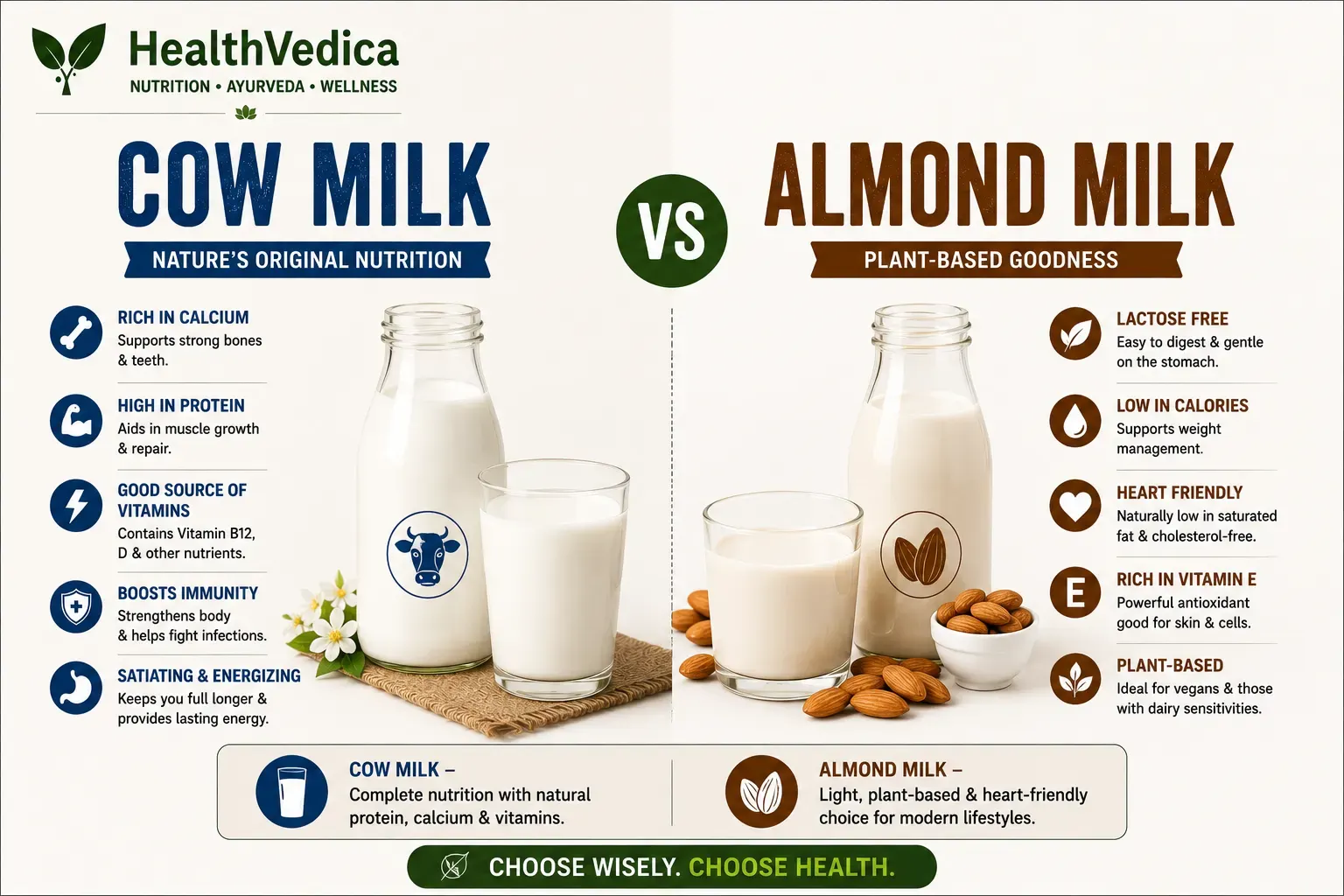
📊 Cow Milk vs Almond Milk: Nutritional Comparison (per 100ml)
| Nutrient | Cow Milk (whole) | Almond Milk (unsweetened) | Advantage |
|---|---|---|---|
| Protein | 3.2g | 0.4–1g | Cow milk (significantly higher) |
| Calcium | 125mg | ~120mg (fortified varieties) | Roughly equal (if fortified) |
| Fat | 3.5g | 1.1g | Almond milk (lower) |
| Lactose | 4.8g | None | Almond milk |
| Vitamin B12 | Naturally present | Absent unless fortified | Cow milk |
| Calories | 61 kcal | 13–17 kcal | Almond milk (much lower) |
| Vitamin E | Minimal | Present (from almonds) | Almond milk |
✅ Where Cow Milk Wins
Significantly higher protein: Cow milk provides roughly three to eight times more protein than almond milk, making it far more valuable for children's growth, muscle maintenance, and overall protein intake.
Naturally occurring Vitamin B12: Cow milk is a natural source of Vitamin B12, essential for nerve function and red blood cell formation, which almond milk lacks entirely unless artificially fortified.
Complete, naturally balanced nutrition: Cow milk provides a naturally occurring combination of protein, fat, calcium, and vitamins without requiring fortification, unlike almond milk which relies on added nutrients for much of its nutritional value.
✅ Where Almond Milk Wins
Lactose-free: Almond milk contains no lactose whatsoever, making it fully suitable for the large proportion of Indians with lactose intolerance who experience digestive discomfort from cow milk.
Lower calories and fat: Unsweetened almond milk has dramatically fewer calories and less fat than whole cow milk, making it a lighter option for those managing weight or calorie intake.
Suitable for vegans and dairy allergies: Almond milk contains no animal products or milk proteins, making it appropriate for vegans and those with a true milk protein allergy, not just lactose intolerance.
🍽️ Which Should You Choose?
For children, those needing high protein intake, or anyone without dairy restrictions, cow milk remains the more nutritionally complete natural choice. For the lactose intolerant, vegans, or those specifically seeking lower calorie and fat intake, fortified unsweetened almond milk is a reasonable substitute, provided the protein gap is compensated through other dietary sources like dal, paneer, or nuts.
Sources and context
Nutrition guidance in this article is framed around Indian dietary guidance from ICMR–National Institute of Nutrition (ICMR-NIN). Where Ayurveda is discussed, it is presented as a traditional framework and kept separate from modern clinical evidence. The Ministry of AYUSH's published guidance emphasises factors such as food quality, preparation, quantity, timing and individual suitability; these principles are useful context, but they should not be treated as a substitute for diagnosis or medical treatment.
Important: Nutrition needs vary with age, pregnancy, medications and medical conditions. If you have diabetes, kidney disease, coeliac disease, a food allergy or another diagnosed condition, use personalised advice from a qualified clinician or dietitian.