🌱 What Is a Vegan Diet?
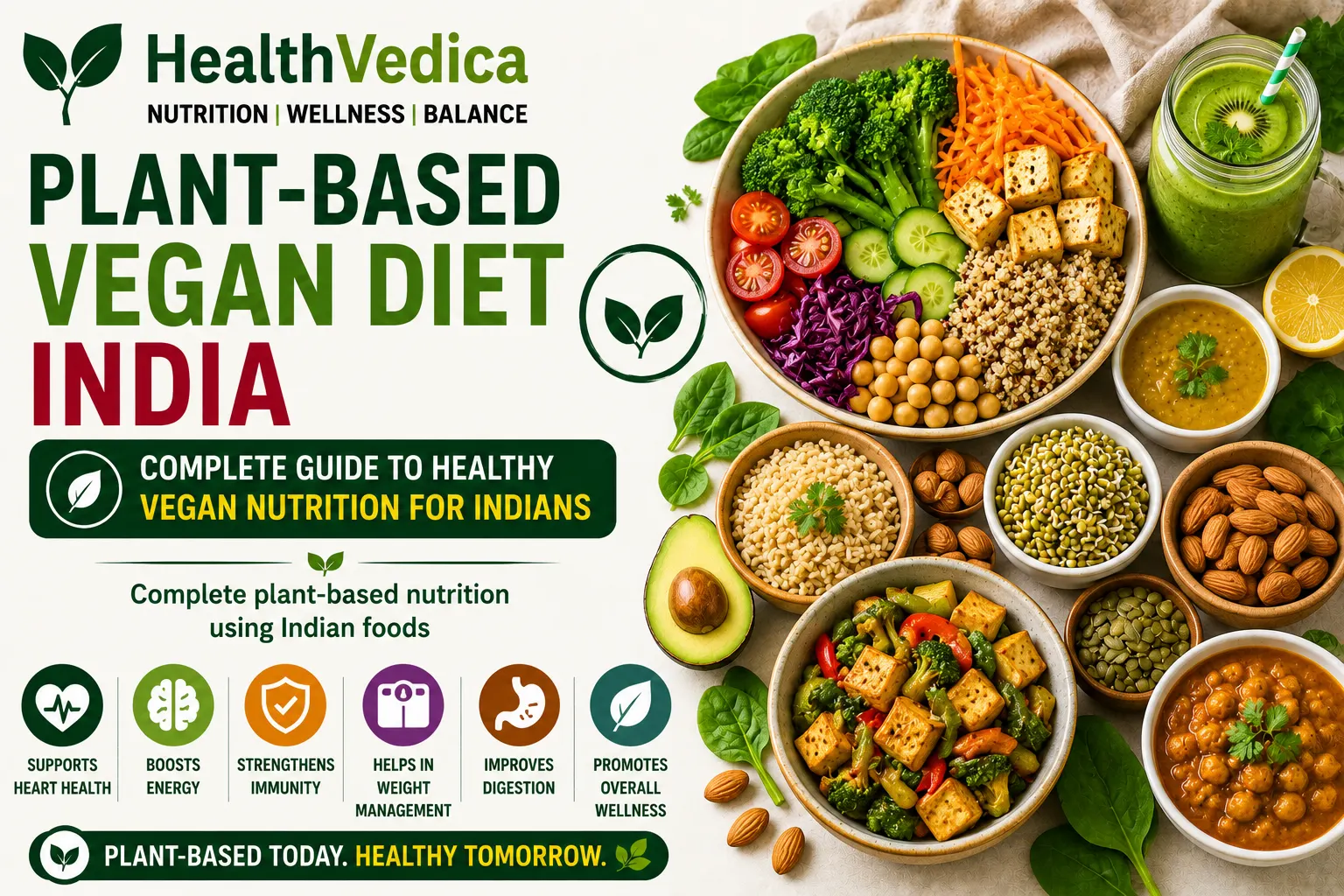
A vegan diet excludes animal-derived foods, including meat, fish, poultry, eggs and dairy. A healthy vegan diet is not simply a list of foods to avoid; it is a structured way of building meals around vegetables, fruits, pulses, beans, soy foods, whole grains, nuts and seeds.
India already has a strong culinary tradition of plant foods, which makes many vegan meals familiar: dal, chana, rajma, vegetable curries, millet dishes, rice, roti, peanuts, sesame and soy foods.
⭐ Plant-Based vs Vegan: They Are Not Identical
Vegan means excluding animal products from the diet. Plant-based is a broader term and can describe diets that emphasize plant foods without necessarily excluding every animal food.
| Feature | Plant-Based | Vegan |
|---|---|---|
| Plants | Central focus | Central focus |
| Dairy | May or may not be included | Excluded |
| Eggs/meat/fish | May or may not be included | Excluded |
| Flexibility | Varies | More defined |
💪 Can Vegans Get Enough Protein?
Yes, but protein needs to be planned rather than assumed. Good Indian vegan protein sources include soy chunks, tofu, tempeh, dal, chickpeas, rajma, black chana, peas, peanuts and other legumes.
Simple rule: include a meaningful protein source at each main meal instead of eating mostly rice, roti and vegetables.
📊 Best Vegan Protein Foods in India
| Food | Role | Practical Use |
|---|---|---|
| Soy chunks | High-protein food | Curry, stir-fry, pulao-style dishes |
| Tofu | Protein + calcium depending on product | Curries, stir-fries, bhurji |
| Moong dal | Protein + fiber | Dal, khichdi, chilla |
| Masoor dal | Protein + iron | Dal and soups |
| Chickpeas | Protein + fiber | Chana curry, salads |
| Rajma | Protein + fiber | Rajma curry |
| Peanuts | Protein + unsaturated fat | Chutney, snack, meal topping |
| Seeds | Protein + healthy fats | Add to meals in sensible portions |
🥗 Build a Balanced Vegan Plate
A useful meal structure is:
- Protein: dal, beans, tofu, soy chunks or another plant protein.
- Vegetables: include several colors across the day.
- Whole-food carbohydrate: rice, roti, oats, millets or other whole grains according to your energy needs.
- Healthy fat: nuts, seeds or suitable plant oils in moderate amounts.
- Fruit: whole fruit as part of overall dietary variety.
🥬 Vegetables and Fruits
Indian vegan meals can easily include spinach, methi, amaranth, carrots, cauliflower, cabbage, beans, bottle gourd, pumpkin, tomato, cucumber and many seasonal vegetables.
For fruit, rotate options such as guava, papaya, orange, apple, banana, pomegranate, mango when in season and amla. Variety is more useful than treating one fruit as a “superfood.”
🌾 Whole Grains and Millets
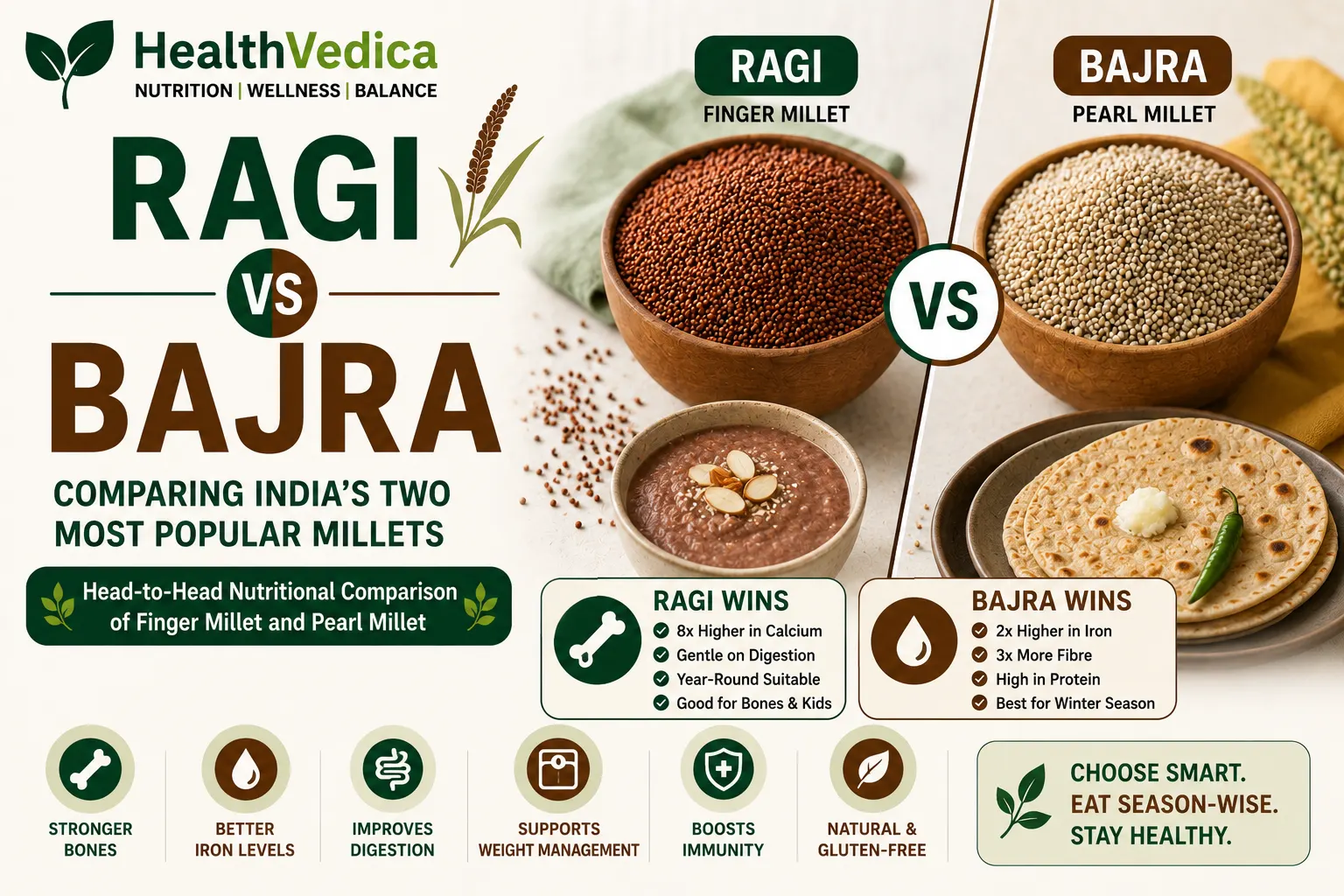
Brown rice, oats, whole wheat, jowar, bajra, ragi, barley, millets and quinoa can contribute carbohydrates, fiber and micronutrients. Choose portions according to energy needs rather than assuming that every grain is automatically low-calorie.
🧠 Vitamin B12: The Nutrient Vegans Must Take Seriously
Vitamin B12 is difficult to obtain reliably from unfortified plant foods. A vegan diet therefore needs a dependable source of B12, usually fortified foods and/or a suitable supplement under professional guidance.
Do not assume that spirulina, fermented foods or ordinary vegetables provide reliable B12. This is one of the most important nutrition-planning points for a vegan diet.
🦴 Calcium, Iron, Vitamin D and Omega-3
| Nutrient | Vegan Sources/Strategy | Important Point |
|---|---|---|
| Vitamin B12 | Fortified foods or supplement | Reliable intake is essential |
| Calcium | Calcium-set tofu, fortified plant milk, sesame, leafy greens | Check food labels where fortification is expected |
| Iron | Lentils, beans, soy, greens, seeds | Vitamin-C-rich foods can support non-heme iron absorption |
| Vitamin D | Fortified foods/supplements as needed | Needs vary by individual |
| Omega-3 | Flaxseed, chia, walnuts | Provide plant ALA; individual needs vary |
| Zinc | Legumes, seeds, nuts, whole grains | Variety helps improve intake |
🍽️ Indian Vegan Meal Plan
Breakfast: Moong dal chilla with vegetable filling + fruit.
Mid-morning: Fruit + a small portion of nuts/seeds.
Lunch: Rice or roti + dal/rajma/chana + two vegetable dishes + salad.
Evening: Roasted chana or a soy-based snack.
Dinner: Tofu or soy-chunk curry + vegetables + roti/millet portion.
Optional: Fortified unsweetened soy milk.
📅 7-Day Indian Vegan Meal Ideas
| Day | Breakfast | Lunch | Dinner |
|---|---|---|---|
| 1 | Moong chilla | Dal + rice + vegetables | Tofu curry + roti |
| 2 | Oats + fruit + seeds | Rajma + rice + salad | Soy chunk curry + vegetables |
| 3 | Poha with vegetables + peanuts | Chana + roti + vegetables | Tofu stir-fry + millet |
| 4 | Besan chilla + fruit | Masoor dal + rice + greens | Rajma/bean bowl + vegetables |
| 5 | Oats + fortified soy milk | Chole + roti + salad | Tofu curry + vegetables |
| 6 | Moong chilla + chutney | Dal + millet + vegetables | Soy chunks + mixed vegetables |
| 7 | Vegetable upma + peanuts | Rajma/chana + rice + vegetables | Tofu + vegetable curry + roti |
⚠️ Common Vegan Diet Mistakes
- Eating mostly rice, roti and potatoes while neglecting protein.
- Ignoring B12.
- Assuming all packaged vegan foods are healthy.
- Eating too little because meals are low in energy density.
- Ignoring calcium, iron, vitamin D, zinc and omega-3 intake.
- Depending heavily on refined vegan snacks and sugary drinks.
❤️ Potential Health Benefits
Well-planned diets that emphasize vegetables, fruits, legumes, whole grains, nuts and seeds can provide substantial fiber and micronutrients and may support cardiometabolic health. The benefit comes from the quality and balance of the diet, not merely from removing animal foods.
WHO emphasizes dietary diversity and minimally processed foods as foundations of healthy eating. citeturn0search0
👥 Who Should Get Individual Nutrition Advice?
Children, teenagers, pregnant or breastfeeding people, older adults, athletes and people with medical conditions may need individualized nutrition planning. A vegan diet can be nutritionally adequate, but nutritional needs change across life stages.
📌 Indian Nutrition Perspective
ICMR-NIN's Dietary Guidelines for Indians 2024 provide a useful Indian nutrition framework. When adapting a vegan pattern, the key is to preserve dietary variety and ensure adequate protein and critical micronutrients rather than simply removing dairy, eggs and meat. citeturn0search48
💡 Final Thoughts
A vegan diet can work well in India because many traditional foods are already plant-based. The difference between a nutritious vegan diet and a poorly planned one is usually meal structure: include a reliable protein source, eat a variety of vegetables and whole foods, and plan B12 and other nutrients deliberately.